Inês Trindade, PhD is a Clinical Psychologist and Research Fellow at the University of Coimbra, Portugal. Her main research interest is in contextual behavioral and contemplative approaches (e.g., Acceptance and Commitment Therapy, mindfulness, compassion-based therapies) applied to chronic illness contexts. She studies the efficacy of such interventions (face-to-face or digitally delivered) on mental health and physiological markers in diverse populations of chronically ill patients (e.g., inflammatory bowel disease, cancer, chronic pain).
Nona’s introduction to mindfulness occurred during her undergraduate education at Duke University, where she jointly majored in Psychology and Middle Eastern/ Asian Studies. It was during her exploration of Asian Studies that she was introduced to Buddhist philosophy, and was immediately attracted to the commonalities of introspective Eastern traditions and the modern scientific field of psychology. At Duke University, Nona worked extensively with Dr. Mark Leary in the Self, Emotion, and Behavior Lab, investigating measures related to social and personality psychology. While at Duke University, she also worked in research roles in both evolutionary anthropology and global health fields, under Dr. Brian Hare and Dr. Sumedha Ariely, respectively. Nona spent her formative years in the United States, China, Belgium, France, New Zealand, and Australia, and she speaks both Mandarin and English. This diverse culture upbringing gave rise to her interdisciplinary academic interests, which lie at the intersection of psychology, health, philosophy, religion, and anthropology. She currently lives in Honolulu, Hawai’i and works as an Asia-Pacific intelligence analyst for the US Government. She is planning to begin her graduate studies in psychology in Fall 2021. In her free time, Nona enjoys spending time outside surfing and hiking, and she maintains a daily meditation and yoga practice.
Master of Social Work Program
at Masters of Social Work program at Seton Hall University my goal is to bring more of the contemplative work. A bit of my history and research goes back to working in China implementing mindfulness-based practices in migrant schools. Due to this work and research, I saw the wider potential impact of mindfulness for the mind and body for those who have lived through trauma as a result of migration.
Most recently, I’ve been partnering with the City of Newark as a Senior Medical Social Worker consultant. Within this role, I have been collaborating with the city in designing and executing various therapeutic programs and models of interventions to address violent crimes in the city. Newark has a beautiful and rich history but also one that is historically entangled in socio- economic disparity and collective trauma. It’s been a city that has been over policed and under resourced. It’s the largest city in New Jersey and is well-known for its rich African American culture, community, and social activism. I say that because it informs the work that I’m doing with mindfulness, healing trauma, social justice, and caring justice.
The work that I do comes from the Violence on Crime Act federal grant out of the Office of Health and Wellness. This work has extended to various projects throughout the City. Recently, as a response to the global rebellion against police racial injustice, Mayor Ras Baraka issued a decree divesting the 1st Police Precinct, which was the epicenter of the 1967 Newark Rebellion. In that rebellion, 23 people lost their lives in response to the police unlawfully targeting and brutalizing an unarmed Black taxi driver who was beaten without cause. This indignation sparked an awakening. People wanted justice!
Ras Baraka’s decree initiated both the fiscal and physical resources from the 1st Police Precinct to be divested to create a space of healing for the community. This center is going to be called the Office of Violence Prevention and Trauma Recovery and it’s going to become a branch of city government. What’s special about this is that this is a direct response to the George Floyd murder and the racial injustice awakening that’s been happening in our country for the past six months. Now we have a city official taking an innovative and proactive stance saying we can invest this money into the healing portion of our community and put it into a grassroots organization.
Our team of clinicians, administrators and outreach workers are designing what this space will look like. This office is repurposing the 1st Precinct to host various initiatives. The first floor is going to be a dedicated museum space for social justice, celebrating the history of activism in Newark and commemoration of the 1967 Newark Uprising. The second floor is going to be a dedicated space for community based organizations that are leading city wide grassroots efforts, such as West Ward Victims Outreach, violence interrupters and Newark street team, and the Brick City peace coalitions. These groups that have been historically underfunded to serve our community are now going to have a piece of that $12 million divestment. This will endow them with the resources to effectively provide preventative and community-first respondent programs to the most marginalized in the City.
The third floor is a training space for community members, credible messengers, and public safety. The basement is dedicated entirely for holistic work- this is where the mindfulness piece comes into action. This space is for mindfulness-based interventions, whether movement work, indigenous work, meditation, and practices that connect our hearts, minds, and souls. Nothing happens in that space except for the healing arts. In the parking lot, we’re dedicating space to the community garden to address food insecurities in the community and engage the community in this holistic work that connects folks with nature. What’s most important is the philosophy. This space really embodies mindfulness-based work and is inspired by Rhonda Magee and her work on racial justice. This work modernizes mindfulness and puts it in a language everyday folks can understand and integrate as a part of their practice that makes sense for them.
How do you see mindfulness as a tool for advancing equity and social justice?
In this space, we are serving marginalized communities that are racialized as primarily Black and Brown. These individuals are typically below the poverty line and have had some sort of trauma experience, whether it’s intrapersonal, interpersonal, or intergenerational- that’s our focus. As we know through mindfulness-based intervention research, some of the benefits are for helping folks who are living in dysregulated states. These marginalized communities are living in dysregulation as a result of unaddressed and intergenerational trauma, whether it be due to economic trauma, food insecurity, racialized trauma, or prolonged trauma due to abuse. These communities live in trauma states that, for one thing, make everyone else appear as a threat.
Specifically, what mindfulness can bring into the community is presence: recognizing one’s own space and being fully present in every moment with one another. Moving away from perceiving everything and everyone as a threat. Presence allows us to regulate these hyperarousal states when in these healing environments. This slowly builds trust and creates space for collective healing. It’s using the tenets of mindfulness-based practices, whether it’s creating presence, inviting a nonjudgmental stance, or just embracing the ‘us’ as we are.
The ‘we’- the healing that occurs in the collective work is transformation. When there is a brother or a sister in the community hurting, we are hurting. Whether you call it liberation, theology, transformative justice, mindfulness- we cannot separate those components of practice, all of those things are integrated. Integration brings peace, and peace within is key to embracing the other. As Daniel Segal mentions, this is the ‘Mwe’ in our collective consciousness. As I heal, I now make room to embrace my brother, my sister, my community. That is the beauty of mindfulness.
Seton Hall via Dr. Juan Rios
“That’s why we are here, it’s academia in action. It’s about using research and science put into action for social good.”
What is the intended impact of this model?
This is a model that we have not yet seen; there are a bunch of independent lines of research that exist, such as what happens when resources are dedicated to grassroots organizations, trauma recovery, training police officers on implicit racial bias, or the effects of introducing mindfulness into communities. This proposed center ties all of that together: economic justice, legal justice, social justice, trauma recovery, and contemplative communal spaces. This puts tax money not just into violence prevention but also into healing. We have to work toward healing the community by increasing our emotional intelligence and groundedness as well as meeting their immediate needs. Some people have never had the privilege or exposure to these grounding techniques. Even recognizing our breath, something that appears so basic, some individuals don’t know that they’re becoming agitated and have dysregulated breathing. Total body disconnectedness. We hope to instill skills that have real impact in people’s daily experience.
‘Defunding police’ is a big topic but there aren’t many practical suggestions, heavily researched practice models, nor a clear definition of what that means. We have to give the Mayor and the City of Newark credit for this reallocation of resources for a new center for violence prevention and trauma recovery. The city government has not only taken that leap of faith, but action and the decision that if we want to change, we have to do something different. We can’t continue 50 years of trying to ‘reform the police’; let’s engage in a different model that encompasses the police, the community, government and mindful orientation. This increases our emotional intelligence through deep insight, compassion, and holistic healing as we create healthier communities. The way I envision it working, we have to work with individuals to effect change outwards, and this in turn reflects back inwards. The City of Newark can serve as a model that works. The fact that the Mayor and the government are investing their fiscal and physical resources toward this work shows true commitment to progress.
Do you feel that these mindfulness skills are for members of the community or for other groups, like police officers?
I want to be clear that I believe in working with both members of the community and the police. Some people don’t take that stance. My stance is that we need to put more money into people who are on the streets. Credible messengers, as we call them, are individuals who are community stakeholders and have respect in the communities. These need to be our first responders for non-violent public safety responses, rather than calling the police when someone is in distress either due to homelessness or a mental health crisis. Re-structuring and re-conceptualizing what we in our community see as public safety. Credible messengers can be anyone who has buy-in and can hopefully unite communities with police in this work. This is just one example of many.
We’re partnering with community members, government, grass roots organizations and violence disruptors with police officers and universities to teach social justice and contemplative practices. Imagine within these transformative spaces, we have cohorts of police, ex-gang members, community leaders, and government officials. The goal is to create healing spaces that address the multiple dimensions of oppression and collective trauma. Community healing takes a comprehensive intervention, not just moving money, creating programs, and investing in training. Together they can begin truly seeing one another as human beings, learning new skills to build compassion, and applying these new approaches. This one small component can save lives and help reduce the automatic responses from the hip that causes dehumanization and results in excessive force.
If I’m engaged in these cohorts, I see you as a community partner, a brother locked in arms. That is the essence of using contemplative practices in caring justice. It’s ‘this and,’ not ‘this or.’ It’s engaging the community and putting the resources in the hands of grassroot organizations and cultivating a new culture in public safety and adopting these models. This entails being grounded in the present, reducing implicit biases, becoming more aware, and meeting each other as we are with heart-centeredness. Imagine the communities that we can build.
How do you see virtual reality (VR) as an asset in these efforts to this center and your larger goals?
One of my areas of interest is VR to teach social justice. This came about as work as a futurist. How do we envision and design the world we want to live in? Emergent technology is a way in which folks can deepen the immersive experience using mindfulness and VR technologies. We want to take it a step further using mindfulness to teach social justice by building empathy. This practice is inspired by the work of Courtney Cogburn of Columbia University and well as the work being done at the Virtual Reality Human Interactions lab. Stanford is conducting research on empathy-building using VR technology. I learned about that work last summer. I asked if anyone is using this in practice, like clinicians. I took it upon myself to pursue this work since what’s missing is a model that can help people connect with these immersive experiences in practice.
One of my colleagues, Anthony Nicotera, came up with a model of learning using mindfulness called the Circle of Insight. It takes you through the cycle of being fully aware: noticing, reflecting, then acting. In my work, I took his model slightly further by adding ‘feeling’ and ‘de-roling’. These two areas in the circle of insight, while engaging in virtual reality, reinforces the importance of being connected to the body by noticing physical sensations, then when completing the virtual experience, to de-role from the avatar.
We are planning to add this work at the Center of Office of Violence Prevention and Trauma recovery. The goal for the first floor at the proposed center will be a VR room where people can immerse themselves in a program that takes people through the immersive experience of social activism in the City of Newark. What was it like to be in the 1967 uprising and to then see the effects of gentrification? Cultivating questions like: What type of future are we committed to designing? How do we reflect on the past mistakes in a visceral way as well as taking personal conviction to being a part of the change to ensure healthier communities. It’s taking them through a journey in the past and a journey into the future using immersive technology.
Before using VR, we teach them the VR-Circle of Insight and set an intention. People can find it entertaining or even triggering. That’s why mindfulness is so important. We have to set the intention. What are you doing this for? What is happening within me? What are the physiological and emotional reactions? We need to put it in a perspective toward action.
Clay Banks via Unsplash
“If we can use common language regarding this collective dysregulated state then we are practicing mindfulness. It doesn’t matter if you’re practicing business or law, everyone can have a visceral awakening regarding self and their position in the world. This sense of awakening has allowed mindfulness-based practices to be an approach that is universal and available in any discipline.”
Are you doing any research around this to capture any changes and linking this back to larger statistics or indices of community wellness?
Absolutely. We’re pursuing a grant to research the effects of trauma informed spaces as well as developing a curriculum specifically to develop transformative spaces. We plan to explore these models to capture the outcomes of the interventions such as Empathy Quotient (EQ) scales and community quality of life. We’ll be able to measure these outcomes for those who participate in the center, and also we’ll compare this to data on police prosecution and the reduction of violent crimes and examining if that changes over time.
As an educator, how do you see these partnerships as being mutually enhancing to the city and Seton Hall University?
I’m fortunate to be with Seton Hall. The university has a long history of servant leadership and philanthropy, as well as a complex history due to its geographic positioning. We’re in a cultural and economic divide due to our location. It’s located between South Orange, which is primarily suburban and economically affluent, and Newark, which is urban and socioeconomically impoverished. It’s very different.
What I love about the university is that they focus on public service. One of the models that we adopted is ‘Take heart. Take action.’ In a heart-centered way, we engage our community to form these valuable collaborations. Right now, we have folks at the law school, public policy, Africana studies, museum studies, public policy social work, environmental studies, and the social justice certificate program. When communities, higher education, and the government partner together, we see positive changes happen. You have to have commitment from the universities and the faculty. Unfortunately, that service component is often minimized by faculty and programs, but not at Seton Hall. That’s why we are here, it’s academia in action. It’s about using research and science put into action for social good.
Your work appears naturally interdisciplinary as a clinical social worker. Are we also seeing an interdisciplinary conceptualization of mindfulness? Do you think that for those disciplines that have yet to accommodate mindfulness into the core of their work, do you think it might become an ideal to be pursued?
Over the last 7 months, our world has been in a state of social isolation. This global phenomenon of being forced into this unnatural setting, sitting with ourselves, tests what it is to be social or to live in fear. Whether you practice mindfulness or not, you are awakened to the reality that this is challenging. You might begin to question how to put this feeling in context. If we can use common language regarding this collective dysregulated state then we are practicing mindfulness. It doesn’t matter if you’re practicing business or law, everyone can have a visceral awakening regarding self and their position in the world. This sense of awakening has allowed mindfulness-based practices to be an approach that is universal and available in any discipline.
Why this is important is that normally we approach a person in business and we’re asking them how to create social economic mobility in marginalized communities. There is a point of mindfulness as we must become curious about what our relationship is to money, self, and self-efficacy. This is all tied into mindfulness: how is my state of awareness, how do I regulate myself when I sense an impulse, how can we integrate that with the effects of Covid-19 and the racial injustice awareness that is happening globally? Economic justice is about liberation and liberation is rooted in first letting go of toxic states that we were conditioned to develop. Mindfulness in action helps us move past our ‘stuckness’ and be here now, letting go of what does not serve us. That applies to internal and external systems.
We’re adding two different layers of context that mindfulness-based practices can beautifully integrate. So much is needed with regard to how we can heal. To use Bronfenbrenner’s work, when we want to heal society, we have to work from the individual level outwards, then again inwards. Critically, because of what’s happening throughout this year, introducing mindfulness-based work is a form of radical acceptance. People are hungry trying to find approaches that integrate emotional intelligence, individual and collective well-being, transformative work, and even truth and reconciliation. James Baldwin said it best, “you can’t change everything you face, but nothing can be changed if you don’t face it.” That’s quintessential mindfulness. If we want to change what’s happening in our society, we might not be able to change it all, but we can’t change it unless we have an honest truth and perspective into what we’re dealing with.
“That’s why mindfulness is so important. We have to set the intention. What are you doing this for? What is happening within me? What are the physiological and emotional reactions? We need to put it in a perspective toward action.”
Dr. Lin is a postdoc working with Dr. Todd Braver in the Cognitive Control & Psychopathology Lab at Washington University in St. Louis (WUSTL). He received his PhD in clinical psychology from Michigan State University. His research leverages EEG and fMRI to study the brain mechanisms underlying the effects of mindfulness meditation on emotion regulation and cognitive control. As a member of the WUSTL Aging and Development program, Jeff is currently exploring ways to extend his work on mindfulness toward the study of healthy aging. His long-term aspiration is to develop an interdisciplinary research program that intersects the arts and sciences, drawing insights from psychology, neuroscience, religion, and philosophy to advance understanding and treatment of human suffering.
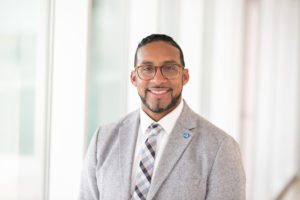
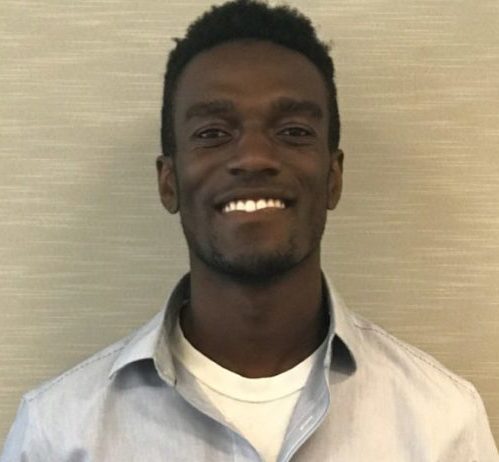
Grant Jones (he/him) is an artist, contemplative, researcher, and activist. Currently, he is a 3rd Year Clinical Psychology PhD candidate at Harvard University. He is also a co-founder of The Black Lotus Collective, a meditation community that centers the healing and liberation of individuals with historically marginalized identities (i.e. Black, Brown, Queer Folks, Folks with Disabilities). His research and life work centers around developing and implementing contemplative and liberatory tools for underserved populations. He is also a musician and is rooted in Black soul, R&B, and alternative music traditions. He loves his family, his friends, nature, contemplative practice, travel, a good work out, and good food.
Parts of the interview have been edited for clarity and length.
As you are pursuing a PhD in Clinical Psychology at Harvard, what has brought you to this point in your life?
I have always been deeply introspective from the time I was young. I remember writing in my journal that I was going to be a psychologist. I really love combining my academic passions with my proclivity toward introspection and first-person inquiry. Psychology research is where my inner investigations express themselves. It’s a combination of being a school nerd and being curious about what’s happening in my mind that led me to pursue a PhD.
How did you enter the field of mindfulness? What led you on that path of becoming a contemplative scholar?
I think a lot of it stems from my own interest in my introspective process. Around the time when I was 18, contemplation really became codified as a practice. I was first drawn to meditation as a form of stress relief as I went to Harvard for undergrad. It was not just the outer stress of being in the most elite academic environment, but also the inner stress of ‘imposter syndrome’ and insecurity. It led me to go inwards and figure out what was happening. That led me toward contemplative practice. Over time, I’ve questioned how I could make a life in which I could center my contemplative practice; clinical psychology research is that answer, for the time being.
Were you involved with any undergraduate research in contemplative sciences?
Not at all. I was drawn to contemplative research later. I was figuring out what I wanted to do in undergrad and also research didn’t seem like a place for me. Research generally is not geared toward folks from my background. It wasn’t a place where I saw myself. When I was an undergrad, I was mainly focused on securing a “good” job. But through my introspective processes, it became clearer that I had to search for work that honored some of the truest elements of myself. This process initially drew me to research. From there, I’ve established a part of my self-hood within contemplative science.
How do you see your background informing your research or path forward in your academic work?
I see the two as being inextricably intertwined; I do not want to do any research that isn’t helping me grow into a more authentic version of who I am. I don’t want my research to flow from a purely cerebral place; I want it to be informed by the contemplative and embodied practices that I do. I want it to be informed by the culture that I’m a part of and by the life path that I’ve walked. It feels like there should be another word that’s more expansive than ‘research’, as I hope this work I do inside and outside of academia helps to scaffold my broader process of self-actualization. Right now, formal ‘research’ is one tool in my toolkit toward self-expansion.
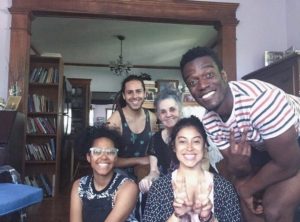
The Black Lotus Collective
“I don’t want my research to flow from a purely cerebral place; I want it to be informed by the contemplative and embodied practices that I do.”
As you bring your academic work into a personal reflective equilibrium, what are those initiatives that you are pursuing that embody this?
I’m a musician. Part of what’s been really exciting for me is thinking about what it means to have black music as a vehicle for contemplative practice and expression. That’s one frontier that I’ve been really excited about exploring. I’m an artist figuring out what it means to have science as a framework to facilitate my artistic process. So again, being myself but using the resources, frameworks, and the tools of science to bolster that self-expression. The forms of musical contemplative practice in the Black community aren’t recognized by Western forms of empirical inquiry at this point. I am in this doctoral program to hopefully expand what we see as ‘science.’
What is the Black Lotus Collective and what inspired its inception?
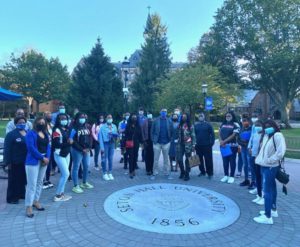
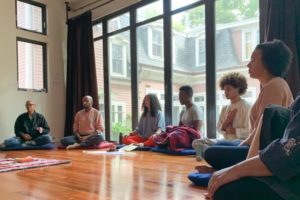
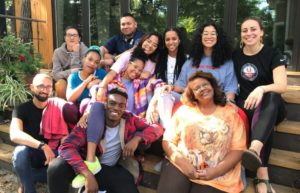
The Black Lotus Collective is a Boston-based healing space that centers the experiences and the healing of folks who have historically marginalized identities- Black, Brown, Queer folks, and Folks with Disabilities. It’s a group that uses contemplative practice and somatic and future-building practices to invite folks into their liberation. The group started after I met Juliana Santoyo at Green Gulch Farm (Zen Center) in San Francisco, California in 2016; we really vibed and thought about starting a spiritual community together for folks with historically marginalized identities (although we met in CA, we were both from Boston). We were also talking about Radical Dharma at the time because Rev angel Kyodo Williams was speaking at Green Gulch. After meeting with Lama Rod Owens back in Boston, we learned that he was intending to build a spiritual community as well. We started building together. Lama Rod introduced us to Darla Martin and Terrin Gathers and Juliana introduced us to their brother, Juan Santoyo. There were many other folks involved with the first years of the collective, but the folks I just named are those still acting as organizers for the group (and thus those I feel comfortable naming).
We originally started as a Radical Dharma Sangha of Boston, but we eventually branched off and kind of rebranded. We still have nothing but immense love and respect for Rod, but we realized that we as organizers were developing this emergent process that was informed by, but separate from Radical Dharma. The Black Lotus Collective has been in existence for almost four years now and meets monthly. This group was one of the main catalysts for embarking upon this PhD process I’m currently in now.
What is Radical Dharma?
Before I answer, I want to say that I am in no way an official representative of Radical Dharma at all! So my answer reflects my interpretation of the text and the message. With that said, to me Radical Dharma is essentially just stepping into a Dharma that recognizes that suffering is structured differently based on our identities and demographic markers. It’s a recognition that history has distributed suffering unequally, and those with historically marginalized identities have borne the brunt of so much suffering. It’s moving into a Dharma and inviting our Dharma spaces into a reflection around that truth. It’s about getting real that undoing suffering is inextricable from undoing structural oppression, it’s calling the Dharma into that truth. It’s just the Dharma, but it’s the Dharma that’s moving into deeper honesty with the world that we live in and showing how suffering works within it.
The Black Lotus Collective
“Inner wellness is critical not only for dismantling the systems that cause depression, but also for giving the imaginative space to allow something else to take the place of those structures.”
Increasingly, we’re seeing how contemplative practices are used to undermine social structures that might promote inequality. Are initiatives like Black Lotus Collective an attempt to address social change or to promote wellness? Does the Black Lotus Collective point to a link between those two?
The two are inextricably linked. We do both, as both inform one another. Both are critical for the other. Inner wellness is critical not only for dismantling the systems that cause depression, but also for giving the imaginative space to allow something else to take the place of those structures. If you’re not well, there’s almost a guarantee that the structures that you put in the place of the ones that you tear down will continue to replicate the same violence. A part of the work that we do is making sure that in doing the healing work internally, we can build new structures that are actually more liberating.
Pretty much every structure that’s ever been built has been built in the name of liberation, truth, and justice- yet look at the world we have. So, we’re trying to be rigorous about our approach to healing so we can be rigorous about what we build. And on the flip side, these oppressive structures impede our healing. There’s real structural change that needs to happen. It feels really important to turn toward that because folks can’t heal if they are struggling to feed themselves, take care of themselves, if they’re experiencing incessant threats of harm and violence, and if they don’t have money.
We’re witnessing a global pandemic and American civil unrest. Do you think that Black Lotus Collective was designed to address this very type of unrest?
Yes, it’s designed exactly for that. The work of the Black Lotus Collective has always been about preparing us for pain and suffering; to show up to the particularities of each moment of suffering while recognizing that this suffering has always been with us. Our work is sustaining ourselves so that we can meet these moments of pain when they come to us.
As Black Lotus Collective blossoms, how do you envision its own growth and the impact of our five year or ten year period?
We all have different visions. I’m aware that each person’s version of liberation and truth are very different. I’m currently with the question: what do we do with the fact that we actually may all have different visions of what it means to live in a liberated future? What does it mean for us to potentially have different visions for what we want for the collective? Maybe some of us view our role as being more deeply relational, maybe some of us view our role as being more deeply structural. We’re in a process in which we’re actually being forced to reckon with where we overlap but also where we don’t. It all comes back to that very simple practice of just showing up as honestly as I can while keeping myself safe and figuring out what it means to do that with these folks with whom I’ve been in practice. It’s always the practice and it’s always evolving.
What do you envision for your future?
I didn’t feel like this going into grad school, but a part of me may want a tenure-track faculty job. I’m considering what it means to go into academia and bring myself into these spaces as authentically as I can. I’ve been thinking about doing that at a liberal arts college where I could be focused particularly on building community at the same time as I do some research, but not the amount of research that I see professors doing at R01 universities. I’ll likely be taking a different path than that (but we’ll see!). I’m also thinking about what it means to have a significant time period of extended retreat in the midst of my academic work because, again, continuing my embodied practices is a non-negotiable part of what it means for me to exist. So, I’m exploring whether I can blend my embodied contemporary practices with working from within these institutions.
I also love clinical work. I was drawn to this field because I love holding space, it’s one of the clearest connections I have to the divine, to the infinite, to the Dharma. I would like to have my own private practice and healing practice center, and having a clinical psychology license would make that process easier.
Ultimately though, I hope to go where life calls me, without much preconception. No matter what, I will have to forge my own path. That may be outside of institutions. Building on my own makes me feel nervous because in America, there’s like no safety net at all for anybody, especially not for folks like me.
For now, I’m just going to take as much time as possible with the PhD, do the work that I get called to, do work with folks that I care about, have as good a time as I can, do as much music as possible, and heal. I’ll see what happens when I do those things.
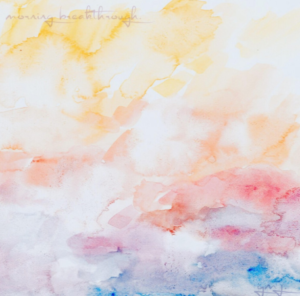
The Black Lotus Collective Cover Art for morning breakthrough.
Grant Jones’ album morning breakthrough. is available on Spotify. You can listen to it here.