Mindfulness-based cognitive therapy, also known as MBCT, is a group-based treatment program that was originally developed by Segal, Williams, & Teasdale (2002) 1 to prevent relapse in clinical populations with recurrent major depressive disorder (MDD). The MBCT program helps participants learn to step out of habitual, automatic patterns of the mind and body that arise during depressive episodes. MBCT targets cognitive reactivity by teaching participants to develop different ways of relating to sensations, thoughts, and feelings that contribute to depressive relapse. By becoming more aware of body sensations, feelings, and thoughts through mindfulness techniques, participants learn to recognize, accept, and disengage from habitual patterns that might cause recurring challenges.
Course Format: The MBCT program follows a manualized protocol1 including The Mindful Way Workbook2 for course participants (Segal, Williams, & Teasdale, 2002). MBCT provides instructions for integrating meditation, mindfulness movement, and cognitive techniques over an 8-week course. In the first four sessions, participants learn the basics of mindfulness. This includes learning to become aware of how little attention is paid in daily life, noticing how quickly the mind shifts, and restoring focus using body scan, a technique that teaches participants to pay attention to bodily sensations in a gradual sequence from the feet to the head. Participants also learn how mind wandering allows negative thoughts and feelings to escalate. In the last four sessions, participants focus on recognizing and skillfully responding to shifts in mood. As participants develop their mindfulness practices in class and at home using audio recorded instructions, participants learn to approach patterns of negative moods and thoughts by simply allowing and exploring these thoughts while using breathing practices as a focal point for their awareness. MBCT is not recommended for patients who are acutely suicidal, currently abusing drugs or alcohol, experiencing a major crisis, and are active in other mental health treatment.
“By becoming more aware of body sensations, feelings, and thoughts through mindfulness techniques, participants learn to recognize, accept, and disengage from habitual patterns that might cause recurring challenges.”
Instructor Requirements: Similar to other mindfulness-based interventions, the MBCT course has instructor requirements. Importantly, the instructor must maintain an on-going meditation practice to appropriately and skillfully navigate the challenges that participants might encounter. The creators of MBCT emphasize that the instructors’ basic understanding of mindfulness and personal orientation will be one of the most powerful influences affecting this process. Additionally, although the second edition of the MBCT manual (Segal, Williams, & Teasdale, 2012) aims to cultivate mindfulness and self-compassion, the authors advise against explicitly teaching self-compassion to clinically depressed individuals, as this could perpetuate feelings of being unlovable and unworthy. Instead, the instructor should implicitly embody kindness and compassion through their presence, guidance in meditation practice, and responses to participants’ discussion3.
Course Outcomes: MBCT has been developed to improve concentration, mindful awareness of thoughts, emotions, and body sensations, acceptance, decentering, and a non-fixing attitude. According to several empirical studies3, MBCT participants report a range of improvements for depression, anxiety, rumination, insomnia, tension, mindfulness, compassion, self-compassion, concentration, resilience, optimism, and quality of life.
Clinical Populations: Robust empirical evidence from meta-analyses (an analysis of many independent studies on the same subject) supports its therapeutic effectiveness across a range of disorders. A growing body of empirical studies demonstrates that MBCT significantly reduces the risk of depressive relapse by 35% compared to standard treatment, and by 44% for patients with three or more depressive episodes5. These are similar to the rates found for antidepressant treatment. MBCT has also been used to treat different clinical populations and disorders including children6, adolescents7, pregnant women at risk for depression8, hypochondriasis9, chronic fatigue syndrome10, tinnitus11, auditory hallucinations12, insomnia13, social phobia14, generalized anxiety disorder15, panic disorder, depression in primary care16, and cancer patients17. As clinicians and researchers continue to test and expand its clinical application, MBCT has become one of the most versatile mindfulness-based interventions.
Segal, Z. V., Williams, J. M. G., & Teasdale, J. D. (2002). Mindfulness-based cognitive therapy for depression: A new approach to preventing relapse. Guilford Press.
Teasdale, J. D., Williams, J. M. G., & Segal, Z. V. (2014). The mindful way workbook: An 8-week program to free yourself from depression and emotional distress. Guilford Publications.
Segal, Z. V., Williams, M., & Teasdale, J. (2018). Mindfulness-based cognitive therapy for depression. Guilford Publications.
Piet, J., & Hougaard, E. (2011). The effect of mindfulness-based cognitive therapy for prevention of relapse in recurrent major depressive disorder: a systematic review and meta-analysis. Clinical psychology review, 31(6), 1032-1040.
Semple, R. J., & Lee, J. (2014). Mindfulness-based cognitive therapy for children. In Mindfulness-based treatment approaches (pp. 161-188). Academic Press.
Bögels, S., Hoogstad, B., van Dun, L., de Schutter, S., & Restifo, K. (2008). Mindfulness training for adolescents with externalizing disorders and their parents. Behavioural and cognitive psychotherapy, 36(2), 193-209.
Dimidjian, S., & Goodman, S. (2009). Nonpharmacological intervention and prevention strategies for depression during pregnancy and the postpartum. Clinical obstetrics and gynecology, 52(3), 498.
McManus, F., Surawy, C., Muse, K., Vazquez-Montes, M., & Williams, J. M. G. (2012). A randomized clinical trial of mindfulness-based cognitive therapy versus unrestricted services for health anxiety (hypochondriasis). Journal of consulting and clinical psychology, 80(5), 817.
Rimes, K. A., & Wingrove, J. (2013). Mindfulness‐based cognitive therapy for people with chronic fatigue syndrome still experiencing excessive fatigue after cognitive behaviour therapy: a pilot randomized study. Clinical psychology & psychotherapy, 20(2), 107-117.
Philippot P, Nef F, Clauw L, de Romrée M, Segal Z. A randomized controlled trial of mindfulness-based cognitive therapy for treating tinnitus. Clin Psychol Psychother. 2012 Sep;19(5):411-9. doi: 10.1002/cpp.756. Epub 2011 May 12. PMID: 21567655.
Chadwick, P., Hughes, S., Russell, D., Russell, I., & Dagnan, D. (2009). Mindfulness groups for distressing voices and paranoia: a replication and randomized feasibility trial. Behavioural and Cognitive Psychotherapy, 37(4), 403.
Britton, W. B., Haynes, P. L., Fridel, K. W., & Bootzin, R. R. (2012). Mindfulness-based cognitive therapy improves polysomnographic and subjective sleep profiles in antidepressant users with sleep complaints. Psychotherapy and psychosomatics, 81(5), 296-304.
Piet, J., Hougaard, E., Hecksher, M. S., & Rosenberg, N. K. (2010). A randomized pilot study of mindfulness‐based cognitive therapy and group cognitive‐behavioral therapy for young adults with social phobia. Scandinavian Journal of Psychology, 51(5), 403-410.
Craigie, M. A., Rees, C. S., Marsh, A., & Nathan, P. (2008). Mindfulness-based cognitive therapy for generalized anxiety disorder: A preliminary evaluation. Behavioural and Cognitive Psychotherapy, 36(5), 553.
Kim, B., Lee, S. H., Kim, Y. W., Choi, T. K., Yook, K., Suh, S. Y., … & Yook, K. H. (2010). Effectiveness of a mindfulness-based cognitive therapy program as an adjunct to pharmacotherapy in patients with panic disorder. Journal of Anxiety Disorders, 24(6), 590-595.
Shawyer, F., Meadows, G. N., Judd, F., Martin, P. R., Segal, Z., & Piterman, L. (2012). The DARE study of relapse prevention in depression: design for a phase 1/2 translational randomised controlled trial involving mindfulness-based cognitive therapy and supported self monitoring. BMC psychiatry, 12(1), 1-11.
Foley, E., Baillie, A., Huxter, M., Price, M., & Sinclair, E. (2010). Mindfulness-based cognitive therapy for individuals whose lives have been affected by cancer: a randomized controlled trial. Journal of consulting and clinical psychology, 78(1), 72.
Enjoy? Share with your friends
Share on facebook
Share on twitter
Share on linkedin
Share on reddit
As the field of contemplative science grows, these are the researchers who are helping the field move forward. These researchers come from a range of disciplines from all over the world.
Buddhist conceptualizations of mindfulness differ based on emphasis on explicit ethical framework vs. direct insight
Buddhist non-dual conceptualizations of mindfulness inform current clinically-based mindfulness programs
Mindfulness is commonly described as “paying attention, with intention, nonjudgmentally”
What is Mindfulness?
With the increased interest in mindfulness research, there remains a practical and theoretical need to establish a testable, operational definition of mindfulness. Part of this challenge is that the concept of mindfulness is compatible with multiple explanatory frameworks from various disciplines such as contemplative theories,1 clinical, and neuroscientific frameworks.2 Framing mindfulness in a scientific context compatible to clinical medicine and psychology is helpful in that it can be communicated directly to patients, healthcare providers, and researchers. However, this secularized perspective might critically overlook elements that contribute to the potentially transformative effects of mindfulness practice that first emerged beyond the context of medicine, psychology, and neuroscience.
Rather than proposing a single definition, mindfulness might be better understood in relation to the phenomenology of the various contemplative traditions and practices that intend to develop mindfulness. This article will explore how early Buddhist conceptualizations of mindfulness led to varying theoretical accounts that consider how ethics, concentration, and insight align with the concept of mindfulness. These varying theoretical considerations will then be linked to contemporary Buddhist and modern scientific accounts of mindfulness.
While mindfulness is understood as both a process (mindful practice) and an outcome (mindful awareness),3 important differences are amplified by the various approaches that seek to cultivate mindfulness.4 Broadly, the construct of mindfulness has been used to refer to a mental trait or phenomenological state, a spiritual path that reduces suffering and promotes wellness, and as a cognitive process that is capable of being enhanced through training.5
Buddhist Origins of Mindfulness
Mindfulness as a concept rooted in Buddhist origins goes back 2,500 years. However, many spiritual traditions, psychological, and Western philosophical schools of thought also describe its phenomenological nature.6 While these diverse, yet converging conceptualizations of mindfulness attempt to convey mindfulness as a universal human capacity that transcends any single culture, philosophy, or religion,3 most clinical adaptations of mindfulness have drawn from Buddhist techniques and theories. Mindfulness was first introduced in its clinical capacity by Jon Kabat-Zinn, PhD, who drew on Zen Buddhist teachings and applied them in a secular, clinical context. Mindfulness has been considered the heart of Buddhist meditation,8 however Buddhist scholars point to a rich history of debate that concludes that there is no single authoritative account of mindfulness.9, 10 Examining these original Buddhist sources provides the basis for understanding whether our contemporary approaches align with original theoretical accounts.
Mindfulness, as it is described by Buddhist teachers, goes beyond simple practices and techniques.
For Buddhist practitioners, mindfulness might entail a commitment to a way of living and a general orientation toward experiences. This sentiment has been captured by Nyanaponika Thera, who described mindfulness as “the clear and single-minded awareness of what actually happens to us and in us at the successive moments of perception.” 11 (p5) Thich Nhat Hanh has similarly characterized mindfulness as “keeping one’s consciousness alive to the present reality.” 12(p11) Buddhist scholars remind us that mindfulness practice includes motivation, goals, and often an ethical framework to live one’s life.10
Mindfulness is the focus of the practice of satipatthana.13 This practice derives from ‘sati’ (mindfulness) and ‘sampajanna’ (clear comprehension). While the concept of ‘sati’ originally meant ‘memory,’ it is believed that the Buddha altered its meaning for his teachings to reflect ‘lucid awareness’ of the phenomenal field or the impermanence of all bodily and mental experiences. Mindfulness practices help reduce craving and aversion by allowing the practitioner to understand the selfless nature of all objective and subjective phenomena. Greater mindfulness leads to a clearer comprehension of the nature of those arising phenomena and interprets them as transient experiences until this process becomes direct insight (vipassana) and wisdom (panna).
When practitioners of mindfulness are better at distinguishing wholesome states of mind from harmful conditions, they can engage in purposeful action that nurtures more wholesome qualities. ‘Right mindfulness’ is included as the seventh factor in the Noble 8 Fold Path (samma sati) between ‘right effort’ and ‘right concentration’ and represents the mind’s energetic application to its stilling and purification. Buddhist scholars note that different traditions promote varying approaches to mindfulness. Each prescribes techniques that align with their theoretical account about the ability to observe mental phenomena as impermanent.1
Via Pexels
“…mindfulness has been used to refer to a mental trait or phenomenological state, a soteriological or spiritual path that reduces suffering and promotes wellness, and as a cognitive process that is capable of being enhanced through training.”
Classical Buddhist Approaches
A Classical Buddhist perspective links suffering with distorted cognitions that lead to maladaptive actions and mental states. Suffering occurs when one misperceives phenomena as conducive to pleasure when they are actually creating suffering, and permanent when they are actually impermanent. Therefore, Classical contemplative practices’ central goal is to cease these distortions by attaining a level of insight (vipassana) that recognizes that these sensory phenomena and conditioned aspects of the mind are impermanent, selfless, and may lead to suffering. According to the traditional Abhidharma, a Buddhist theoretical account, mindfulness confers focus that allows the practitioner to see the true nature of these phenomena. The emphasis is placed on ‘remaining in the present’ without further conceptual elaboration.
The Classical contemplative approaches help the practitioner to see beyond distorted cognitions and prior conditioning of the mind. These approaches also call for a “heedfulness” (apramāda) of one’s ethical and spiritual intentions.1 During formal practices, an ethical framework (śīla) encourages the practitioner to make a discernment between mental states that are wholesome and are “to be adopted” (upādeya) versus those that are unwholesome and are “to be abandoned” (heya).1
Many Classical traditions hope to instill a capacity to sustain these efforts during contemplative training and beyond the context of training, thus encouraging practitioners to see beyond the dualistic notion of formal and informal practice and consistently maintain a heedful awareness of their activities. This requires a practitioner to employ judgment that explicitly connects back to an ethical framework. The Classical Buddhist style explicitly requires an intensive recollection of vows and ethics to live a mindful life.
Buddhist Non-Dual Approaches
Contrasting the Classical approach, a Non-Dual account of suffering is attributed to a false distinction between subject and object. A Non-Dual approach, encourages dissolving this false distinction through a non-dual experience (advaya).1 According to the Abhidharma account, mindfulness as a concept is a mental phenomenon and can only occur if there is a subject-object duality. In essence, there is only a phenomenological presentation of an object (e.g., apple) only when there is a separate phenomenological subject (e.g., person perceiving the apple). Since duality is viewed as the primary source of delusion, mindfulness as a concept is considered to be within this subject-object illusion.
A Non-Dual approach to contemplative practice does not encourage the practitioner to cultivate mindfulness, but rather the “non-mindfulness (asmrti),” 14 which is a “mindfulness of mere non-distraction.” 1(p263) This philosophical position would later be advanced by the Apohatheory, which invites the perspective of experiencing mental phenomena as a form of consciousness rather than the object that it represents.1 This theory underlies a contemplative technique known in contemporary terms as ‘decentering,’ ‘dereification,’ ‘cognitive insight,’ ‘mindfulness awareness,’ and ‘diffusion.’ Whereas Classical approaches to contemplative practices emphasize an ethical paradigm, Non-dual approaches are based on insight and therefore encourages one to abandon any paradigm during formal practice, which facilitates insight during informal settings as well. Ethical judgment is viewed as a form of conceptuality that can become an obstacle and, therefore, should be suspended as one maintains a present-centered focus.
“This process, referred to as ‘decentering’ or ‘cognitive insight,’ allows the practitioner to observe mental phenomena without over-identifying and reacting to them habitually.”
Contemporary Mindfulness
Current conceptualizations of mindfulness include a non-elaborative, non-judgmental, and present-centered awareness whereby mental phenomena, including thoughts, feelings, and sensations, are acknowledged and accepted.15 This has been most commonly defined by Jon Kabat- Zinn, PhD, as “paying attention in a particular way, on purpose, in the present moment, and non-judgmentally.” 16(p27) Formal training in a contemporary approach helps the practitioner develop present-centered attention to an object, most commonly the breath. Following a present-centeredness, practitioners are encouraged to monitor their awareness for distractions with a non-judgmental orientation. Practitioners are not to evaluate whether the distracting mental states are to be cultivated, abandoned, nor further analyzed. 1 Instead, practitioners are to recognize that they are distracted and are encouraged to return to the focal object, such as the breath, without further conceptual elaboration. 16 This process, referred to as ‘decentering’ or ‘cognitive insight,’ allows the practitioner to observe mental phenomena without over-identifying and reacting to them habitually. Instead, practitioners allow space for these thoughts, and they can respond with greater intention, skill, and equanimity.
In abandoning the explicit ethical framework central to the Classical tradition, contemporary approaches toward mindfulness align more closely with the Non-dual approaches that emphasize present-centeredness rather than ethics. Buddhist scholars note that an appeal is made to the emergence of innate capacities 16 similar to specific Non-dual traditions (e.g., Mahāmudrā);1 however, it is clear that contemporary approaches do not necessitate explicit ethical paradigms. Mindfulness-based Stress Reduction (MBSR) programs, a common form of mindfulness training utilized in clinical practice, do not teach evaluative nor ethical frameworks as a tool for mindfulness practice. Normative and simple goals are not recommended during MBSR training. Instead, practitioners are encouraged to cultivate a present-centeredness.
It is speculated that introducing a specific ethical code in secular clinical contexts could be problematic. A secularized format increases the accessibility of mindfulness practices and allows participants to embrace their own ethical framework that arises from their personal experience and creative appropriation.1 Despite the absence of an explicit ethical framework, an implicit framework is arguably provided in mindfulness-based training through its pedagogy, which includes poetry by Rumi, Mary Oliver, and others. These philosophical elements might implicitly suggest an intention by which to engage with the world. Even in the absence of an explicit ethical framework, practitioners’ intentions in clinical contexts appear to develop over time spontaneously. 17 At first, practitioners intend to improve their self-regulation, whereas further in their practice, they become motivated by self-exploration, followed by self-liberation, and finally devotion to selfless service.
Andrea Piacquadio via Pexels
“…a common underlying feature is the motivation to reduce suffering.”
Scientific Approaches to Mindfulness
Attempts to operationalize mindfulness have produced colorful and varied accounts. Mindfulness as a concept has been generally reconceived through a ‘family resemblance approach’ where the various cognitive processes are contextualized through postural, aspirational, and motivational dimensions that produce recognizable states within defined phenomenological dimensions. 5 In essence, these elements of mindfulness practice are first recognizable and then reproducible. Although various models have emerged to capture the complexity of mindfulness, two theoretical approaches are prominent.
Two-Component Model of Mindfulness
A systematic effort to establish an operational definition has led to a Two-Component model of mindfulness.18 The first component involves the self-regulation of attention to present-moment experiences. Through the practice of present moment awareness, practitioners should enhance their ability to sustain attention, switch attention back to the object of focus, and inhibit elaborative thinking. The second component of the model involves adopting a particular orientation that is curious, open, and accepting. Practitioners are encouraged to maintain a commitment to an attitude of curiosity, non-striving, and acceptance to the various mental experiences that arise. In summary, this model conceptualizes mindfulness as a process of openly relating to experiences.
Theoretically, this model predicts that practitioners abandon avoidance strategies over time as they progressively adopt a more open orientation to their distressing internal experiences. Mindfulness has been appropriated to psychotherapy interventions due to these shifts in metacognition. By gaining insight into the nature of their thoughts and emotions, patients can expand their repertoire of responses to uncomfortable internal experiences.19 Finally, this model considers mindfulness as a psychological process that more closely aligns with a temporary state rather than a stable trait since its evocation and maintenance depends on the active regulation of attention and a mindful orientation to experiences.
Phenomenological Matrix
Another prominent theoretical account of mindfulness is the Phenomenological Matrix, a heuristic tool for mapping various practice styles and expertise levels of mindfulness onto a multidimensional model 5. This model decomposes the multiple elements of mindfulness practice into three independent dimensions, including objectorientation- the awareness of a particular object, dereification- interpretation of mental phenomena as mental processes rather than depictions of reality, and meta-awareness – the mental state of noticing the current contents of consciousness. These three primary dimensions are considered the main targets for all styles of mindfulness training.
In addition to these core dimensions, four secondary qualities are described, which account for relevant features of meditation experience influenced directly or indirectly by the specific instructions for practicing mindfulness. They include aperture, clarity, stability, and effort. Aperture describes the scope of attention. Clarity refers to the vividness of one’s experience. Stability entails the degree to which a phenomenological experience persists over time, either spontaneously or intentionally. Lastly, effort describes the amount of intention and energy to maintain a state of awareness. Together, this operationalization allows scientists to empirically examine these theoretical dimensions and communicate back their discoveries to the scientific community in a common language.
Conclusion
Historically, the concept of mindfulness has provided fertile grounds for theoretical discussion for over 2,500 years. The secularization of mindfulness as it enters the realm of science and medicine comes with mixed reviews between caution and appreciation.13 Despite clear differences in axiological approaches, especially in regards to the ethics of mindfulness, a common underlying feature is the motivation to reduce suffering.20 As this emerging field of contemplative sciences matures, theorists ought to consider whether mindfulness can be fully adopted without the traditional elements that have led to its successful proliferation over centuries, including ethics, faith, and devotion. It poses an important consideration: does the secularization of mindfulness miss the point upon which Buddhism and other contemplative traditions have been premised? These multiple attempts to understand and operationally define mindfulness are helpful, yet as theorists continue to enter space considered sacred by ancient traditions, a scientific approach accompanied by both humility and gratitude is warranted.
References
Dunne, John D. “Buddhist Styles of Mindfulness: A Heuristic Approach.” In Handbook of Mindfulness and Self-Regulation, edited by Brian D. Ostafin, Michael D. Robinson, and Brian P. Meier, 251–70. New York: Springer, 2015.
Hölzel, B. K., Carmody, J., Vangel, M., Congleton, C., Yerramsetti, S. M., Gard, T., & Lazar, S. W. (2011). Mindfulness practice leads to increases in regional brain gray matter density. Psychiatry research: neuroimaging, 191(1), 36-43.
Shapiro, S. L., & Carlson, L. E. (2017). Mindfulness-informed therapy.
Chambers, R., Gullone, E., & Allen, N. B. (2009). Mindful emotion regulation: An integrative review. Clinical psychology review, 29(6), 560-572.
Lutz, A., Jha, A. P., Dunne, J. D., & Saron, C. D. (2015). Investigating the phenomenological matrix of mindfulness-related practices from a neurocognitive perspective. American Psychologist, 70(7), 632.
Cordon, S. L., Brown, K. W., & Gibson, P. R. (2009). The role of mindfulness-based stress reduction on perceived stress: Preliminary evidence for the moderating role of attachment style. Journal of Cognitive Psychotherapy, 23(3), 258-269.
Kabat-Zinn, J. (2011). Some reflections on the origins of MBSR, skillful means, and the trouble with maps. Contemporary Buddhism, 12(1), 281-306.
Nyanaponika (Thera). (1962). The Heart of Buddhist Meditation (Satipaṭṭhāna): A Handbook of Mental Training Based on the Buddha’s Way of Mindfulness, with an Anthology of Relevant Texts Translated from the Pali and Sanskrit. Rider.
Gethin, R. (2011). On some definitions of mindfulness. Contemporary Buddhism, 12, 263–279
Sharf, R. (2014). Mindfulness and mindlessness in early chan. Philosophy East and West, 64 (4), 933–964.
Thera, N. (2008). The power of mindfulness. Wheel Publication, 1-75.
Hanh, T. N. (2016). The miracle of mindfulness: An introduction to the practice of meditation. Beacon Press.
Bodhi, B. (2011). What does mindfulness really mean? A canonical perspective. Contemporary Buddhism, 12, 19–39.
Higgins, D. (2006). On the development of the non-mentation (amanasikāra) doctrine in Indo-Tibetan Buddhism. Journal of the International Association of Buddhist Studies, 255-303.
Kabat-Zinn, Jon. Full Catastrophe Living : Using the Wisdom of Your Body and Mind to Face Stress, Pain, and Illness. New York, N.Y: Delacorte Press, 1990. Print.
Kabat-Zinn, J. (2013). Full catastrophe living: Using the wisdom of your body and mind to face stress, pain, and illness (Revised and updated ed.). New York: Bantam Books.
Shapiro, D. H. (1992). A preliminary study of long term meditators: Goals, effects, religious orientation, cognitions. Journal of Transpersonal Psychology, 24(1), 23-39.
Bishop, S. R., Lau, M., Shapiro, S., Carlson, L., Anderson, N. D., Carmody, J., … & Devins, G. (2004). Mindfulness: A proposed operational definition. Clinical psychology: Science and practice, 11(3), 230-241.
Horowitz, M. J. (2002). Self- and relational observation. Journal of Psychotherapy Integration, 12(2), 115–127. https://doi.org/10.1037/1053-0479.12.2.115
Wilson, J. (2014). Mindful America: Meditation and the mutual transformation of Buddhism and American culture. Oxford University Press.
Enjoy? Share with your friends
Share on facebook
Share on twitter
Share on linkedin
Share on reddit
University of Pittsburgh and works in his advisor Mindfulness and Self-Regulation Lab. In his research, he utilizes both quantitative and qualitative methods to examine how mindfulness meditation training can support positive youth development from adolescence to young adulthood. In addition to his research, Michael recently joined the team at
“At that moment I realized that death was way closer than I would have ever imagined…”
What was your last research study?
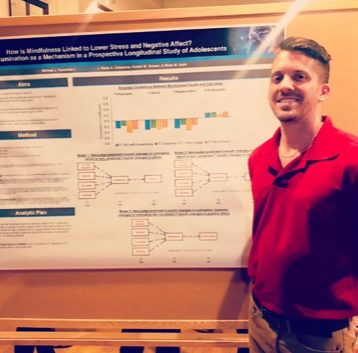
We recently completed a longitudinal study to administer self-report assessments to high school students across a full academic year. We captured their self-reported levels of mindfulness, rumination, and positive and negative affect, among a host of other measures. We were interested in examining rumination as a mediating psychological process linking mindfulness to positive and negative mood.
We found that higher levels of the non-judgment component of mindfulness (and total mindfulness) in September predicted a reduction in rumination in January that, in turn, predicted longitudinal reductions in negative affect at the end of the school year. In other terms, greater mindfulness predicted less rumination, which predicted less negative affect over the course of a full academic year. We didn’t see any changes in positive affect.
The way we kind of understand these findings is that the reduction of rumination may be more tightly linked with negative emotion than positive emotion, which is that simply removing causes of suffering may not be sufficient to simultaneously enhance well-being.
What is the concept of rumination and how does it contrast with the concept of mindfulness?
They’re like two sides of the same coin: they’re similar in some ways but very different. I would say rumination is a negative, cyclical, self-reflective mode of thinking that proliferates from a place of automaticity. It kind of snowballs and gets of a mind of its own. In some ways, it’s devoid of a receptive, intentional awareness of that process.
On the other hand, mindfulness is more of an intentional awareness of the ongoing mental stream of consciousness, the unfolding thought patterns and body sensations. When this cyclical negative process occurs, you might notice that it’s occurring, which can dampen the snowballing effect. You just watch that unfold and notice that proliferation without giving it fuel.
How is nonjudgmental acceptance associated with reductions in rumination?
So whereas judgment of these cyclical negative thoughts would give it fuel, a nonjudgmental orientation towards rumination reduces resistance and slows down the proliferation of this rumination cycle. You can stop it in its tracks. Instead of saying, “I’m no good,” you can inoculate against that type of thinking. A nonjudgmental stance gives that psychological distance or space; you can watch it unfold and become curious about it.
“A nonjudgmental stance gives that psychological distance or space; you can watch it unfold and become curious about it.”
Why are longitudinal study designs important for your study of mindfulness?
It’s important to have repeated snapshots over time to be able to observe a naturalistic development of some of these psychological processes. Especially in the work that I do with adolescents and young adults, it’s a time period of profound growth and changes in metacognition and self-reflective processes. I think longitudinal designs allow you to map these trajectories across time and sometimes provide insight into critical inflection points that provide unique opportunities to intervene.
What are some of the current projects that you’re working on?
I’m writing up the results of a study I conducted in the summer of 2019 where I attended a weeklong residential mindfulness meditation retreat for adolescents. I was both a researcher and a retreatant. I administered daily diary assessments each day and conducted focus groups on the final day of the retreat with the goal of uncovering the sources of suffering for adolescents and constituents of well-being that arose during their meditation practice.
It was motivating to hold a space for their experiences instead of assuming their experiences nicely fit into an adult framework. Teens care about very different things when they are mediating and ask questions like, “who am I, how can I feel like I have a sense of belonging with my peers?” Adult approaches to mindfulness tend to put an emphasis on stress reduction. I would argue that these developmental insights add value to the conversation. It leaves us wondering how we can incorporate those youth voices, values, and experiences into our interventions to meet them “where they are” so that they are designed for youth, by youth.
Do you think there are good interventions designed for adolescents or do you think that’s a gap that could be addressed?
There are good interventions designed for teens, but I think generally there is an adult-oriented framework of stress reduction without considering the struggles they face in their practice as well as the constituents of well-being that emerge and develop. Are they learning about who they are more so than reducing stress? Are they able to kind of observe their thought patterns and motivations and align their values and their behaviors? I think there are good programs out there but I think we can still improve. I think we can honor the voices of youth by incorporating them into our programs to increase program motivation and uptake.
How are you using mobile mindfulness training programs in your research?
Currently, we are piloting and testing a tailored mobile mindfulness training program to support students’ engagement and learning. I emphasize the word tailored because this is where I think there’s a huge gap in the programs currently administered to adolescence and young adults. We built a tailored mobile mindfulness program derived from focus groups with the explicit goal of boosting engagement and learning.
I think there’s a lot of promise with mobile mindfulness interventions because adolescents and young adults are engaged with their cellular devices more than ever. I think it goes back to meeting youth “where they are” and mobile mindfulness training programs can potentially benefit youth in ways that might not be possible through traditional mindfulness training formats.
“It leaves us wondering how we can incorporate those youth voices, values, and experiences into our interventions to meet them “where they are” so that they are designed for youth, by youth.”
What is your dream study?
Honestly, I miss and appreciate retreat contexts especially since they are structured and standardized almost like a laboratory “out in the wild,” which is hard to achieve. I would say my dream study would be a long term retreat with a racially diverse sample of teens or young adults. It would either be a 15 or 30-day retreat with a group of meditation-naïve youth. I would implement a mixed-methods approach to better understand how meditative insights might promote flourishing outcomes, such as authenticity and meaning in life. I would include focus groups both pre- and post-retreat, daily diary assessments each day of the retreat, and follow-up interviews and ecological momentary assessments to map participant’s trajectories and learn whether continued practice and dosage impact participants’ authenticity and meaning in life. I’m still working out the details of my dream study but the insights gleaned from contemplative practice and the ways in which it informs who we are, who we want to be, and how we can live a life of great purpose (especially during key developmental periods) deserves greater attention!
Where do you see the field of contemplative sciences heading and how will you take it there?
I think it’s starting to move in the direction of becoming more contextualized and tailored. Mindfulness is less of a one size fits all panacea, which is becoming clearer in the literature. I think we also need to seek out opportunities to accurately describe and contextualize how it can be applied in everyday life for a diversity of people with a diversity of challenges. That level of ideographic precision is increasingly important.
At the Mind & Life Summer Research Institute, the first year I attended focused on diversity and inclusion and it really opened my eyes and mind to where we have been and where we need to go. And so I think a stronger emphasis on interdisciplinary approaches is a vital path forward that we need in order to move toward.
As far as youth and adolescent development are concerned, we should consider implementing ways to align mindfulness programs with their motives and values. Importantly, we’ll contextualize and tailor these mindfulness interventions to create more developmentally appropriate programs and ultimately foster positive youth development, setting them up on trajectories to be adults who are calm in body, clear in mind, and kind in approach. What will a world with more of that look like?
“I think we also need to seek out opportunities to accurately describe and contextualize how it can be applied in everyday life for a diversity of people with a diversity of challenges.”
Michael J. Tumminia is a 4th Year PhD candidate in Applied Developmental Psychology at the University of Pittsburgh and works in his advisor Dr. Brian Galla’s Mindfulness and Self-Regulation Lab. In his research, he utilizes both quantitative and qualitative methods to examine how mindfulness meditation training can support positive youth development from adolescence to young adulthood. His first experience with mindfulness meditation was during a community college field trip to a Buddhist temple, and then his dedication to meditation accelerated following a life-altering brain surgery just a few months later. At Stockton University, Michael received his B.A. in psychology and behavioral neuroscience, while strengthening his mindfulness practice and knowledge of contemplative science under the guidance of meditation teacher Dr. Marcello Spinella. Michael then worked as a project coordinator in Dr. David Creswell’s Health and Human Performance Lab at Carnegie Mellon University. At CMU he supported one investigation that examined the relationships between mechanisms of mindfulness training and stress resilience processes, and co-led another that utilized ecological momentary assessments to examine the psychological, social, and institutional factors that affect students’ overall health and academic success. He is grateful for his family, friends, colleagues, and mentors for their positive influence and he loves running, golf, pick-up basketball, standup comedy, cycling, kayaking, and attending live music and sports.