Category: Interviews with the Experts

  • Interview with Dr. Juan Rios

    Interview with Dr. Juan Rios

    Interview with
    Dr. Juan Rios

    Dr. Juan Rios

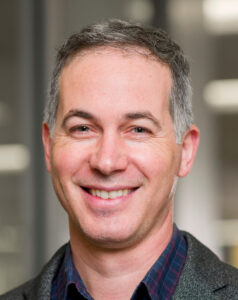
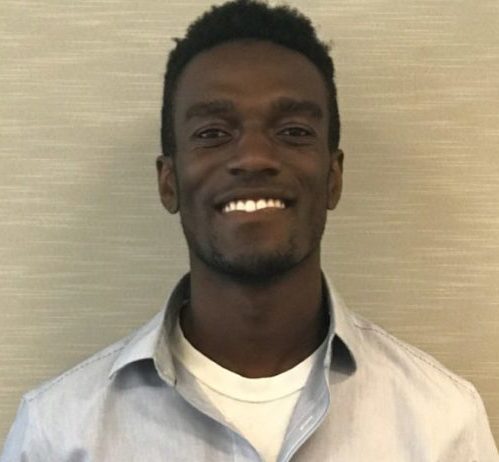
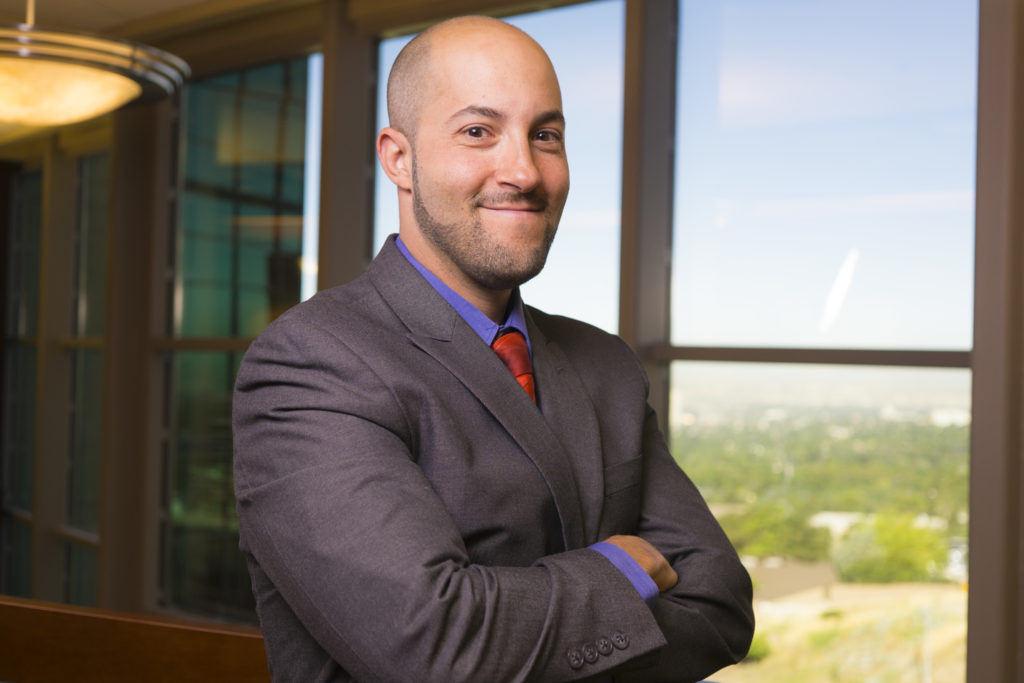
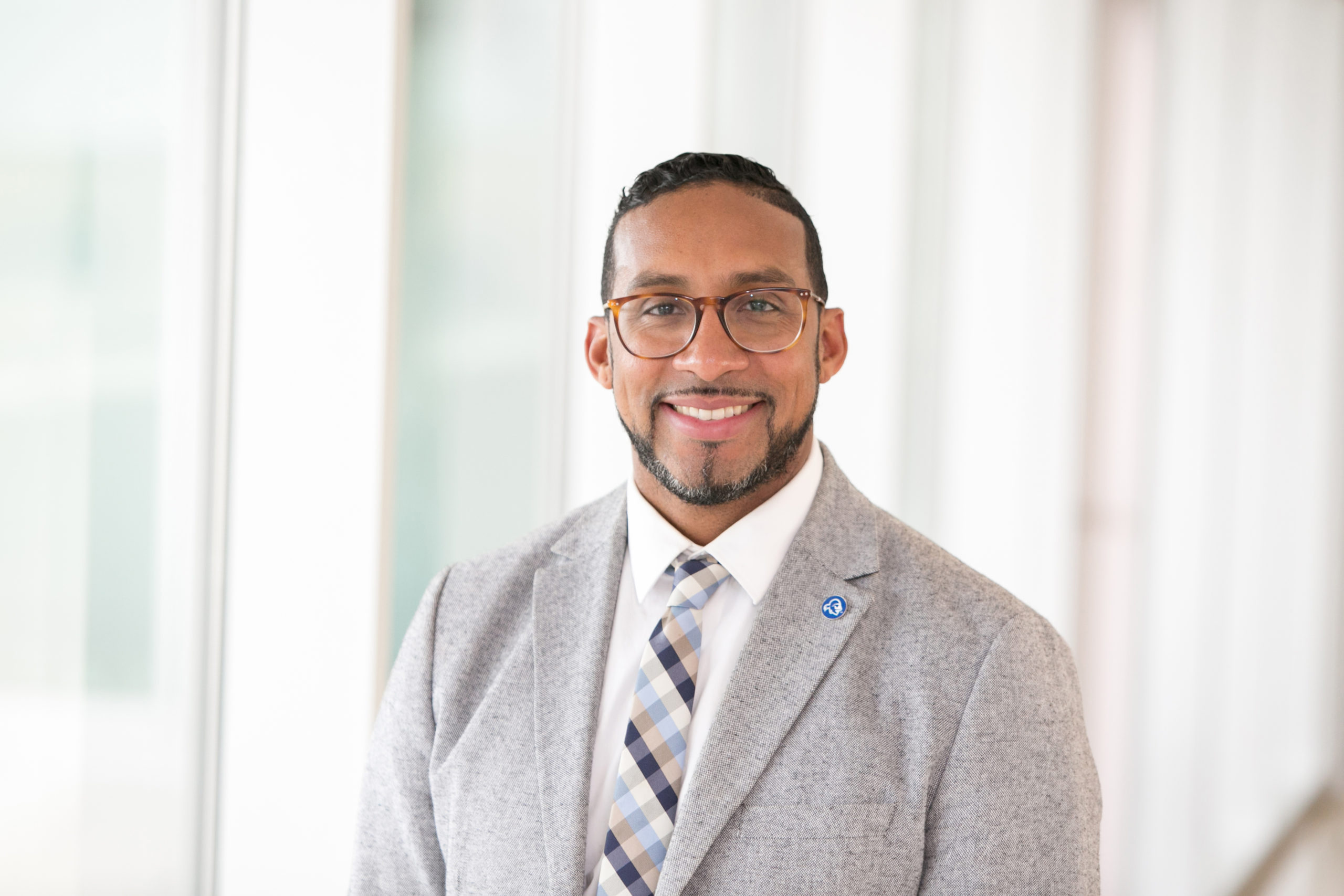
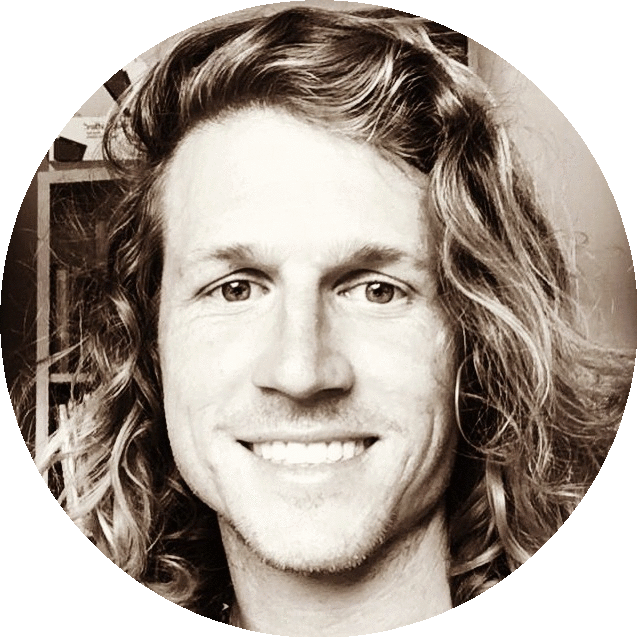
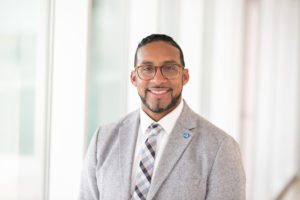
    Dr. Juan Rios Jr. (he/him) is a Psychotherapist, Mindfulness research-practitioner, futurist and activist. Juan is a Licensed Clinical Social Worker and the Director of the Master of Social Work Program at Seton Hall University . He has a passion for integrating contemplative practices into academia and inner-city communities. He has spent many years researching the psychological effects of mindfulness-based interventions with migrant children in China. Most recently, he has joined the City of Newark as a Senior Medical Social Worker to implement innovative trauma treatment approaches, as well as research comprehensive community collaborative best practices to empower marginalized communities to heal from inter/intra personal trauma, systemic oppressive trauma, economic trauma, intergenerational trauma and collective trauma. He has a deep love for cultivating healing spaces, his family, wife, daughter and newborn son, deconstructing oppressive spaces, mentoring, all things Sci-fi, exploring the world, and sadly being the last openly proud Knicks fan.
    Parts of the interview have been edited for clarity and length. 

    What are some of the initiatives that you are working on at Seton Hall? 

    As the Director of the Masters of Social Work program at Seton Hall University my goal is to bring more of the contemplative work. A bit of my history and research goes back to working in China implementing mindfulness-based practices in migrant schools. Due to this work and research, I saw the wider potential impact of mindfulness for the mind and body for those who have lived through trauma as a result of migration. 

    Most recently, I’ve been partnering with the City of Newark as a Senior Medical Social Worker consultant. Within this role, I have been collaborating with the city in designing and executing various therapeutic programs and models of interventions to address violent crimes in the city. Newark has a beautiful and rich history but also one that is historically entangled in socio- economic disparity and collective trauma. It’s been a city that has been over policed and under resourced. It’s the largest city in New Jersey and is well-known for its rich African American culture, community, and social activism. I say that because it informs the work that I’m doing with mindfulness, healing trauma, social justice, and caring justice. 

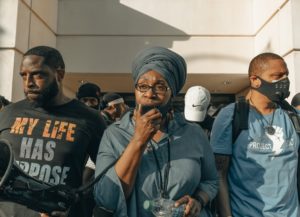
    The work that I do comes from the Violence on Crime Act federal grant out of the Office of Health and Wellness. This work has extended to various projects throughout the City. Recently, as a response to the global rebellion against police racial injustice, Mayor Ras Baraka issued a decree divesting the 1st Police Precinct, which was the epicenter of the 1967 Newark Rebellion. In that rebellion, 23 people lost their lives in response to the police unlawfully targeting and brutalizing an unarmed Black taxi driver who was beaten without cause. This indignation sparked an awakening. People wanted justice! 

    Ras Baraka’s decree initiated both the fiscal and physical resources from the 1st Police Precinct  to be divested to create a space of healing for the community. This center is going to be called the Office of Violence Prevention and Trauma Recovery and it’s going to become a branch of city government. What’s special about this is that this is a direct response to the George Floyd murder and the racial injustice awakening that’s been happening in our country for the past six months. Now we have a city official taking an innovative and proactive stance saying we can invest this money into the healing portion of our community and put it into a grassroots organization. 

    Our team of clinicians, administrators and outreach workers are designing what this space will look like. This office is repurposing the 1st Precinct to host various initiatives. The first floor is going to be a dedicated museum space for social justice, celebrating the history of activism in Newark and commemoration of the 1967 Newark Uprising. The second floor is going to be a dedicated space for community based organizations that are leading city wide grassroots efforts, such as West Ward Victims Outreach, violence interrupters and Newark street team, and the Brick City peace coalitions. These groups that have been historically underfunded to serve our community are now going to have a piece of that $12 million divestment. This will endow them with the resources to effectively provide preventative and community-first respondent programs to the most marginalized in the City. 

    The third floor is a training space for community members, credible messengers, and public safety. The basement is dedicated entirely for holistic work- this is where the mindfulness piece comes into action. This space is for mindfulness-based interventions, whether movement work, indigenous work, meditation, and practices that connect our hearts, minds, and souls. Nothing happens in that space except for the healing arts. In the parking lot, we’re dedicating space to the community garden to address food insecurities in the community and engage the community in this holistic work that connects folks with nature. What’s most important is the philosophy. This space really embodies mindfulness-based work and is inspired by Rhonda Magee and her work on racial justice. This work modernizes mindfulness and puts it in a language everyday folks can understand and integrate as a part of their practice that makes sense for them. 

    How do you see mindfulness as a tool for advancing equity and social justice?

    In this space, we are serving marginalized communities that are racialized as primarily Black and Brown. These individuals are typically below the poverty line and have had some sort of trauma experience, whether it’s intrapersonal, interpersonal, or intergenerational- that’s our focus. As we know through mindfulness-based intervention research, some of the benefits are for helping folks who are living in dysregulated states. These marginalized communities are living in dysregulation as a result of unaddressed and intergenerational trauma, whether it be due to economic trauma, food insecurity, racialized trauma, or prolonged trauma due to abuse. These communities live in trauma states that, for one thing, make everyone else appear as a threat.

    Specifically, what mindfulness can bring into the community is presence: recognizing one’s own space and being fully present in every moment with one another. Moving away from perceiving everything and everyone as a threat. Presence allows us to regulate these hyperarousal states when in these healing environments. This slowly builds trust and creates space for collective healing. It’s using the tenets of mindfulness-based practices, whether it’s creating presence, inviting a nonjudgmental stance, or just embracing the ‘us’ as we are. 

    The ‘we’- the healing that occurs in the collective work is transformation. When there is a brother or a sister in the community hurting, we are hurting. Whether you call it liberation, theology, transformative justice, mindfulness- we cannot separate those components of practice, all of those things are integrated. Integration brings peace, and peace within is key to embracing the other. As Daniel Segal mentions, this is the ‘Mwe’ in our collective consciousness. As I heal, I now make room to embrace my brother, my sister, my community. That is the beauty of mindfulness. 

    science of mindfulness interview with Juan Rios
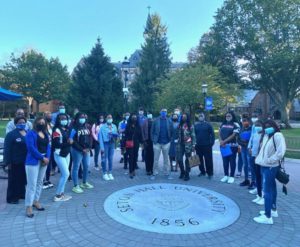
    Seton Hall via Dr. Juan Rios

    “That’s why we are here, it’s academia in action. It’s about using research and science put into action for social good.”

    What is the intended impact of this model?

    This is a model that we have not yet seen; there are a bunch of independent lines of research that exist, such as what happens when resources are dedicated to grassroots organizations, trauma recovery, training police officers on implicit racial bias, or the effects of introducing mindfulness into communities. This proposed center ties all of that together: economic justice, legal justice, social justice, trauma recovery, and contemplative communal spaces. This puts tax money not just into violence prevention but also into healing. We have to work toward healing the community by increasing our emotional intelligence and groundedness as well as meeting their immediate needs. Some people have never had the privilege or exposure to these grounding techniques. Even recognizing our breath, something that appears so basic, some individuals don’t know that they’re becoming agitated and have dysregulated breathing. Total body disconnectedness. We hope to instill skills that have real impact in people’s daily experience. 

    ‘Defunding police’ is a big topic but there aren’t many practical suggestions, heavily researched practice models, nor a clear definition of what that means. We have to give the Mayor and the City of Newark credit for this reallocation of resources for a new center for violence prevention and trauma recovery. The city government has not only taken that leap of faith, but action and the decision that if we want to change, we have to do something different. We can’t continue 50 years of trying to ‘reform the police’; let’s engage in a different model that encompasses the police, the community, government and mindful orientation. This increases our emotional intelligence through deep insight, compassion, and holistic healing as we create healthier communities. The way I envision it working, we have to work with individuals to effect change outwards, and this in turn reflects back inwards. The City of Newark can serve as a model that works. The fact that the Mayor and the government are investing their fiscal and physical resources toward this work shows true commitment to progress.

    Do you feel that these mindfulness skills are for members of the community or for other groups, like police officers? 

    I want to be clear that I believe in working with both members of the community and the police. Some people don’t take that stance. My stance is that we need to put more money into people who are on the streets. Credible messengers, as we call them, are individuals who are community stakeholders and have respect in the communities. These need to be our first responders for non-violent public safety responses, rather than calling the police when someone is in distress either due to homelessness or a mental health crisis. Re-structuring and re-conceptualizing what we in our community see as public safety. Credible messengers can be anyone who has buy-in and can hopefully unite communities with police in this work. This is just one example of many. 

    We’re partnering with community members, government, grass roots organizations and violence disruptors with police officers and universities to teach social justice and contemplative practices. Imagine within these transformative spaces, we have cohorts of police, ex-gang members, community leaders, and government officials. The goal is to create healing spaces that address the multiple dimensions of oppression and collective trauma. Community healing takes a comprehensive intervention, not just moving money, creating programs, and investing in training. Together they can begin truly seeing one another as human beings, learning new skills to build compassion, and applying these new approaches. This one small component can save lives and help reduce the automatic responses from the hip that causes dehumanization and results in excessive force.

    If I’m engaged in these cohorts, I see you as a community partner, a brother locked in arms. That is the essence of using contemplative practices in caring justice. It’s ‘this and,’ not ‘this or.’ It’s engaging the community and putting the resources in the hands of grassroot organizations and cultivating a new culture in public safety and adopting these models. This entails being grounded in the present, reducing implicit biases, becoming more aware, and meeting each other as we are with heart-centeredness. Imagine the communities that we can build.

    How do you see virtual reality (VR) as an asset in these efforts to this center and your larger goals?

    One of my areas of interest is VR to teach social justice. This came about as work as a futurist. How do we envision and design the world we want to live in? Emergent technology is a way in which folks can deepen the immersive experience using mindfulness and VR technologies. We want to take it a step further using mindfulness to teach social justice by building empathy. This practice is inspired by the work of Courtney Cogburn of Columbia University and well as the work being done at the Virtual Reality Human Interactions lab. Stanford is conducting research on empathy-building using VR technology. I learned about that work last summer. I asked if anyone is using this in practice, like clinicians. I took it upon myself to pursue this work since what’s missing is a model that can help people connect with these immersive experiences in practice. 

    One of my colleagues, Anthony Nicotera, came up with a model of learning using mindfulness called the Circle of Insight. It takes you through the cycle of being fully aware: noticing, reflecting, then acting. In my work, I took his model slightly further by adding ‘feeling’ and ‘de-roling’. These two areas in the circle of insight, while engaging in virtual reality, reinforces the importance of being connected to the body by noticing physical sensations, then when completing the virtual experience, to de-role from the avatar. 

    We are planning to add this work at the Center of Office of Violence Prevention and Trauma recovery. The goal for the first floor at the proposed center will be a VR room where people can immerse themselves in a program that takes people through the immersive experience of social activism in the City of Newark. What was it like to be in the 1967 uprising and to then see the effects of gentrification? Cultivating questions like: What type of future are we committed to designing? How do we reflect on the past mistakes in a visceral way as well as taking personal conviction to being a part of the change to ensure healthier communities.  It’s taking them through a journey in the past and a journey into the future using immersive technology. 

    Before using VR, we teach them the VR-Circle of Insight and set an intention. People can find it entertaining or even triggering. That’s why mindfulness is so important. We have to set the intention. What are you doing this for? What is happening within me? What are the physiological and emotional reactions? We need to put it in a perspective toward action.

    science of mindfulness interview with Juan Rios
    Clay Banks via Unsplash

    “If we can use common language regarding this collective dysregulated state then we are practicing mindfulness. It doesn’t matter if you’re practicing business or law, everyone can have a visceral awakening regarding self and their position in the world. This sense of awakening has allowed mindfulness-based practices to be an approach that is universal and available in any discipline.”

    Are you doing any research around this to capture any changes and linking this back to larger statistics or indices of community wellness?

    Absolutely. We’re pursuing a grant to research the effects of trauma informed spaces as well as developing a curriculum specifically to develop transformative spaces. We plan to explore these models to capture the outcomes of the interventions such as Empathy Quotient (EQ) scales and community quality of life. We’ll be able to measure these outcomes for those who participate in the center, and also we’ll compare this to data on police prosecution and the reduction of violent crimes and examining if that changes over time. 

    As an educator, how do you see these partnerships as being mutually enhancing to the city and Seton Hall University? 

    I’m fortunate to be with Seton Hall. The university has a long history of servant leadership and philanthropy, as well as a complex history due to its geographic positioning. We’re in a cultural and economic divide due to our location. It’s located between South Orange, which is primarily suburban and economically affluent, and Newark, which is urban and socioeconomically impoverished. It’s very different. 

    What I love about the university is that they focus on public service. One of the models that we adopted is ‘Take heart. Take action.’ In a heart-centered way, we engage our community to form these valuable collaborations. Right now, we have folks at the law school, public policy, Africana studies, museum studies, public policy social work, environmental studies, and the social justice certificate program. When communities, higher education, and the government partner together, we see positive changes happen. You have to have commitment from the universities and the faculty. Unfortunately, that service component is often minimized by faculty and programs, but not at Seton Hall. That’s why we are here, it’s academia in action. It’s about using research and science put into action for social good

    Your work appears naturally interdisciplinary as a clinical social worker. Are we also seeing an interdisciplinary conceptualization of mindfulness? Do you think that for those disciplines that have yet to accommodate mindfulness into the core of their work, do you think it might become an ideal to be pursued?

    Over the last 7 months, our world has been in a state of social isolation. This global phenomenon of being forced into this unnatural setting, sitting with ourselves, tests what it is to be social or to live in fear. Whether you practice mindfulness or not, you are awakened to the reality that this is challenging. You might begin to question how to put this feeling in context. If we can use common language regarding this collective dysregulated state then we are practicing mindfulness. It doesn’t matter if you’re practicing business or law, everyone can have a visceral awakening regarding self and their position in the world. This sense of awakening has allowed mindfulness-based practices to be an approach that is universal and available in any discipline

    Why this is important is that normally we approach a person in business and we’re asking them how to create social economic mobility in marginalized communities. There is a point of mindfulness as we must become curious about what our relationship is to money, self, and self-efficacy. This is all tied into mindfulness: how is my state of awareness, how do I regulate myself when I sense an impulse, how can we integrate that with the effects of Covid-19 and the racial injustice awareness that is happening globally? Economic justice is about liberation and liberation is rooted in first letting go of toxic states that we were conditioned to develop. Mindfulness in action helps us move past our ‘stuckness’ and be here now, letting go of what does not serve us. That applies to internal and external systems. 

    We’re adding two different layers of context that mindfulness-based practices can beautifully integrate. So much is needed with regard to how we can heal. To use Bronfenbrenner’s work, when we want to heal society, we have to work from the individual level outwards, then again inwards. Critically, because of what’s happening throughout this year, introducing mindfulness-based work is a form of radical acceptance. People are hungry trying to find approaches that integrate emotional intelligence, individual and collective well-being, transformative work, and even truth and reconciliation. James Baldwin said it best, “you can’t change everything you face, but nothing can be changed if you don’t face it.” That’s quintessential mindfulness. If we want to change what’s happening in our society, we might not be able to change it all, but we can’t change it unless we have an honest truth and perspective into what we’re dealing with.

    “That’s why mindfulness is so important. We have to set the intention. What are you doing this for? What is happening within me? What are the physiological and emotional reactions? We need to put it in a perspective toward action.”

    Enjoy? Share with your friends

    Picture of Michael Juberg

    Michael Juberg

    Michael is the Founder & Chief Editor of the Science of Mindfulness.

    Related Posts

    science of mindfulness- linda carlson

    Interview with Dr. Linda Carlson

    Dr. Linda Carlson holds the Enbridge Research Chair in Psychosocial Oncology, is Full Professor in Psychosocial Oncology in the Department of Oncology, Cumming School of Medicine at the University of Calgary, and Adjunct Professor in the Department of Psychology.

    Read More »
    Trait Mindfulness and Relationship Satisfaction: The Role of Forgiveness Among Couples

    Trait Mindfulness and Relationship Satisfaction: The Role of Forgiveness Among Couples (Roberts et al., 2020)

    The researchers were interested in understanding if forgiveness acts as a mechanism by which mindfulness relates to relationship satisfaction. They speculated that being mindful would allow individuals to be aware of their own and their partners’ emotions in a non-judgmental and non-reactive way. The increased awareness would make people more forgiving of partner transgressions, thereby enhancing relationship satisfaction.
    Read More »

    Interview with Dr. Erin Bantum

    My work, over the past fifteen years has had a core theme of social support running through it, and I’d like to create an online mindfulness meditation intervention that includes a group component, such that people who have experienced cancer can meet and practice mindfulness meditation together.
    Read More »

    Interview with Dr. Amy Brown

    I didn’t want them to needlessly struggle and suffer as much as I did, and mindfulness is one of those tools that definitely helps us all during this time. I’m helping them in the way that I wish I would have been helped.
    Read More »

    Interview with Dr. Thao Le

    Ultimately, my intention is for it to be a service space to help students, faculty, staff, or anyone from the community to connect with themselves. Don’t we all need to pause?
    Read More »

    Interview with Blake Colaianne

    Blake Colaianne is a former Earth science teacher turned contemplative researcher. He is currently a Ph.D. Candidate in Human Development and Family Studies at Penn State University. His research focuses on supporting adolescent development using both a culture of belonging in high schools and prevention and promotion programs that teach mindfulness and compassion skills.
    Read More »

    Interview with Dr. Juan Rios

    “Whether you call it liberation, theology, transformative justice, mindfulness- we cannot separate those components of practice, all of those things are integrated. Integration brings peace, and peace within is key to embracing the other.”
    Read More »
    THE EMOTION REGULATORY MECHANISMS OF BRIEF OPEN MONITORING MEDITATION

    An electrophysiological investigation on the emotion regulatory mechanisms of brief open monitoring meditation in novice non-meditators (Lin et al., 2020)

    Despite growing knowledge that mindfulness meditation can enhance emotional wellbeing, very little is known about how it all works. How exactly does the act of meditation help us deal with the emotional rollercoaster of everyday life? Is mindfulness training actually “transferrable” to real world situations? What’s going on in the brain? Can we even measure it?
    Read More »

    Interview with Grant Jones

    Grant Jones (he/him) is an artist, contemplative, researcher, and activist. Currently, he is a 3rd Year Clinical Psychology PhD candidate at Harvard University and Co-Founder of The Black Lotus Collective.
    Read More »

    Interview with Dr. Helen Weng

    Dr. Helen Weng is a clinical psychologist and neuroscientist who originally joined the Osher Center for Integrative Medicine in 2014 as a postdoctoral scholar in the Training in Research in Integrative Medicine (TRIM) fellowship. She is developing new ways to quantify meditation skills using functional magnetic resonance imaging (fMRI) and machine learning to identify mental states of body awareness during meditation.

    Read More »

    Interview with Dr. Eric Garland

    Dr. Eric Garland, PhD, LCSW is Presidential Scholar, Associate Dean for Research, and Professor in the University of Utah College of Social Work, Director of the Center on Mindfulness and Integrative Health Intervention Development (C-MIIND), and Associate Director of Integrative Medicine in Supportive Oncology and Survivorship at the Huntsman Cancer Institute.

    Read More »
  • Interview with Grant Jones

    Interview with Grant Jones

    Interview with
    Grant Jones

    Grant Jones

    Grant Jones (he/him) is an artist, contemplative, researcher, and activist. Currently, he is a 3rd Year Clinical Psychology PhD candidate at Harvard University. He is also a co-founder of The Black Lotus Collective, a meditation community that centers the healing and liberation of individuals with historically marginalized identities (i.e. Black, Brown, Queer Folks, Folks with Disabilities). His research and life work centers around developing and implementing contemplative and liberatory tools for underserved populations. He is also a musician and is rooted in Black soul, R&B, and alternative music traditions. He loves his family, his friends, nature, contemplative practice, travel, a good work out, and good food.

    Parts of the interview have been edited for clarity and length. 

    As you are pursuing a PhD in Clinical Psychology at Harvard, what has brought you to this point in your life?  

    I have always been deeply introspective from the time I was young. I remember writing in my journal that I was going to be a psychologist. I really love combining my academic passions with my proclivity toward introspection and first-person inquiry. Psychology research is where my inner investigations express themselves. It’s a combination of being a school nerd and being curious about what’s happening in my mind that led me to pursue a PhD.

    How did you enter the field of mindfulness? What led you on that path of becoming a contemplative scholar?

    I think a lot of it stems from my own interest in my introspective process. Around the time when I was 18, contemplation really became codified as a practice. I was first drawn to meditation as a form of stress relief as I went to Harvard for undergrad. It was not just the outer stress of being in the most elite academic environment, but also the inner stress of ‘imposter syndrome’ and insecurity. It led me to go inwards and figure out what was happening. That led me toward contemplative practice. Over time, I’ve questioned how I could make a life in which I could center my contemplative practice; clinical psychology research is that answer, for the time being.

    Were you involved with any undergraduate research in contemplative sciences?

    Not at all. I was drawn to contemplative research later. I was figuring out what I wanted to do in undergrad and also research didn’t seem like a place for me. Research generally is not geared toward folks from my background. It wasn’t a place where I saw myself. When I was an undergrad, I was mainly focused on securing a “good” job. But through my introspective processes, it became clearer that I had to search for work that honored some of the truest elements of myself. This process initially drew me to research. From there, I’ve established a part of my self-hood within contemplative science.

    How do you see your background informing your research or path forward in your academic work?

    I see the two as being inextricably intertwined; I do not want to do any research that isn’t helping me grow into a more authentic version of who I am. I don’t want my research to flow from a purely cerebral place; I want it to be informed by the contemplative and embodied practices that I do. I want it to be informed by the culture that I’m a part of and by the life path that I’ve walked. It feels like there should be another word that’s more expansive than ‘research’, as I hope this work I do inside and outside of academia helps to scaffold my broader process of self-actualization. Right now, formal ‘research’ is one tool in my toolkit toward self-expansion.

    science of mindfulness interview with grant jones
    The Black Lotus Collective

    “I don’t want my research to flow from a purely cerebral place; I want it to be informed by the contemplative and embodied practices that I do.”

    As you bring your academic work into a personal reflective equilibrium, what are those initiatives that you are pursuing that embody this?

    I’m a musician. Part of what’s been really exciting for me is thinking about what it means to have black music as a vehicle for contemplative practice and expression. That’s one frontier that I’ve been really excited about exploring. I’m an artist figuring out what it means to have science as a framework to facilitate my artistic process. So again, being myself but using the resources, frameworks, and the tools of science to bolster that self-expression. The forms of musical contemplative practice in the Black community aren’t recognized by Western forms of empirical inquiry at this point. I am in this doctoral program to hopefully expand what we see as ‘science.’

    What is the Black Lotus Collective and what inspired its inception?

    The Black Lotus Collective is a Boston-based healing space that centers the experiences and the healing of folks who have historically marginalized identities- Black, Brown, Queer folks, and Folks with Disabilities. It’s a group that uses contemplative practice and somatic and future-building practices to invite folks into their liberation. The group started after I met Juliana Santoyo at Green Gulch Farm (Zen Center) in San Francisco, California in 2016; we really vibed and thought about starting a spiritual community together for folks with historically marginalized identities (although we met in CA, we were both from Boston). We were also talking about Radical Dharma at the time because Rev angel Kyodo Williams was speaking at Green Gulch. After meeting with Lama Rod Owens back in Boston, we learned that he was intending to build a spiritual community as well. We started building together. Lama Rod introduced us to Darla Martin and Terrin Gathers and Juliana introduced us to their brother, Juan Santoyo. There were many other folks involved with the first years of the collective, but the folks I just named are those still acting as organizers for the group (and thus those I feel comfortable naming). 

    We originally started as a Radical Dharma Sangha of Boston, but we eventually branched off and kind of rebranded. We still have nothing but immense love and respect for Rod, but we realized that we as organizers were developing this emergent process that was informed by, but separate from Radical Dharma. The Black Lotus Collective has been in existence for almost four years now and meets monthly. This group was one of the main catalysts for embarking upon this PhD process I’m currently in now.

    What is Radical Dharma?

    Before I answer, I want to say that I am in no way an official representative of Radical Dharma at all! So my answer reflects my interpretation of the text and the message. With that said, to me Radical Dharma is essentially just stepping into a Dharma that recognizes that suffering is structured differently based on our identities and demographic markers. It’s a recognition that history has distributed suffering unequally, and those with historically marginalized identities have borne the brunt of so much suffering. It’s moving into a Dharma and inviting our Dharma spaces into a reflection around that truth. It’s about getting real that undoing suffering is inextricable from undoing structural oppression, it’s calling the Dharma into that truth. It’s just the Dharma, but it’s the Dharma that’s moving into deeper honesty with the world that we live in and showing how suffering works within it.

    science of mindfulness interview with grant jones
    The Black Lotus Collective

    “Inner wellness is critical not only for dismantling the systems that cause depression, but also for giving the imaginative space to allow something else to take the place of those structures.”

    Increasingly, we’re seeing how contemplative practices are used to undermine social structures that might promote inequality. Are initiatives like Black Lotus Collective an attempt to address social change or to promote wellness? Does the Black Lotus Collective point to a link between those two?

    The two are inextricably linked. We do both, as both inform one another. Both are critical for the other. Inner wellness is critical not only for dismantling the systems that cause depression, but also for giving the imaginative space to allow something else to take the place of those structures. If you’re not well, there’s almost a guarantee that the structures that you put in the place of the ones that you tear down will continue to replicate the same violence. A part of the work that we do is making sure that in doing the healing work internally, we can build new structures that are actually more liberating. 

    Pretty much every structure that’s ever been built has been built in the name of liberation, truth, and justice- yet look at the world we have. So, we’re trying to be rigorous about our approach to healing so we can be rigorous about what we build. And on the flip side, these oppressive structures impede our healing. There’s real structural change that needs to happen. It feels really important to turn toward that because folks can’t heal if they are struggling to feed themselves, take care of themselves, if they’re experiencing incessant threats of harm and violence, and if they don’t have money. 

    We’re witnessing a global pandemic and American civil unrest. Do you think that Black Lotus Collective was designed to address this very type of unrest?

    Yes, it’s designed exactly for that. The work of the Black Lotus Collective has always been about preparing us for pain and suffering; to show up to the particularities of each moment of suffering while recognizing that this suffering has always been with us. Our work is sustaining ourselves so that we can meet these moments of pain when they come to us.

    As Black Lotus Collective blossoms, how do you envision its own growth and the impact of our five year or ten year period?

    We all have different visions. I’m aware that each person’s version of liberation and truth are very different. I’m currently with the question: what do we do with the fact that we actually may all have different visions of what it means to live in a liberated future? What does it mean for us to potentially have different visions for what we want for the collective? Maybe some of us view our role as being more deeply relational, maybe some of us view our role as being more deeply structural. We’re in a process in which we’re actually being forced to reckon with where we overlap but also where we don’t. It all comes back to that very simple practice of just showing up as honestly as I can while keeping myself safe and figuring out what it means to do that with these folks with whom I’ve been in practice. It’s always the practice and it’s always evolving.

    What do you envision for your future? 

    I didn’t feel like this going into grad school, but a part of me may want a tenure-track faculty job. I’m considering what it means to go into academia and bring myself into these spaces as authentically as I can. I’ve been thinking about doing that at a liberal arts college where I could be focused particularly on building community at the same time as I do some research, but not the amount of research that I see professors doing at R01 universities. I’ll likely be taking a different path than that (but we’ll see!). I’m also thinking about what it means to have a significant time period of extended retreat in the midst of my academic work because, again, continuing my embodied practices is a non-negotiable part of what it means for me to exist. So, I’m exploring whether I can blend my embodied contemporary practices with working from within these institutions.

    I also love clinical work. I was drawn to this field because I love holding space, it’s one of the clearest connections I have to the divine, to the infinite, to the Dharma.  I would like to have my own private practice and healing practice center, and having a clinical psychology license would make that process easier.

    Ultimately though, I hope to go where life calls me, without much preconception. No matter what, I will have to forge my own path. That may be outside of institutions. Building on my own makes me feel nervous because in America, there’s like no safety net at all for anybody, especially not for folks like me.

    For now, I’m just going to take as much time as possible with the PhD, do the work that I get called to, do work with folks that I care about, have as good a time as I can, do as much music as possible, and heal. I’ll see what happens when I do those things.

    science of mindfulness interview with grant jones Khalsa
    The Black Lotus Collective
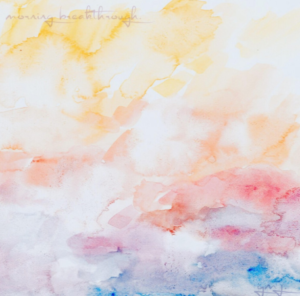
    Cover Art for morning breakthrough.

    Grant Jones’ album morning breakthrough. is available on Spotify. You can listen to it here.

    Enjoy? Share with your friends

    Picture of Michael Juberg

    Michael Juberg

    Michael is pursuing his Ph.D. in Clinical Psychology at the University of Hawai’i, Mānoa.

    Related Posts

    Trait Mindfulness and Relationship Satisfaction: The Role of Forgiveness Among Couples

    Trait Mindfulness and Relationship Satisfaction: The Role of Forgiveness Among Couples (Roberts et al., 2020)

    The researchers were interested in understanding if forgiveness acts as a mechanism by which mindfulness relates to relationship satisfaction. They speculated that being mindful would allow individuals to be aware of their own and their partners’ emotions in a non-judgmental and non-reactive way. The increased awareness would make people more forgiving of partner transgressions, thereby enhancing relationship satisfaction.

    Read More »
    THE EMOTION REGULATORY MECHANISMS OF BRIEF OPEN MONITORING MEDITATION

    An electrophysiological investigation on the emotion regulatory mechanisms of brief open monitoring meditation in novice non-meditators (Lin et al., 2020)

    Despite growing knowledge that mindfulness meditation can enhance emotional wellbeing, very little is known about how it all works. How exactly does the act of meditation help us deal with the emotional rollercoaster of everyday life? Is mindfulness training actually “transferrable” to real world situations? What’s going on in the brain? Can we even measure it?

    Read More »
  • Interview with Dr. Ilana Nankin – Breathe For Change

    Interview with Dr. Ilana Nankin – Breathe For Change

    Interview with
    Dr. Ilana Nankin

    Dr. Ilana Nankin

    Dr. Ilana Nankin—the Founder & CEO of Breathe For Change—is an award-winning entrepreneur, teacher educator, and former San Francisco pre-k teacher committed to using wellness as a vehicle for healing and social change. Ilana received her PhD in Curriculum and Instruction at University of Wisconsin. Her dissertation revealed the critical connection between educator well-being and student learning, and the positive impact that wellness and social-emotional learning can have on teachers and students’ lives. Inspired by her research, Ilana founded Breathe For Change, a movement on a mission to enhance the health and well-being of educators, students, and entire communities. Breathe For Change offers mind-body wellness, social-emotional learning, and yoga teacher trainings for educators and community leaders, and provides wellness and SEL professional development for schools, districts, and organizations. Since 2015, Breathe For Change has certified 4,000+ educators through their 200-hour training, and positively impacted the lives of 500,000+ students. Ilana and Breathe For Change will continue strengthening and caring for educators, students, and communities until individual and collective well-being becomes a reality for all human beings.
    Can you tell us about Breath For Change?

    Breathe for Change is a movement that aims to empower educators to transform themselves, their relationships, and their communities in order to create a more socially just and peaceful world. We offer the world’s only 200-hour wellness and yoga training that is specifically designed for educators.

    Why did you start Breathe for Change?

    As a former Pre-K teacher in San Francisco, I was incredibly stressed. I found yoga and mindfulness and it completely transformed my teaching and my personal life. I started using the practices in my own classroom and saw transformational outcomes both social-emotionally and academically for my students. I came to the University of Wisconsin-Madison to pursue my Ph.D. in Curriculum and Instruction. Through my research and teaching, it became clear that teacher stress and burnout is a universal concern and that our teachers don’t necessarily have the means to take care of themselves as they support their students. I realized I had to do something about this. My vision was to prioritize teacher well-being in the education system by giving them tools to deal with the stresses that they face everyday.

    I completed a yoga training the year before and it was truly transformational as a teacher. I wanted to share this experience with other educators and I had the idea to start the world’s first 200-hour wellness and yoga teacher training. We designed it specifically for educators to give them skills to integrate mindfulness and yoga into their lives, build communities, and affect school-wide transformation.

    Michael Fenchel, who was a successful entrepreneur, was inspired and wanted to help formalize this into a business. We came together in 2016 to pilot ten school-wide wellness programs that were premised on three thematic workshops: transformation of self, relationships, and community. Our graduates taught weekly wellness classes that were a mixture of community-building activities, mindfulness, and yoga. We also created content that teachers could use to take care of themselves, social-emotional strategies for students, and a vision of well-being that leaders could integrate into their larger vision of education. What we witness was a ripple effect within a few months of that initial training; we had such a positive response that people were actively introducing these strategies in their schools.

    science of mindfulness interview with Ilana Nankin
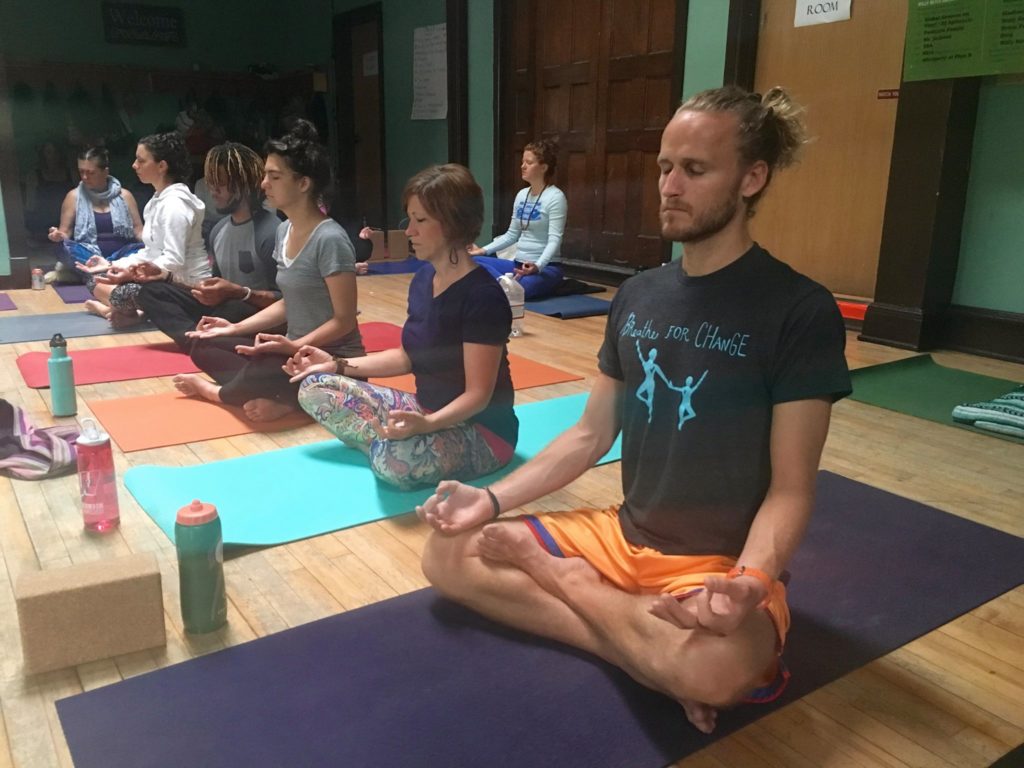
    Via Breathe for Change

    What are the basic tenets of the curriculum?

    When I was a Pre-K teacher, a student raised his hand in our community circle and said, “In a community, first you have to love yourself, because if you don’t love yourself, then you can’t love anybody else.” When we broke it down, this young student’s words were truly the inspiration behind our curriculum. The whole transformation progression is grounded in this idea that in order to take care of others, we have to first take care of ourselves. Accordingly, our curriculum incorporates a wide range of wellness techniques based in yoga and mindfulness that promotes the transformation of self, relationships, and communities. What makes our yoga training unique is the emphasis that we place on developing relationships within our school communities.

    Is the curriculum geared toward any level of educator?

    Our 200-hour training is for any educator involved with Pre-K through 12th grade. We differentiate our social-emotional learning strategies so that teachers within the same grade levels are working with each other when we do peer mentorship groups. This gives teachers the opportunity to connect and share resources with colleagues sharing similar experiences. Breathe For Change is relevant for a diverse range of individuals working within schools, including educators, principals, school social workers, and college professors. We believe that having a diversity of perspectives and experiences strengthens everyone’s experience within the community.

    Is the program designed for schools or individual teachers?

    Initially, we designed it for individual educators. However, we see a trend unfolding; when we first launch in a new city, we primarily recruit educators, they take it back to their schools, and then the districts take note and begin to get excited about this. This potential link is really exciting because if whole districts get on board, then we’re better able to enact systemic change.

    The first training we piloted was in the Madison school district. This introduced Breathe For Change with the district and so that created a formal partnership with the entire Madison Metropolitan School District. That gave more schools and teachers the opportunity to get on board.

    Anything is possible when an entire leadership sees benefit in this vision. We’re going in that direction, but for now we market to educators and principals to forward to their educators. Principals can recognize that if they can have even one educator participate, those educators can implement a wellness program into their schools.

    science of mindfulness interview with ilana nankin
    Via Breathe for Change
    “In a community, first you have to love yourself, because if you don’t love yourself, then you can’t love anybody else.”

    How do you measure the impact it has on children and teachers?

    Last year I worked in partnership with the University of Wisconsin, Madison and received approval to conduct a research study to test how our training impacted the lives of our graduates and their educational communities. What we found was that 100% of these teachers said that Breathe for Change significantly reduced their stress levels and enhanced their well-being. We also found that all of the schools that have wellness programs reported increased collaboration among staff and feel a deeper sense of community. The teachers have also self-reported gains and enhancement in the social-emotional and academic outcomes of their students.

    Through my dissertation, which focused on the training experience of eight teachers, I found a correlation between students’ social-emotional learning and their academic performance. I think that correlation is expected, but not necessarily prioritized in our educational system. If we are taking care of our kids’ social-emotional needs, then their academic performance is going to subsequently improve. Instead of focusing on the literacy and math scores, we should shift our focus to the underlying issues that the children are facing. If we give them the tools and supports to enhance their social-emotional development, then ultimately that will have a direct and lasting impact on their lives.

    One of the participating schools noticed the impact of Breathe For Change on the rate of students’ behavioral incidents. This is a school where every teacher participated in the program. They found that the rate of behavioral incidents decreased by more than half from the year before. Instead of detention, they practiced non-violent communication among other strategies that we taught their teachers.

    The other thing that we found was the results from the surveys we gave to 150 teachers who completed the teacher training. We did a pre-survey, at the end of each segment, as well as a post-survey. What we found was that the Net Promoter Score (NPS), assessing whether the program participant would refer this to colleagues, we received a 100% score. This means that every teacher says that they would recommend this training based on the value that it brought them.

    “What we found was that 100% of these teachers said that Breathe for Change significantly reduced their stress levels and enhanced their well-being.”
    science of mindfulness interview with ilana nankin
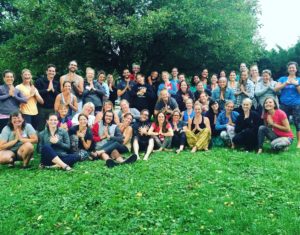
    Teachers in Training via Breathe for Change

    When you mention building community, is that designed for children or teachers?

    I would say both, but it starts with an emphasis on the teachers. In our trainings, we create a space that allows teachers to be vulnerable. They are encouraged to express themselves fully in a trusted community of peers. Most teachers haven’t necessarily experienced that before. Those who graduate our training cultivate a support network that they can readily access anytime after. The community starts at the training, but there is a ripple effect. They first learn how to build communities and later they share these techniques with their colleagues. For instance, some teachers start everyday with breathing exercises with the rest of their staff.

    All of the social-emotional skills we teach not only enhance the individual student’s emotional regulation capacity, but also teach them how to cherish community. We show students how to connect with our fellow peers, appreciate, and become present for one another. We’re discovering that this is possible with any student age four and up. We’re giving students a toolset to infuse these skills in any area of their lives.

    Have you faced any resistance?

    Actually, I have been shocked with how little resistance we’ve had. For some people, mindfulness and yoga carry stereotypes, mainly that it’s religious-based. We recognize that the language that we use is important. Terms like ‘yoga’ aren’t used in our program. We’re cognizant of this even though the scientific research supports the benefits of yoga and mindfulness. My whole intention is to circumvent these potential resistances. We teach teachers how to reframe what we’re doing using very universally accepted vocabulary. For example, we tell our teachers not to use the term ‘yoga’ in their schools, but instead ‘mindful movement’. The action of teaching ‘yoga’ or ‘mindful movement’ is the same, but the implications are very different. Outside of a school setting, educators can choose the term that most appropriate. But within a school, we use these universal terms with sensitivity to the resistance that we could face.

    We also have found some resistance working with large districts where there is more bureaucracy, legalities, and rules. They might have existing initiatives that they have been working on for years. It can be challenging to introduce new programs on a systemic level. That’s why we focus on teachers first. No policy is going to prevent a teacher from introducing community building into their staff meeting or classroom. It’s happening even with some of these systemic barriers in place. I think that in time as we train more teachers and develop more leaders in our schools, policies will hopefully start to change. We might see superintendents instead of teachers introducing Breathe For Change to their entire district. In time it will grow when everybody sees its intrinsic value.

    Where would you like this to be in ten years?

    In ten years I would like to see Breathe For Change in every single school in our country. I believe it’s paramount that our education system recognizes the value of teacher well-being. We hope to see complete shifts in our education system with a deeper focus on social-emotional learning and teaching. I see Breathe For Change as a movement that is creating educators with agency to change the world. I want see the world as a happier and healthier place and by giving educators the ability to transform communities, starting with themselves. That’s the key to world transformation. It would be my dream to have everyone know what Breathe For Change is and see the real effects it has on individuals, if not systems. I want to see injustice and disparities in schools conquered. I think that the missing link is social-emotional development and wellness and I want to see that prioritized.

    Keep up with Dr. Nankin’s latest groundbreaking work on her website.

    Enjoy? Share with your friends

    Picture of Michael Juberg

    Michael Juberg

    Michael is the Founder & Chief Editor of the Science of Mindfulness.

    Related Posts

    science of mindfulness- linda carlson

    Interview with Dr. Linda Carlson

    Dr. Linda Carlson holds the Enbridge Research Chair in Psychosocial Oncology, is Full Professor in Psychosocial Oncology in the Department of Oncology, Cumming School of Medicine at the University of Calgary, and Adjunct Professor in the Department of Psychology.

    Read More »
    Trait Mindfulness and Relationship Satisfaction: The Role of Forgiveness Among Couples

    Trait Mindfulness and Relationship Satisfaction: The Role of Forgiveness Among Couples (Roberts et al., 2020)

    The researchers were interested in understanding if forgiveness acts as a mechanism by which mindfulness relates to relationship satisfaction. They speculated that being mindful would allow individuals to be aware of their own and their partners’ emotions in a non-judgmental and non-reactive way. The increased awareness would make people more forgiving of partner transgressions, thereby enhancing relationship satisfaction.

    Read More »

    Interview with Dr. Erin Bantum

    My work, over the past fifteen years has had a core theme of social support running through it, and I’d like to create an online mindfulness meditation intervention that includes a group component, such that people who have experienced cancer can meet and practice mindfulness meditation together.

    Read More »

    Interview with Dr. Amy Brown

    I didn’t want them to needlessly struggle and suffer as much as I did, and mindfulness is one of those tools that definitely helps us all during this time. I’m helping them in the way that I wish I would have been helped.

    Read More »

    Interview with Dr. Thao Le

    Ultimately, my intention is for it to be a service space to help students, faculty, staff, or anyone from the community to connect with themselves. Don’t we all need to pause?

    Read More »

    Interview with Blake Colaianne

    Blake Colaianne is a former Earth science teacher turned contemplative researcher. He is currently a Ph.D. Candidate in Human Development and Family Studies at Penn State University. His research focuses on supporting adolescent development using both a culture of belonging in high schools and prevention and promotion programs that teach mindfulness and compassion skills.

    Read More »

    Interview with Dr. Juan Rios

    “Whether you call it liberation, theology, transformative justice, mindfulness- we cannot separate those components of practice, all of those things are integrated. Integration brings peace, and peace within is key to embracing the other.”

    Read More »
    THE EMOTION REGULATORY MECHANISMS OF BRIEF OPEN MONITORING MEDITATION

    An electrophysiological investigation on the emotion regulatory mechanisms of brief open monitoring meditation in novice non-meditators (Lin et al., 2020)

    Despite growing knowledge that mindfulness meditation can enhance emotional wellbeing, very little is known about how it all works. How exactly does the act of meditation help us deal with the emotional rollercoaster of everyday life? Is mindfulness training actually “transferrable” to real world situations? What’s going on in the brain? Can we even measure it?

    Read More »

    Interview with Grant Jones

    Grant Jones (he/him) is an artist, contemplative, researcher, and activist. Currently, he is a 3rd Year Clinical Psychology PhD candidate at Harvard University and Co-Founder of The Black Lotus Collective.

    Read More »

    Interview with Dr. Helen Weng

    Dr. Helen Weng is a clinical psychologist and neuroscientist who originally joined the Osher Center for Integrative Medicine in 2014 as a postdoctoral scholar in the Training in Research in Integrative Medicine (TRIM) fellowship. She is developing new ways to quantify meditation skills using functional magnetic resonance imaging (fMRI) and machine learning to identify mental states of body awareness during meditation.

    Read More »

    Interview with Dr. Eric Garland

    Dr. Eric Garland, PhD, LCSW is Presidential Scholar, Associate Dean for Research, and Professor in the University of Utah College of Social Work, Director of the Center on Mindfulness and Integrative Health Intervention Development (C-MIIND), and Associate Director of Integrative Medicine in Supportive Oncology and Survivorship at the Huntsman Cancer Institute.
    Read More »
  • Interview with Dr. Helen Weng

    Interview with Dr. Helen Weng

    Interview with
    Dr. Helen Weng

    Dr. Helen Weng

    Dr. Helen Weng is a clinical psychologist and neuroscientist who originally joined the Osher Center for Integrative Medicine in 2014 as a postdoctoral scholar in the Training in Research in Integrative Medicine (TRIM) fellowship. In her work at the Osher Center and as an affiliate faculty member of the Neuroscape Center, she is developing new ways to quantify meditation skills using functional magnetic resonance imaging (fMRI) and machine learning to identify mental states of body awareness during meditation. She values integrating multicultural and social justice frameworks into her work and communication.

    How did you first become interested in compassion and mindfulness?

    Starting in high school, I started reading books about psychology, Buddhist philosophy, and emotional intelligence. Luckily my dad recognized that interest and he gave me books. It was in high school when I read the Tibetan Book of Living and Dying by Sogyal Rinpoche, The Art of Happiness by the Dalai Lama, and Emotional Intelligence by Daniel Goleman. My interest came from the struggles I had growing up as one of the only racial minorities in my town, and from the cross-cultural clashes I had with my parents who are Taiwanese immigrants. I wanted to find a form of healing and relief from pain which I’m learning many people share.

    I started to realize there were internal characteristics that can ground us in our values and what we care about. For example, compassion could become a value in responding to others’ suffering with kindness. In one of the books, I learned about compassion and it stated that compassion could be developed through meditation. The book also included instructions for compassion meditation that you could practice. I was 15 years old in my bedroom practicing compassion meditation and realized how hard it really was. It grounded me and helped give me a value that could guide me.

    It became a deep personal value of mine. I reflected on compassion and tried to express it in my life. In college I ended up majoring in neuroscience and I knew I wanted to be a clinical psychologist. As one expression of compassion, I wanted to see how I could help people with mental health issues. I learned of Richie Davidson’s work where he studied the brain, emotion regulation, and was beginning to study compassion meditation. Our research interests were so well-aligned that it was clear that I should be his graduate student. I had to reach out to him.

    I actually wrote about these experiences for my autobiographical essay when I was applying for clinical psychology internship. I recently shared this at the 2016 Mind and Life Summer Research Institute to give people an understanding of how my contemplative practice stems from my experience as a second-generation immigrant and racial minority in the United States, and how these experiences are feeding into my new work.

     You studied mindfulness at the University of Wisconsin-Madison, arguably the epicenter of mindfulness research in the world. Could you tell us a bit about your experience working within that research network?

    The Center for Healthy Minds  is very large now. There was never a dull moment. Our central aim was to apply the most rigorous science to meditation and well-being. We tried to use as many objective measures as we could, like brain imaging. I developed economic decision-making paradigms to measure the outcomes of compassion meditation. We wanted to develop measures of compassion where people were unaware of what we were measuring, and that measured observable quantifiable behavior. That was a very tricky scientific endeavor that we eventually figured out.

    There is also a very public component of the Center where we really care about disseminating the information to the general public. We believe that everyone has the right to know how to expand their own potential for well-being. We have studied mindful attention, emotion regulation, empathy, and compassion. The question becomes how do we bring this information to the public once the science has been established. To this end, we provide newsletters, classes, and seminars to educate people according to the latest findings.

    The Center has grown and they expanded their outreach to schools where they have conducted mindfulness and kindness-based trainings in schools. We released more resources that people can access. For instance, the compassion-based training that I used in my study was a 30-minute daily mediation that is freely available on our site. We showed that if you practice every day for 2 weeks for 30 minutes, it’s enough to increase your generosity to a stranger through the economic paradigms that we’ve created. It was also enough to change how their brains responded to suffering, showing increases in regions associated with empathy and emotion regulation. This is a major part of our mission: to learn these things and then bring them to the greater community.

     What is compassion and how do you develop it?

    Compassion is the awareness of somebody’s suffering, and responding with a sense of caring and wanting to help. It can generate a feeling of warmth and connection, and also a desire to relieve that suffering. With compassion meditation, you envision different types of people suffering in your mind and then you practice a compassionate way of responding. So first you have to tune into somebody’s suffering, either emotional or physical. Then there is a desire to relieve that suffering. We think we’re training people to get better at this with practice. Not only does it change your internal state when you encounter somebody suffering, but we think that it also change actual behavior. It transforms an internal state into an external behavior. I think that contemplative practices can affect how we act, interact, and communicate to produce more well-being for ourselves and others.

    You studied how compassion training alters altruism and neural responses to suffering. What were the results of this study and why is this important?

    We found that compassion meditation training increases altruistic behavior and also how the brain responds to suffering. We came up with an economic behavioral paradigm called the Redistribution Game, which we developed from the behavioral economics literature. Working with my colleague Drew Fox, PhD, we developed a paradigm where the participants witness an unfair economic exchange between two people. They themselves have money, and if they choose to do so, they have the option to spend their own money and redistribute the unequal distribution of funds. The game was described in purely economic terms; they didn’t know we were trying to measure compassionate behavior. That money actually came out of their paychecks so it really meant something. It’s a model for altruism: spending one’s own money to promote equality. You can see how this model theoretically translates to other forms of inequality that we encounter every day.

    We took members from the Madison, Wisconsin community who had no meditation experience. Twenty of them learned compassion meditation using a guided audio practice. In the compassion mediation group, they practiced envisioning different kinds of people suffering: first a loved one, themselves, a stranger, and then somebody they might find difficult. They have to imagine each person suffering then practice wishing them relief from their suffering. They repeat compassion-generating phrases such as “May you be free of suffering.” The compassion group did that every day for two weeks.

    Twenty-one people in the control group learned cognitive reappraisal. Participants learned to think about situations in different ways to make them less stressful, essentially changing their thoughts to improve their feelings. We put both groups in the brain scanner before and after the two weeks in their respective courses to measure how their brains would respond to images of suffering. We showed them pictures of people in pain, both emotional and physical pain. Then we also showed them pictures of everyday neutral situations.

    The compassion group had to evoke compassion for the people in the pictures, and the cognitive reappraisal group had to reinterpret the meaning of the pictures to decrease their negative feelings. What we found is that after only two weeks of practicing, the compassion group spent more money in the redistribution game to help out a stranger compared to the cognitive reappraisal group. This showed that just two weeks of practice was enough to change how the compassion group treated other people.

    “This showed that just two weeks of practice was enough to change how the compassion group treated other people.”

    We then learned how much a person was willing to spend was associated with how much their brains changed from the meditation. So people who showed a greater increase in the brain region involved with empathy, called the inferior parietal cortex, were also the ones who gave more to the stranger in the game. This links objective neurological responses to behavioral outcomes. Within this context, this data suggests that the way you perceive suffering is related to how you treat someone.

    One of the implications is that compassion is not just something you’re born with. We all have a certain dispositional level of compassion. However, we can practice and get better at it. Using the parallel of practicing an instrument; the more you practice, the better you get. If you practice compassion, it might shift the meaning of what somebody else’s suffering means to you, which might change the way you treat people and could ultimately make you a more caring person.

    “If you practice compassion, it might shift the meaning of what somebody else’s suffering means to you, which might change the way you treat people and could ultimately make you a more caring person.”

    Is the heightened neurological activation seen in the brain permanent, or do effects weaken over time without continued compassion training?

    We don’t have the data yet to know that. We would need more data that measure our participants over time. We do see differences in long-term meditators who practice compassion meditation. Those practitioners show more activation in regions associated with empathy like the insula. We would need some studies that follow people over time as they practice. I am curious to know how much you need to practice to maintain a stable level of compassion. As with most things, if you continue to practice, those skills become more stable.

    How did you become involved with the Mind and Life Institute?

    I read the books that they were publishing and was introduced to Richie Davidson’s work. I started going to the conferences at the Summer Research Institute, which invites scholars in the field from difference disciplines and encourages interdisciplinary discussion.

    I applied to a Varela Award in 2006, offered by the Mind and Life Institute, to fund part of my compassion meditation study. I was fortunate to receive the award and they started to invite me to speak as a Varela awardee. Last year, I was awarded another Varela Award for my postdoctoral work to increase the racial and ethnic diversity within studies of contemplative neuroscience. At this year’s Summer Research Institute, they invited me to be a faculty member to speak on my new work, which was a great honor. My teams at the UCSF Osher Center for Integrative Medicine and the UCSF Neuroscape Center, directed by Dr. Adam Gazzaley, are collaborating with the East Bay Meditation Center in Oakland, CA.

     
    science of mindfulness interview with Helen Weng
    Cliff Booth/Pexels

    In your latest talk at the Mind and Life’s Summer Research Institute, you delivered a proposal to include more diverse contemplative communities in your neuroscientific research paradigms. Why is this important?     

    There is a larger cultural phenomenon in this country where the mindfulness field mainly consist of people in higher socioeconomic status and it tends to be more Caucasian practitioners.

    I’m working with the East Bay Meditation Center in Oakland, California. They provide safe spaces for underrepresented populations to practice a variety of contemplative practices, and offers guidelines for members from different group identities to interact. They have groups for people of color, LGBT, people with disabilities, and those with chronic health conditions. We know that people from different group who are minorities encounter different stressors and meditation practice can really help with improving their sense of well-being and promote healthy emotional regulation.

    Photo Credit: East Bay Meditation Center

    I’m working with them to create community-engaged approaches, meaning that I get continuous feedback from people in their community as we’re conducting our latest neuroscience study. Using community engagement and dialogue, my Varela Award will help increase the diversity of meditators studied within contemplative neuroscience, including racial and ethnic minorities, the LGBTQ population, and people with disabilities.

    “The field is recognizing that mindfulness practice and research need to be accessible to many different type of people, particularly people who encounter more oppression, which is a type of suffering.”

    The field is recognizing that mindfulness practice and research need to be accessible to many different type of people, particularly people who encounter more oppression, which is a type of suffering. There is so much potential for these types of practices to help minorities.

    Could you tell us about your current study?

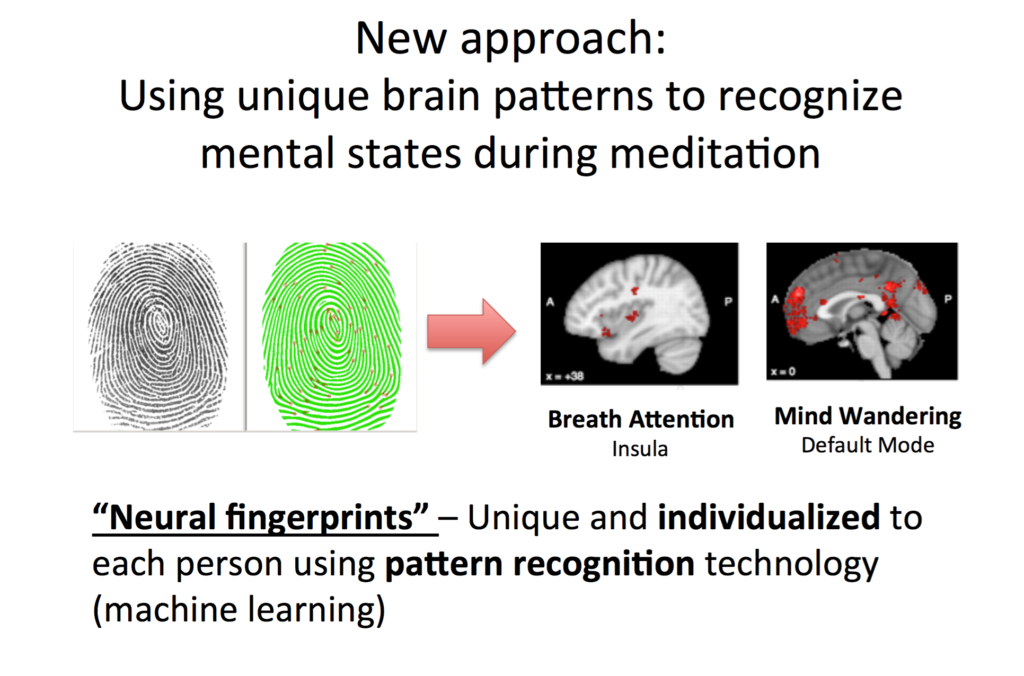
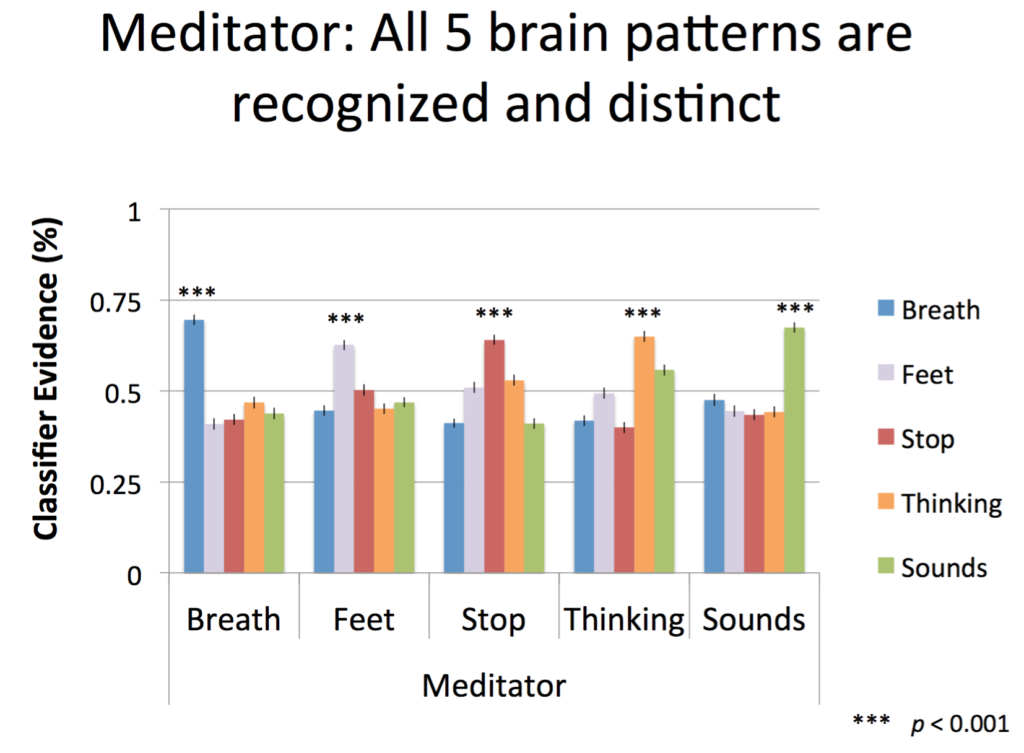
    In the EMBODY study, I’m using a new fMRI methodology to study meditation. It uses machine learning or pattern recognition technology, which has been around for 15 years in the field, to identify mental states during meditation. This is in contrast to standard fMRI methods, which averages brain activity together within a person as well as across people. Because mental states during meditation are fluctuating and changing, and different people may have different patterns of brain activity, using pattern recognition approaches that are individualized to each person make more sense. The way my brain works during meditation doesn’t have to look the same as somebody else’s when they meditate. So we’re developing these methods to first study focused attention to the breath in order to see when people are paying attention to their breath or not, based on individualized brain data.

    Since this methodology is more individualized to each person, it’s more conducive to including a greater diversity of people in these studies. There are a lot of biases and assumptions in neuroscience. These assumptions carry out when we analyze data. We assume that brains act similarly, to the extent that we actually average the activity, which means we exclude certain people’s brain activity who might be considered “abnormal.” For instance, we typically exclude left-handers, people with neurological disorders, people who have had head injuries, or mental health issues. We end up with a pool of people who don’t represent the greater population. Once we have methods that accounts for each person’s unique activity, we no longer need to have all those stringent study criteria.

    I’m working with the East Bay Meditation Center to reexamine these assumptions. It comes down to who can lie still in the scanner for two hours comfortably and who can pay attention to their breath. That includes a lot of people. That’s the beauty of contemplative practice; it’s available to most people. I’m trying to infuse these principles of honoring diversity and inclusivity into the populations I study and how I study the brain.

    You were recently invited to participate in a dialogue with His Holiness the Dalai Lama at the International Conference of Buddhism and Science in Ulaanbaatar, Mongolia. What was that experience like?

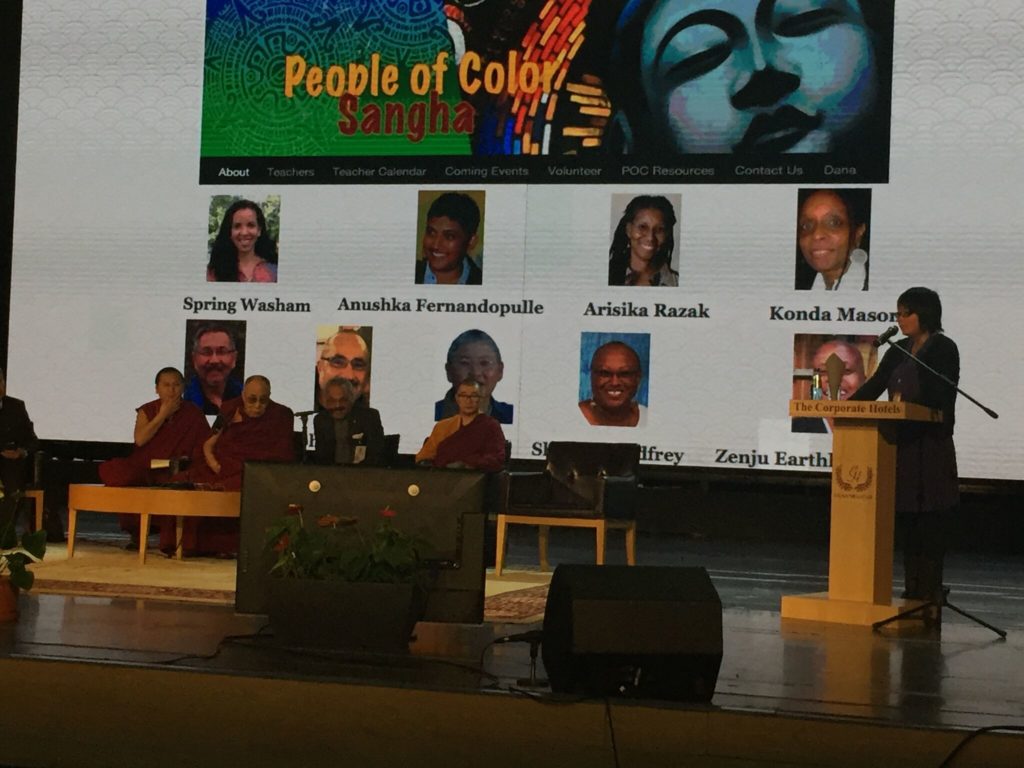
    International Conference of Buddhism and Science in Ulaanbaatar, Mongolia. Photos Credit Fadel Zeidan, PhD

    This was an amazing experience and such an honor! Institutions in Mongolia put together the first Science and Buddhism conference with His Holiness the Dalai Lama, and reached out to the Mind and Life Institute for some scientist speakers. I was invited along with Fadel Zeidan, PhD as junior scientists to represent Mind and Life by the president Susan Bauer-Wu. This was a dream come true for both of us, observing dialogues with scientists and His Holiness since we were young graduate students, and now being invited to participate. Four Mongolian speakers also spoke on Buddhist ethics, Buddhism and quantum physics, and perspectives on biomedical advances such as stem cell research.

     
    Presentation slide from Helen Weng, PhD, at the International Conference of Buddhism and Science in Ulaanbaatar, Mongolia[/caption]

    I spoke about my new work with the EMBODY Task, showing how pattern recognition technology applied to brain data can actually identify when a meditator is paying attention to their breath or not. I also spoke about the collaboration with the East Bay Meditation Center (EBMC) and working with diverse populations such as racial minorities and the LGBT population. His Holiness was particularly engaged when hearing about how EBMC cultivates a culture of understanding between different groups of people, particularly between groups who hold more power or less power. I was thanked by many Mongolian women after the talk, and I am excited to help represent Asian women in the sciences. The conference organizers expressed wanting to inspire young people in Mongolia to be involved in the intersection of Buddhism and Science, and the dialogue was broadcasted on Mongolian TV. I hope I contributed to that inspiration.

    “I was thanked by many Mongolian women after the talk, and I am excited to help represent Asian women in the sciences.”

    What has been the most exciting part of being a researcher of mindfulness-based interventions over the years?

    I really like creating new things and understanding my own experiences. I’m working to make my science a part of my contemplative practice and become more vocal about this. My deepest wish is to become a more loving and compassionate person and have my life that truly reflects this. One way is through my work, as these are the topics I study. I approach life as a person who practices compassion through various means, sees how compassion may affect me and those around me, and then I channel that into my work. I process and examine my personal experiences, and then I design an experiment to test whether my understanding of them is right. It’s another form of practice.

    The learning goes both ways, and I will change my understanding based on what my science says. I learned from my first compassion meditation study that when people witness an unfair transaction, the more they spend in the game is related to how compassionate they are. But if they witness a fair interaction, and they still spend their money on one person, they are actually punishing the other person. This illustrates how compassion is contextual. I had to learn to not to be helpful all the time, especially if someone acts poorly; that my decisions to care and help are based on the specific situation. This is one example of how my science feeds back into my own experience, and it creates a continuous dialogue and invites the scientific process as a part of this dialogue.

    What does the future of the science hold? What more is there to learn? 

    So much more! I am really interested in developing these machine learning methods to identify mental states during meditation. It’s really the wave of the future. One of the cool things that it can do is that it can get a count of how much somebody paid attention to their breath. We really don’t have that at this point in time. Using brain data, we can begin to quantify these processes.  I want to bring these methods to many kinds of meditation, and eventually use them to study loving-kindness and compassion meditation again.

    I want to work on creating better brain-based measures of meditation that are specifically tailored to different types of meditation. A lot of the tasks that we use come from literature that already exists. But meditation is a very interesting, dynamic process. So we also need to design experiments to optimize measuring meditation differently, since there are so many types of meditation practice. If I had unlimited resources I would try to develop really good tasks to measure each type of mediation skill that people practice and learn. Then we would be able to determine which skills contribute to decreasing anxiety and depression, building relationships, and promoting compassionate behaviors. Also, there is the need to improve measures of the psychological and the behavioral effects of meditation. I think it’s all about measurement development. That will be a core of what I do.

    Is there anything I haven’t asked you that you would like to share?

    I’m also trained as a clinical psychologist and I’ve been a therapist for four years during my graduate training. I had to individualize therapy for each person, and different approaches worked for different people. For example, someone chose cognitive behavioral approaches (changing thoughts to change feelings) over mindfulness-based approaches to help with his anxiety. I would suggest that people should experiment. People need to look within themselves to understand what they enjoy and what seems to work with them. There seems to be a cultural thing that people assume that meditation will work for them or “should” work for them. I think people should try and take a class and then later reflect whether they will actually integrate that into their lives.

    I think mindfulness and compassion skills have more of an effect if you do them consistently. The act of meditating is not for everyone. There could be a different way to access compassion or become present and centered. I would encourage people to reflect what helps them settle down, connect to themselves and others. It could be through a myriad of things, music, exercise, or having deep conversations. I do believe mindfulness and compassion can help all of those processes because it trains qualities of attention that should help in everything we do. It’s fine if meditation isn’t what helps someone best. I really encourage people to understand their own minds and processes.

    “The act of meditating is not for everyone. There could be a different way to access compassion or become present and centered. I would encourage people to reflect what helps them settle down, connect to themselves and others.”

    Watch Helen’s presentation at the International Conference of Buddhism and Science. It starts at around 1:36:00. 

    Enjoy? Share with your friends

    Picture of Michael Juberg

    Michael Juberg

    Michael is the Founder & Chief Editor of the Science of Mindfulness.

    Related Posts

    science of mindfulness- linda carlson

    Interview with Dr. Linda Carlson

    Dr. Linda Carlson holds the Enbridge Research Chair in Psychosocial Oncology, is Full Professor in Psychosocial Oncology in the Department of Oncology, Cumming School of Medicine at the University of Calgary, and Adjunct Professor in the Department of Psychology.

    Read More »
    Trait Mindfulness and Relationship Satisfaction: The Role of Forgiveness Among Couples

    Trait Mindfulness and Relationship Satisfaction: The Role of Forgiveness Among Couples (Roberts et al., 2020)

    The researchers were interested in understanding if forgiveness acts as a mechanism by which mindfulness relates to relationship satisfaction. They speculated that being mindful would allow individuals to be aware of their own and their partners’ emotions in a non-judgmental and non-reactive way. The increased awareness would make people more forgiving of partner transgressions, thereby enhancing relationship satisfaction.

    Read More »

    Interview with Dr. Erin Bantum

    My work, over the past fifteen years has had a core theme of social support running through it, and I’d like to create an online mindfulness meditation intervention that includes a group component, such that people who have experienced cancer can meet and practice mindfulness meditation together.

    Read More »

    Interview with Dr. Amy Brown

    I didn’t want them to needlessly struggle and suffer as much as I did, and mindfulness is one of those tools that definitely helps us all during this time. I’m helping them in the way that I wish I would have been helped.

    Read More »

    Interview with Dr. Thao Le

    Ultimately, my intention is for it to be a service space to help students, faculty, staff, or anyone from the community to connect with themselves. Don’t we all need to pause?

    Read More »

    Interview with Blake Colaianne

    Blake Colaianne is a former Earth science teacher turned contemplative researcher. He is currently a Ph.D. Candidate in Human Development and Family Studies at Penn State University. His research focuses on supporting adolescent development using both a culture of belonging in high schools and prevention and promotion programs that teach mindfulness and compassion skills.

    Read More »

    Interview with Dr. Juan Rios

    “Whether you call it liberation, theology, transformative justice, mindfulness- we cannot separate those components of practice, all of those things are integrated. Integration brings peace, and peace within is key to embracing the other.”

    Read More »
    THE EMOTION REGULATORY MECHANISMS OF BRIEF OPEN MONITORING MEDITATION

    An electrophysiological investigation on the emotion regulatory mechanisms of brief open monitoring meditation in novice non-meditators (Lin et al., 2020)

    Despite growing knowledge that mindfulness meditation can enhance emotional wellbeing, very little is known about how it all works. How exactly does the act of meditation help us deal with the emotional rollercoaster of everyday life? Is mindfulness training actually “transferrable” to real world situations? What’s going on in the brain? Can we even measure it?

    Read More »

    Interview with Grant Jones

    Grant Jones (he/him) is an artist, contemplative, researcher, and activist. Currently, he is a 3rd Year Clinical Psychology PhD candidate at Harvard University and Co-Founder of The Black Lotus Collective.

    Read More »

    Interview with Dr. Helen Weng

    Dr. Helen Weng is a clinical psychologist and neuroscientist who originally joined the Osher Center for Integrative Medicine in 2014 as a postdoctoral scholar in the Training in Research in Integrative Medicine (TRIM) fellowship. She is developing new ways to quantify meditation skills using functional magnetic resonance imaging (fMRI) and machine learning to identify mental states of body awareness during meditation.

    Read More »

    Interview with Dr. Eric Garland

    Dr. Eric Garland, PhD, LCSW is Presidential Scholar, Associate Dean for Research, and Professor in the University of Utah College of Social Work, Director of the Center on Mindfulness and Integrative Health Intervention Development (C-MIIND), and Associate Director of Integrative Medicine in Supportive Oncology and Survivorship at the Huntsman Cancer Institute.

    Read More »
  • Interview with Dr. Eric Garland

    Interview with Dr. Eric Garland

    Interview with
    Dr. Eric GarLand

    Dr. Eric Garland

    Dr. Eric Garland, PhD, LCSW is Presidential Scholar, Associate Dean for Research, and Professor in the University of Utah College of Social Work, Director of the Center on Mindfulness and Integrative Health Intervention Development (C-MIIND), and Associate Director of Integrative Medicine in Supportive Oncology and Survivorship at the Huntsman Cancer Institute. Dr. Garland is the developer of an innovative, multimodal mindfulness-based intervention founded on insights derived from cognitive, affective, and neurobiological science, called Mindfulness-Oriented Recovery Enhancement (MORE).

    How did you first become interested in studying mindfulness?

    I had a personal practice of mindfulness when I was in college pursing my bachelor’s degree in psychology. At that time, I was very interested in comparative religion, philosophies of mind, as well as anthropology. Along with my personal meditative experiences, I also had exposure to alternative systems and philosophies for understanding the world, like Buddhism, Advaita Vedanta, Taoism, and various shamanistic cultures. These learning experiences gave me a true passion for the idea that a person could access absolute and relative truths by training his or her mind to engage in a different way of seeing and experiencing the world.

    In the beginning, mindfulness was mostly a personal pursuit. To be honest I didn’t know that there was a scientific study of mindfulness for quite some time. In my early career I was working as a therapist and I had begun to use meditative techniques with my clients to help them deal with addiction, anxiety, and depression. This was at a time when a few folks out there were practicing a combination of psychotherapy and meditation, but it wasn’t nearly as prevalent as it is now. There were no real formalized mindfulness-based therapy approaches. So I began to experiment how to integrate meditation into my practice as a clinician. 

    It wasn’t until later when I decided to pursue my doctorate that I discovered there was a whole emerging research world focused on mindfulness. By serendipity I was plugged into an NIH-funded research study of mindfulness as a treatment for irritable bowel syndrome that was being run by Susan Gaylord at UNC’s Program of Integrative Medicine. She kindly took me under her wing and trained me to be a mindfulness researcher. She taught me the tools of the trade. Ten years later here I am.

     Do you maintain a personal practice? If so, how has that informed your career focus?

    I do maintain a personal practice, and also continue to use mindfulness to treat patients in clinical settings. Both my personal and clinical practice of mindfulness have been extremely productive in helping me in develop new models of mindfulness, understanding the therapeutic mechanisms involved, and ultimately discovering how this may be helpful to other people.

    A lot of my research has been focused on teaching mindfulness to patients with little to no experience with mindfulness meditation practices. I think the experience of prolonged contemplative practice over the years can reveal deeper states of consciousness that a novice is unlikely to experience in the context of a standard 8-week therapeutic mindfulness intervention. I think it’s essential that a scientist who is pursuing this field has a personal mindfulness practice, and ideally also experience teaching mindfulness to others.

     A lot of my hypotheses, which I have then gone on to test in my research and found support for in my data, emerged from my own mindfulness experience or my experience sharing mindfulness and mediation techniques with patients. There are parts of my own personal practice that I have yet to study because there are related to the deeper layers of mindfulness and contemplative practice that may not be appropriate for research.

     
    science of mindfulness interview with eric garland
    Image via Pixabay

    Do you think we have the tools and the technology to study those deeper states?

    No, in fact I’m starting several new big studies where we want to start looking at the experience that is referred to as ‘non-dual awareness‘ in the context of clinical trials. We’re having a hard time finding any adequate measures, even self-report measures, of that phenomenon, let alone a task that might probe that state. So I don’t think we have yet developed the right tools and technologies to capture the deeper states of consciousness associated with mindfulness practice.

    As a field it makes sense why we haven’t pursued that too heavily; we’ve been putting most of our energy into establishing the scientific legitimacy of the field. We’ve been trying to import methods from neuroscience and psychology into the field. This was a necessary stage in the development of contemplative science. Probably over the next coming decade we’ll start seeing measurement approaches that can tap constructs that haven’t been really formally considered in these other fields.

    When did you first become involved with the Mind & Life Institute and how did that inform your direction as a researcher?

    I first became connected in Mind & Life Institute in 2007 when I was a doctoral student at University of North Carolina- Chapel Hill and I applied to be a part of the Mind & Life Summer Research Institute. I was selected to be a summer research fellow. To be honest, it was a life changing experience for me. I was surrounded by a group of peers who all had an interest in a similar phenomenon in a field that I didn’t even know was a legitimate science. There was a panel of faculty who were some of the most esteemed researchers in the world across a wide range of disciplines and they were all devoting their career to the pursuit of contemplative science.

    Long before my involvement in the Mind and Life Institute, I had been introduced to the work of Francisco Varela, who was the progenitor of the Mind and Life Institute. It was very exciting to tap into a whole organization whose intention was to carry on the work of Varela. It was really catalytic for me in many ways. I received a Francisco J. Varela Research Award the next year. It was a $15,000 award and His Holiness the Dalai Lama’s signature was on the award letter. That award funded my dissertation, which was the first study of Mindfulness-Oriented Recovery Enhancement (MORE). I’ve since pursued research on MORE for the past eight years and that line of research has blossomed into multiple multi-million dollar federal grants and a number of studies came out of that. So I’m really indebted to Mind and Life and grateful to have made so many friends and colleagues along the way.

     What is Mindfulness-Oriented Recovery Enhancement (MORE)?

    MORE is an integrative therapeutic approach that combines mindfulness training with reappraisal skills and techniques to promote savoring. In that sense, MORE combines multiple traditions; it unites a traditional mindfulness-based intervention approach with some techniques drawn from cognitive-behavioral therapy, and even existential therapy, along with a positive psychology approach that acknowledges the importance of enhancing positive emotion. MORE was designed to ameliorate addictive behavior, stress, and (physical and emotional) pain.

    What are the biobehavioral mechanisms of MORE?

    I’ve done a number of studies on MORE and the therapy seems to have a wide range of effects on both transdiagnostic mechanisms and addiction-specific mechanisms. Generally speaking, MORE seems to help people enhance their attentional control over automatic habits of fixating attention on negative or threat-related information. The data is showing that participants in MORE become better able to disengage and become less fixated on stressful information and consequently gain greater autonomic nervous system regulation in the face of negative emotional information. In other words, if a person is confronted with stressful stimuli or drug-related stimuli, they evidence heightened heart rate variability responses when they are paying attention to these stimuli. This physiological marker seems to indicate that through MORE patients become more flexibly able to engage and disengage their attention from these stimuli – and thereby are better able to regulate their reactions.

    The data also seems to suggest that MORE increases sensitization to natural reward. What I mean is that over time people who participate in MORE seem to extract more pleasure out of healthy objects and events in their lives through the use of mindfulness as a tool to enhance savoring. Across several published and unpublished studies, we are discovering that increasing sensitivity to natural reward through MORE may lead to decreased craving for drugs – a completely novel and radically important finding for the field of addiction science.

    I also have data from several studies showing that mindfulness appears to relieve chronic pain symptoms by increasing interoceptive awareness. In other words, mindfulness seems to be decreasing chronic pain symptoms by enabling people to pay attention to the sensory qualities of their pain rather than being fixated on the emotional aspects of pain. So in MORE for the treatment of pain, we teach patients to focus their awareness on pain. Rather than distract themselves from pain, we encourage patients to explore pain and to break down the experience of pain into its parts. So rather than think of low back pain as a terrible anguishing experience, we train patients to focus on the sensation of heat, tightness, and tingling in the back. In doing so they may find spaces inside of the pain sensation that don’t hurt at all or they might even find some pleasurable sensation in the body proximal to the pain.

    Some people with chronic pain may develop beliefs or schemas about how their pain is and how their body feels, and then they start to feel their assumptions, beliefs, and thoughts about the state of their body more than the actual physiological condition of the body – which is in fact always changing. By tuning interoceptive awareness into the pain experience, mindfulness seems to undo this process to alleviate pain. In many of chronic pain cases, there are no easily defined physiological generators of pain, and no ongoing tissue damage. Yet, over time, the patient may come to perceive uncomfortable sensations in the body that might actually be harmless or innocuous as being threatening and dangerous. In MORE we try to reverse this process.

    The proposed cognitive mechanisms of MORE

    “Across several published and unpublished studies, we are discovering that increasing sensitivity to natural reward through MORE may lead to decreased craving for drugs – a completely novel and radically important finding for the field of addiction science.”

    MORE has been used to treat chronic health, mental health, and addiction related issues. How can mindfulness be one therapeutic tool to address all of these conditions?

    We need to take a transdiagnostic approach to understand how to alleviate human suffering. Across various forms of suffering, there are some crosscutting mechanisms for processes that create suffering regardless of diagnosis. Let’s take one process: stress reactivity or sensitization to threat. We see sensitization to threat in anxiety, trauma, depression, and chronic pain – in which the threat might be from sensations in the body. Prolonged use of addictive drugs or repeated exposure to stress and trauma can dysregulate stress systems in the brain and can increase sensitivity to stress. This mechanism of stress sensitization is a transdiagnostic mechanism that cuts across disorders and is common to many conditions that cause people suffering.

    Another transdiagnostic process that I’m interested in is reward insensitivity. This phenomenon is also found in depression, PTSD, chronic pain, and addiction. Individuals suffering from these problems can become less able to experience natural pleasure from healthy and pleasant events, people, and experiences in everyday life. Because individuals may have this lessened ability to extract the sense of joy from everyday life, this deficit may lead them to seek a sense of well-being through self-destructive coping behaviors, such as overindulging in food, alcohol, drugs, gambling, cutting, etc. Reward insensitivity is another important transdiagnostic mechanism to be targeted by mindfulness. Mindfulness is likely very useful for targeting multiple transdiagnostic mechanisms because it seems to have broad-spectrum effects.

    Do you see mindfulness-based interventions as a primary therapy or as an adjunctive therapy?

    In the case of chronic pain and opioid misuse, what society is faced with is a large number of patients are currently take opioids for pain- that is the medical intervention that they were given by the health care system. Patients who have had Mindfulness-Oriented Recovery Enhancement incorporated into their overall health care plan may experience improvements with pain and stress, and also reduce their misuse of opioids and possibly their dependence on opioids.

    In the future, it’s possible that policy changes focused on reducing opioid misuse will vastly alter the treatment of chronic pain. Rather than being prescribed medication, people with chronic pain will be prescribed meditation – that is a future that I can envision.

    We’re not quite there yet. Ideally, the doctor would prescribe a person with acute pain a limited amount of opioids, but also incorporate a mindfulness-based intervention as well as an exercise and nutrition program into the patient’s treatment plan. An integrative medicine approach would be built into the front end of the treatment plan. This could prevent a lot of problems and suffering down the line.

    Your studies incorporate cognitive, affective, and social neuroscience. Given your background in social work, this might surprise people. Do you feel that the questions you study require an interdisciplinary approach or is this unique to your approach as a clinical scientist?

    Up to this stage in my career, I’ve employed methods from cognitive and affective neuroscience, particularly psychophysiology. I incorporate tasks like the dot-probe task to measure attention biases to emotional information. I’m essentially self-taught; I taught myself psychophysiology in an independent study led by Barbara Fredrickson, Ph.D., while I was a doctoral student at UNC. In terms of doing more complex neuroscience, like the use of fMRI, or molecular neuroimaging using PET, we do need interdisciplinary partners. Going forward, I will definitely be collaborating with others.

    I just received a new grant from the National Center for Complementary and Integrative Health that will be using molecular neuroimaging of MORE to look at its effects of neurotransmitter function with my Co-PI Jon-Kar Zubieta, MD, PhD, Chair of Psychiatry at the University of Utah, who is a pioneer of the use of PET to look at endogenous opioid function in the brain during the experience of pain.

    What is Mindfulness to Meaning Theory?

    Essentially, Mindfulness to Meaning Theory attempts to explain how the acute state of mindfulness that is generated when a person sits down on “the cushion” to meditate might impact one’s sense of meaning in the face of adversity. It aims to answer the question: How does the acute, ostensibly non-judgmental, non-discursive state of mindfulness have positive influences on the discursive, language-based narrative, our autobiographical sense of meaning in everyday life? This whole idea emerged out of the observation that patients benefit from doing mindfulness meditation by not only increasing clarity, and decreasing stress, but also experiencing more complex cognitive and meaning-based benefits, such as a greater ability to reframe the stressors and adversities in their lives. Many patients participating in mindfulness-based interventions come to see these adversities as learning opportunities to grow stronger as a person and to become more compassionate. Their formal practice of mindfulness meditation was benefiting them in broader, more abstract ways than mere stress reduction. This makes sense, because if people were only benefiting from the ten minutes that they were on the cushion focusing on their breathing, mindfulness wouldn’t be a very meaningful pursuit.

    The reason why we practice mindfulness is because it has a broader impact on our lives and our sense of self. Mindfulness seems to have an impact on our life story, the way we define ourselves, and the way we understand the opportunities and the challenges that we face in life. There was no scientific model to really explain that process in a fine-grained way. I think the reason for that oversight is that the field has invested a lot into answering the questions of what ‘mindfulness’ is, what is happening when someone sits down and practices mindfulness meditation, and what is happening in the brain. There has been less attention paid to how the acute state of mindfulness blossoms into these more longitudinal and broader impacts on a person’s life, and life story, and self-concept. These abstract concepts are harder to define and measure. For a variety of reasons, there’s been less attention paid to them.

    The definition of mindfulness that was put forth by Jon-Kabat Zinn has directed the type of questions that contemplative scientists have been asking. And while a seminal contribution, this definition has left a vacuum; for example, in defining mindfulness as “non-judgmental awareness,” we haven’t asked the question of how mindfulness affects our judgments. There are people who will tell you that mindfulness doesn’t affect judgment because it’s a non-judgmental process. But I’m pretty sure as a mammal that it’s impossible to shut off judgment completely. Would we want to do that? There are a lot of positive judgments made in life; we use our judgments to navigate the world, to build relationships, and define our sense of ethics and values. And if you go back and look at the traditional Buddhist systems from which a lot of these mindfulness practices derive, they don’t seem to abstain from non-judgmental perspectives in the least. To the contrary, within the Noble Eightfold Path, for example, there is ‘right action,’ ‘right speech,’ ‘right intention,’ and so forth. ‘Right’ implies wrong. There’s a judgment there. What is correct, what is wholesome?

    In these Buddhist systems there is a huge focus on wholesome qualities. And defining a quality as wholesome implies that there are unwholesome qualities. Implicit in these spiritual systems was a sense of making judgments and discriminations to identify what is a wholesome way to live in the world. Mindfulness was traditionally used as a tool to help gain insight into those positive judgments. Given that history, I developed that Mindfulness to Meaning Theory to help explain how the acute state of mindfulness can help an individual make helpful evaluations of their own sense of self and the world around them so as to experience their life as more meaningful.

    “Rather than being prescribed medication, people with chronic pain will be prescribed meditation – that is a future that I can envision.”

    Mindfulness to Meaning Theory: A Process Model

    What is the newest development in the science of mindfulness that excites you?

    I’m really excited about the Mindfulness to Meaning Theory. Some recent clinical trial work by Philippe Goldin and James Gross shows that mindfulness training increases reappraisal and that cognitive-behavioral therapy (CBT) increases mindfulness. We like to think of these interventions as being distinct with distinct therapeutic mechanisms. But in fact, in these well-controlled studies in patients with social anxiety, Goldin and Gross found that mindfulness helped people change the way they think about their life situation – which provides some of the strongest evidence for the Mindfulness to Meaning Theory yet. Furthermore, CBT helped people become more mindful. From a transdiagnostic and transtherapeutic perspective, these different treatment approaches can promote mental well-being through common pathways.

    In terms of technologies and methodologies, I think that the use of molecular neuroimaging to study the effects of meditation practice on neurotransmitter function is an exciting new development. There’s almost been no work in that area.

    Lastly, for a long time I have been fascinated by studies of the effects of mindfulness meditation on gene expression. There is a body of work studying the changes in gene expression that drive changes in protein synthesis, which provide a pathway by which a psychological intervention might change the function of the body. This technological approach provides a means of testing some of the most time-honored theories of the mind-body relationship.

    If you were to win a Nobel Prize, what would you want it to be for and why?

    If I were to win the Nobel, it would be on this idea: If addiction involves a process by which the individual becomes increasingly insensitive to natural pleasure which drives them to take higher and higher doses of the drug just to feel okay, then if we can teach people to extract pleasure out of everyday life, might it reverse the addictive and interrupt dependence on drugs?

    We’re pretty clear now in terms of the neurobiological mechanisms by which this reward dysregulation occurs in the mesocorticolimbic dopamine system. We believe this mechanism is partially located in brain in the ventral striatum, which in addiction becomes hypersensitized to drug-related cues and becomes insensitive to naturally rewarding pleasures. 

    So clinically, if we can show that teaching mindfulness can promote savoring of the natural beauty of life, and that this savoring process seems to undo craving and addiction, I would hypothesize that we would see that same shift in the brain specifically reflected in the ventral striatum, and more broadly across the mesocortical dopamine and endogenous opioid systems. Through mindfulness training, as the brain becomes less sensitive to drug-related cues, it may become more sensitive to natural pleasures in life.

    Do you have any advice for aspiring scientists hoping to pursue a career in science?

    Science is a rough game. One should not enter into this field without recognizing that. Yet, the scientific profession is joyous because it provides the opportunity to live the life of the mind. My advice to aspiring scientists is often this: don’t pursue merely what interests you. Instead, you should ask yourself, “What are the pressing questions from a societal perspective? What are the needs of society right now?” Based on what society needs, and based on your assessment of those problems, you work to use science to generate solutions to those problems. If an aspiring scientist directs his or her scientific career along those lines, then he or she will have more of an impact on the world, and also have an easier time obtaining funding and a faculty position.

    The other important reason to pursue science is for pure discovery. From a practical perspective, I think it is very hard to build a career to do science for the purpose of pure discovery. Funding in science is so tight right now that funding is going for the most pragmatic applications and questions rather than the grand metatheoretical questions. I think it would be hard to pursue a scientific career in those domains – though it is certainly a worthy endeavor. But I think a fruitful and meaningful path may open up out of asking yourself “What are the needs of society and how can science be applied to address those questions?”

    Dr. Eric Garland in his laboratory

    Keep up with Dr. Garland’s latest groundbreaking work by subscribing to his website.

    Enjoy? Share with your friends

    Picture of Michael Juberg

    Michael Juberg

    Michael is the Founder & Chief Editor of the Science of Mindfulness.

    Related Posts

    science of mindfulness- linda carlson

    Interview with Dr. Linda Carlson

    Dr. Linda Carlson holds the Enbridge Research Chair in Psychosocial Oncology, is Full Professor in Psychosocial Oncology in the Department of Oncology, Cumming School of Medicine at the University of Calgary, and Adjunct Professor in the Department of Psychology.

    Read More »
    Trait Mindfulness and Relationship Satisfaction: The Role of Forgiveness Among Couples

    Trait Mindfulness and Relationship Satisfaction: The Role of Forgiveness Among Couples (Roberts et al., 2020)

    The researchers were interested in understanding if forgiveness acts as a mechanism by which mindfulness relates to relationship satisfaction. They speculated that being mindful would allow individuals to be aware of their own and their partners’ emotions in a non-judgmental and non-reactive way. The increased awareness would make people more forgiving of partner transgressions, thereby enhancing relationship satisfaction.

    Read More »

    Interview with Dr. Erin Bantum

    My work, over the past fifteen years has had a core theme of social support running through it, and I’d like to create an online mindfulness meditation intervention that includes a group component, such that people who have experienced cancer can meet and practice mindfulness meditation together.

    Read More »

    Interview with Dr. Amy Brown

    I didn’t want them to needlessly struggle and suffer as much as I did, and mindfulness is one of those tools that definitely helps us all during this time. I’m helping them in the way that I wish I would have been helped.

    Read More »

    Interview with Dr. Thao Le

    Ultimately, my intention is for it to be a service space to help students, faculty, staff, or anyone from the community to connect with themselves. Don’t we all need to pause?

    Read More »

    Interview with Blake Colaianne

    Blake Colaianne is a former Earth science teacher turned contemplative researcher. He is currently a Ph.D. Candidate in Human Development and Family Studies at Penn State University. His research focuses on supporting adolescent development using both a culture of belonging in high schools and prevention and promotion programs that teach mindfulness and compassion skills.

    Read More »

    Interview with Dr. Juan Rios

    “Whether you call it liberation, theology, transformative justice, mindfulness- we cannot separate those components of practice, all of those things are integrated. Integration brings peace, and peace within is key to embracing the other.”

    Read More »
    THE EMOTION REGULATORY MECHANISMS OF BRIEF OPEN MONITORING MEDITATION

    An electrophysiological investigation on the emotion regulatory mechanisms of brief open monitoring meditation in novice non-meditators (Lin et al., 2020)

    Despite growing knowledge that mindfulness meditation can enhance emotional wellbeing, very little is known about how it all works. How exactly does the act of meditation help us deal with the emotional rollercoaster of everyday life? Is mindfulness training actually “transferrable” to real world situations? What’s going on in the brain? Can we even measure it?

    Read More »

    Interview with Grant Jones

    Grant Jones (he/him) is an artist, contemplative, researcher, and activist. Currently, he is a 3rd Year Clinical Psychology PhD candidate at Harvard University and Co-Founder of The Black Lotus Collective.

    Read More »

    Interview with Dr. Helen Weng

    Dr. Helen Weng is a clinical psychologist and neuroscientist who originally joined the Osher Center for Integrative Medicine in 2014 as a postdoctoral scholar in the Training in Research in Integrative Medicine (TRIM) fellowship. She is developing new ways to quantify meditation skills using functional magnetic resonance imaging (fMRI) and machine learning to identify mental states of body awareness during meditation.

    Read More »

    Interview with Dr. Eric Garland

    Dr. Eric Garland, PhD, LCSW is Presidential Scholar, Associate Dean for Research, and Professor in the University of Utah College of Social Work, Director of the Center on Mindfulness and Integrative Health Intervention Development (C-MIIND), and Associate Director of Integrative Medicine in Supportive Oncology and Survivorship at the Huntsman Cancer Institute.

    Read More »