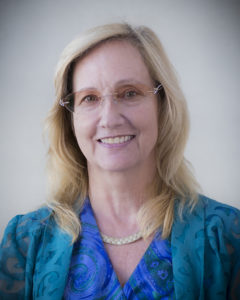
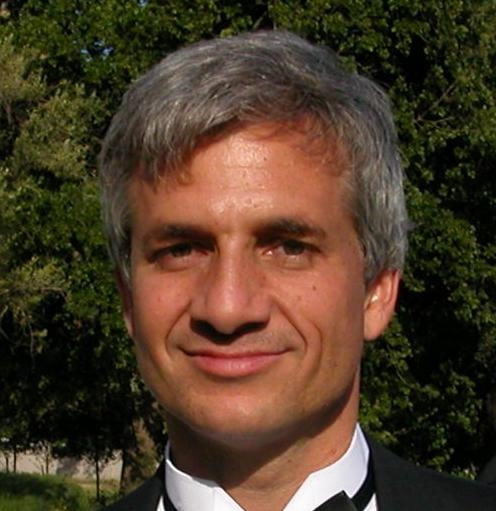
Amy Brown, PhD, RDN, is a Professor in the John A. Burns School of Medicine at the University of Hawai’i at Mānoa. Her clinical and laboratory research is the area of Integrative Medicine and Medical Nutrition Therapy as it relates to diet, foods, and plant extracts that may hold therapeutic potential for disease. Dr. Brown has published in the field of diet and disease with regard to inflammatory bowel disease, psoriasis, dietary supplements, probiotics, autism, and the in vitro anti-proliferation of cancer cells by Pacific Basin plant substances from poi, ginger, and guava. She has authored over 44 scientific publications, along with “Understanding Food (6th Ed),” the number one college textbook in its field. Dr. Brown has also recognized the need for mindfulness in education and now teaches a mindfulness course for college students at the University of Hawai’i at Mānoa.
Parts of the interview have been edited for clarity and length.
What inspired you to develop a mindfulness course for the University of Hawai’i?
It was a confluence of events that melded into one path that gently guided me into teaching mindfulness to college students. About 15 years ago, I joined a small group meditating weekly in the beautiful hills of Honolulu, Hawai’i in a Buddhist temple led by a community volunteer with a deep, calming voice. Working at a university is not easy, and I had to deal with some pretty petty politics, and a part of me just gave up and gave it all to God-completely. At this point, I was alone in the Diamond Head theater waiting for the Christian service to begin, and to my amazement everything just melded together into this beautiful symphony of moving color. The energy was all encompassing infusing me with the feeling of pure God universally intertwined with Love. My perspective shifted where I could look down and saw myself with my silly problems and I just began to laugh. Nothing could bother me now.
The researcher bug in me sent me searching for everything I could find on mindfulness. I found and joined a local mindfulness group called Mindful Hawai’i. The leader asked me why there wasn’t a mindfulness class at the university. There was one, but limited to about 20 student a semester. The initial barrier of not having a “degree” in mindfulness was swept out into the ocean. After all, what did people do before degrees existed? They learned!
I meekly submitted the paperwork for a new class called CAAM 401 Mindfulness Meditation and Stress Reduction. It grew from 20 students in 2017 to over 100 students by 2021. The feedback is incredible and it’s the best and the most fulfilling class I’ve ever taught.
“I wanted to help people learn the life-coping skills I did not have at their young age.”
I wanted to help people learn the life-coping skills I did not have at their young age. Ultimately, it will change the world, because when you change each person’s heart, a “positron” is born. A mindful person or “positron” does not hurt others or the world. My vision is that when you change a person’s heart-centeredness, it will benefit the world to make people less unaware, harmful, and ego-driven and instead more aware, peaceful, and working toward the greater good.
How have you structured the class to optimize engagement for a larger course? Do you have homework, quizzes, or take attendance?
I wanted to reduce stress, so there are no quizzes, tests, papers, presentations or even a final. The only requirement is attendance. You just have to “be present.” Zoom takes attendance through Excel and even logs if they are late or leave early. No slouching is another requirement because a relaxed, yet somewhat straight spine is important for staying at “attention” and experiencing the deeper benefits of meditation. Despite these simple requirements, there’s always someone at the end of the semester with an “F” grade, asking me, “How could you do this?” Even the attendance could tell that these students weren’t present…
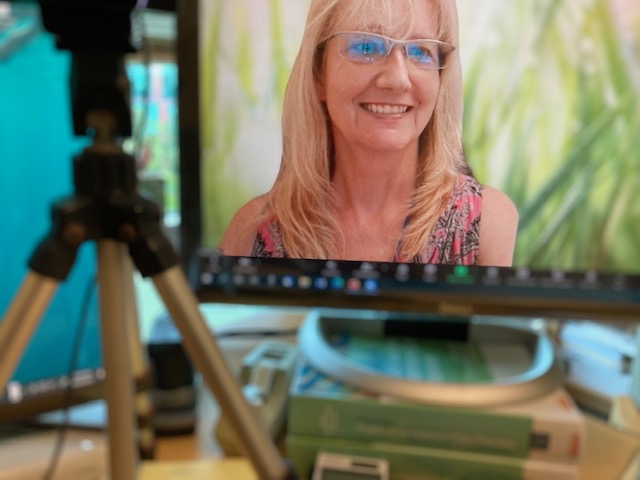
Dr. Brown leading a mindfulness class virtually
“The feedback is incredible and it’s the best and the most fulfilling class I’ve ever taught.”
What are some of the challenges of teaching mindfulness as a university course on Zoom?
I was one of the first professors to create and teach an online course 15 years ago, but it’s a burden when it’s all your classes due to COVID. You can’t feel the pulse of the class. They stare at you like zombies. You crack jokes and no one cracks a smile. The students are tired and exhausted. I feel for them, but there’s only so much saline you can pump into the lifeless. Yet, they end the class with a symphony of thank you “Aunties,” and it pumps me up, makes me smile, and continue trekking on.
Do you feel that the COVID pandemic has increased the need for mindfulness skills training in university settings?
Yes. I grew up with not much life skill teachings. I had plenty of academic education, but real life lessons were left to chance and circumstance. I literally could have been killed, but made it through. Anyway, I think it’s terribly insufficient not to teach life skills; it’s literally akin to throwing someone overboard and telling them to swim. Well, I swam like hell, but wanted to make it easier for these emerging adults to have some rope to haul themselves onto shore. I didn’t want them to needlessly struggle and suffer as much as I did, and mindfulness is one of those tools that definitely helps us all during this time. I’m helping them in the way that I wish I would have been helped.
Do you have any quotes from your class that students particularly resonate with?
“It was only a sunny smile, and little it cost in the giving, but like morning light it scattered the night and made the day worth living. “
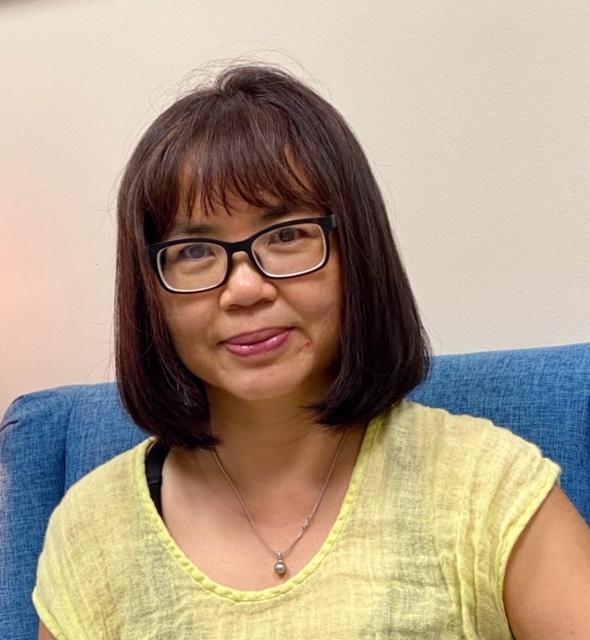
Dr. Thao Le is currently serving as professor in Human Development & Family Studies at the University of Hawai’i Mānoa. She was previously at Colorado State University where she gave up promotion & tenure to come to Hawai’i because of her connection to the island/sea, and with Native Hawaiian collaborators. Prior to academia, she worked in a non-profit in Oakland, California for 14 years focusing on preventing youth delinquency, with particular attention to Asian and immigrant population. Her current research work at UHM is focusing on farmer stress, restoration of native ecology (with her NH collaborators), and mindfulness for Keiki/educators in Hawai’i.
Parts of the interview have been edited for clarity and length.
When did you first bring mindfulness to the University of Hawai’i and what inspired you?
I came to the University of Hawai’i, Mānoa in 2011 and I started a mindfulness course in 2013. It started off as an experimental class. I taught it for two years so that I could collect data and confirm that students were interested in a mindfulness curriculum. It started off with small groups of six students and then just kept building. It was in 2016 when I received a designated course number designation. So it’s been a 3-credit course for UHM students for the past eight years.
I arrived to UHM by way of Colorado State University where I was already working with youth development in terms of suicide prevention with the Native American tribes in Montana. It was a pilot study to incorporate mindfulness within their tribal school. That inspired me. When I arrived to Hawai’i, I asked whether I could try to get mindfulness on campus, because I didn’t see anyone doing it at that time. It was very different from what it is now- everybody knows about mindfulness these days. That was absolutely not the case eight years ago.
What is the focus of the upper division mindfulness course you teach at the University of Hawai’i?
The focus is to introduce the concept of mindfulness, encourage practice, and foster reflective writing. Students have homework practice and writing assignments. It’s also an ethics focused course and students are required to do a considerable amount of reflection. Since I’m in the Human Development Family Studies program, I see mindfulness as part of human development. Mindfulness helps with social emotional regulation and understanding the workings of the mind. Our students acquire different types of training and development courses like infant and youth development, financial and family planning, and conflict management. This is a nice fit because it’s about fostering understanding of who we are, why we developed a certain way, with certain habits and dispositions, and how to live skillfully.
You cannot provide the resources and serve others if you don’t understand the inner-workings of the mind. I try to challenge students to reflect and explore ethics through the course materials. Mindfulness is just a tool in practice, but without ethics, mindfulness can be appropriated in different ways than it was intended.
“I see mindfulness as part of human development.”
What is the Pause Space and how do you see the campus community engaging in it?
My mindfulness course has evolved and continues to evolve depending on the students. But the Pause Space was developed because I wanted a physical place to cultivate the practice so that students taking the course weren’t limited to doing the exercises only in class. The Pause Space was another venue in which students as well as the community could also join the practice. Ultimately, my intention is for it to be a service space to help students, faculty, staff, or anyone from the community to connect with themselves. Don’t we all need to pause?
There’s a small community of us who have continued to gather throughout this whole pandemic. Every Friday we gather and some students casually drop in. Sometimes though my schedule doesn’t allow it, but somehow it always works out, and it’s helpful to have fellowship in the practice.
What lessons do you wish you knew when you first started the Pause Space?
I wish that there was more administrative support. When we start initiatives as educators, it’s based on our own resources. I would like to have a more aesthetically pleasing and welcoming space because the physical environment is important.
I also could have been more politically involved. The university’s counseling center offers important mental health services but many students come to my course saying they were told by their university mental health and academic counselors to take my course. My class was never supposed to be a counseling course and it is not. Maybe I should have reached out to the counseling center and offered to do a collaboration. I don’t want to encroach upon anyone’s territory, for me I see it more as a service, a prevention service, and a skill that could be helpful to students in their learning journey.
What advice would you give to educators hoping to bring mindfulness into their campus communities?
Do it. You learn by trial and error and you learn a lot when you try it yourself, rather than take the learnings from others. If I were to tell you how to cook a dish and there’s a recipe, unless you do your own cooking, you’re not going to know which ingredients work and what the dish tastes like- everybody’s got their own flavor and style.
When I first asked some of my colleagues about starting a mindfulness course, they dissuaded me saying that you can’t mix religion and science, or religion with education. This has nothing to do with religion. I’m not professing to make everybody mindful or promoting any religion, but I didn’t get any slack. I went ahead and did it anyway. So that’s why I say let’s do it!
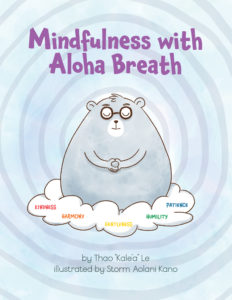
You also recently wrote two children’s books on mindfulness: Mindfulness with Aloha Breath and Akahai. How do these books fit into your overall vision for mindfulness in education?
This was my attempt to address a fundamental concern about the cultural adaptation of mindfulness curricula. Hawaii educators acquire most of the resources on mindfulness from mainstream mindfulness curriculum being promoted on the mainland, and it’s not always culturally relevant with little buy-in among line staff like teachers. These two children’s books are based in the local culture. It’s important to fuse the values that are locally meaningful. So that’s why I felt compelled to create Mindfulness with Aloha Breath and Akahai, which means kindness in Hawaiian. Plus, Uncle Bruce Keaulani, a Native Hawaiian cultural practitioner, said I must do it because he tells me I’m Hawaiian, I guess at heart!
Buy on Amazon Buy on Amazon
I’ve offered these books for free and it has been sponsored generously by the Office of Youth Services. I’m able to provide mindfulness training using these books to different educators and social service providers on O’ahu and Big Island. I have provided over 5,000 copies to date. I love being a local resource for K-12 educators here in the Hawaiian educational and social service communities.
These books teach mindfulness through a Hawaiian framework. Why is that important?
It is important because we are meaning-making creatures; when it’s presented in a way that resonates with the way that we understand the world, then it’s much more likely to have buy-in, to resonate in people’s heart and mind.
My books were developed with the intent of using the values and understanding taught here in Hawai’i. I wish there was a research study that would explore whether making mindfulness culturally appropriate is effective. I think a study that compares a standard mindfulness curriculum to one with cultural adaptation would be very interesting. I’m waiting to see that research for the various cultural contexts that exist in Hawai’i, America, and the world, or happy to collaborate with anyone on this study!
” Ultimately, my intention is for it to be a service space to help students, faculty, staff, or anyone from the community to connect with themselves. Don’t we all need to pause?.”
Philippe Goldin, Ph.D. is an Associate Professor at UC Davis and leads the Clinically Applied Affective Neuroscience. His team is currently engaged in (a) basic research on the brain networks that differentiate different types of emotion regulation strategies; (b) clinical research on the neural bases of psychopathology; and (c) clinical intervention research examining the brain and behavioral mechanisms of therapeutic change during Cognitive-Behavioral Therapy, Mindfulness-based Stress Reduction, and Compassion Cultivation Training in adults with anxiety, depression and chronic pain disorders.
Parts of the interview have been edited for clarity and length.
What was the influence of Tibetan language, Buddhist philosophy, and psychology on your own research trajectory?
Huge! Having met Buddhism in Asia, not in the United States, I think I have a very different experience and background than most people in the U.S., which is often more secular and less embedded in context. One of the biggest differences is that I have studied Sanskrit, Tibetan, and Nepali and lived in monasteries, learned Tibetan Buddhist practices, and served as a translator for several different lamas in different lineages within Tibetan Buddhism. These enriching experiences provide a historical, linguistic, and philosophical context for both my contemplative practice and my own research, which you don’t really see in the United States.
Did you find a natural segue from your religious studies to psychology?
Yes, Buddhism itself is deeply psychological, philosophical, and experiential. When I came back to the United States, I was thinking medicine, law, psychology, and I thought a doctorate in psychology would be a natural flow from what I was doing before.
A team at Google, led by Chade-Meng Tan, was trying to create a program for Googlers that was steeped both in contemplative practice and neuroscience. Someone recommended me so I went to Google, gave several talks, met with various teams, and a core group of us created this program. We were able to infuse clinical science, neuroscience, cognitive, and affective sciences into a 7-week program to increase the common denominator of communication skills, emotional awareness, emotional regulation, emotional intelligence, and empathy. The Search Inside Yourself Leadership Institute has become highly successful and has undergone several permutations.
It was called Search Inside Yourself, which is a pun for the search engine, and it is also known as a mindfulness-based emotional intelligence leadership skills training course. I ended up teaching in Google offices in Europe and the United States. Eventually, the lawyers at Google allowed us to take the program out of Google and start the Search Inside Yourself Leadership Institute which is located in San Francisco and has become a platform that has trained over 1000 instructors from all over the world. We hope it continues to bring organizations a set of skills that creates better environments for work, leadership, listening, and communicating.
What is clinical translational neuroscience and how can it help us better understand how to help people with clinical problems?
Translational neuroscience is the idea of taking models, theories, and what we know about brain circuitry to help translate these into a better understanding of how clinical interventions work, whether these interventions are psychosocial, physical exercise, medication, or meditation. Fundamental to our question is what are the brain patterns associated with psychological dysregulation, how are the brain circuits modified, and how will that predict who will and won’t benefit from certain types of interventions. In essence, can we take functional brain patterns to help us understand the underlying mechanisms more clearly and modify current interventions to make them more effective?
For example, if you know that working memory is essential for certain clinical interventions and you know a certain subset of the population is not using their working memory efficiently, can they be trained on a task that increases different parts of the frontal-parietal cortical brain network that support attention and memory and subsequently make cognitive behavioral therapy, more effective? That is the translation from the neuroscience of core brain circuitry to what influences clinical interventions with the hope that the interventions become more effective.
One research topic I’m pursuing is the different forms of emotional regulation. There are various forms of emotional regulation such as suppressing what you’re feeling, distracting your attention, redirecting your attention in a goal-oriented way, perspective-taking, or even taking a compassionate orientation, which is also one type of cognitive appraisal. So you can imagine assessing current ability in these many domains and then seeing where they are weak, and then giving patients a sequence of training exercises that enhances a particular skill that is currently underdeveloped. We can potentially have several different options for training those skills and continue to assess their development.
“Mindfulness is not the end; it’s just the beginning.”
I think it has tremendous potential. At Stanford University, a group of us came together first to create the Center for Compassion, Altruism, Research, and Education. From that, a group of us came together to create the Compassion Cultivation Training (CCT), which initially started as a nine-week program and was later reduced to eight weeks. It is a training that includes mindfulness practice throughout to stabilize the mind and cultivate balance, and progressively goes through a sequence of different types of compassion practices to build up the skill of paying attention to others, perspective taking, recognizing suffering, then generating the wish to be free of the causes and conditions that give rise to that suffering.
This training program has blossomed and now many people are trained to lead CCT throughout the world. Just as Mindfulness-based Stress Reduction is a preliminary introduction to a few types of mindfulness practices, CCT is also a preliminary introduction to a few types of compassion practices. In the future, we need to do contemplative research on what comes next, for examples, studying more advanced practices that make use of the mindfulness training people already are using. Mindfulness is not the end; it’s just the beginning.
Interestingly, one finding from your CCT study reported that participants are more capable of regulating affective states, yet they reported less desire to regulate these emotional states. What might be happening?
We try to regulate something that we’re not comfortable with. If I become more at ease and accept my experiences, my positive or negative emotions, then there will be less need to regulate, change and modify. That is more of an acceptance stance, where we don’t need to change what we are experiencing but rather how I relate to what I’m experiencing. This is particularly relevant to physical pain, which is very hard to treat. There is some research to suggest that for long-term meditators who have chronic pain, they still experience pain but they are less bothered by it and the pain causes less interference with daily functioning. This suggests that it is possible to modify how fused we are with what we are experiencing. We can observe without getting sucked in and experiencing suffering – that is very promising.
Your study also found that reductions in mind-wandering to unpleasant topics and increases in mind-wandering to pleasant topics were related to increases in caring behaviors for oneself and others. What might explain this link?
That was surprising! What’s interesting in doing research is that we ask the questions, conduct the study, then we let the data speak. We did not expect to see an increase in mind-wandering to pleasant topics, and this suggests that mind-wandering is more complex than we think.
I actually have a study that looks at two different aspects of mind wandering: spontaneous vs intentional, which could be strategic, problem-solving, or curiosity. We did see different trajectories. We don’t trust the results from one study alone, but rather preferably from multiple studies and labs to see if there is a convergence of results. That being said, mind-wandering to pleasant things could be a form of avoidance, savoring, or a reflection of less negative and more positive reappraisal.
In that study of CCT, we did daily experience sampling twice a day, every day, for 11 weeks. What we found was that if people practiced meditation that day, there was an increase in behavior that was caring toward others and oneself. That suggests that doing some form of formal meditation frees up resources to be able to notice and to engage in behaviors that are prosocial and help others, or even helps oneself. We have another study that we haven’t published yet that studies changes in a community sample over 21 days. We did a mediator analysis to investigate the mechanisms. It appears that when participants did meditation practice, their anxiety levels decreased, and that led to increases in caring behaviors. So we know that when people are in a state of anxiety, their scope of awareness narrows, their creativity decreases, and they have less perspective-taking. When people are more calm, their field of view opens, broadens, with a greater ability to take the perspective of the other, to see, to notice, which leads to prosocial behaviors.
“So we know that when people are in a state of anxiety, their scope of awareness narrows, their creativity decreases, and they have less perspective-taking.”
How does self-care behaviors or reductions in anxiety serve as a mediating link?
We did formal mediation analysis. The reduction in anxiety served as a mediator between training in compassion and caring behaviors. If that is replicated, then you can imagine getting more precise. Similar to MBSR, Compassion Cultivation Training includes many different practices. The question becomes which practices really reduce anxiety and therefore free up resources to shift behaviors? Instead of assuming the same practices work for everyone, there is a precision tailoring of sequences of contemplative practices. That’s getting into precision well-being.
Can you capture that using fMRI neurological assessment?
Not sure. Electroencephalography (EEG) is used for individual differences and is capable of obtaining reliable data on an individual person basis. For fMRI, the signal-to-noise ratio, the strength of the signal against background noise, is very low, and thus is a concern. Therefore fMRI studies need to be done on a group and not the individual level. With stronger technology like 7 Tesla scanners, maybe we can get stronger signals from an individual participant. Our technology isn’t there yet. Maybe we can access a brain network that is robust like the self-referential network, which has been the most robust task I have used. This makes sense from an evolutionary perspective because we pay a lot of attention to ourselves. We see the strongest responses in this network. There are other forms of brain imaging that might be more amenable.
In one paper, you suggest that compassion meditation might be a tool for social justice. What are you envisioning?
We have one study that was completed with my colleague, Hooria Jazaieri, in which we found that moral decision-making shifted as a function of doing an 8-week MBSR program in a graduate student sample. Another colleague, Jennifer Daubenmier, is looking at mindfulness vs compassion and its influence on social justice. If we enhance qualities that we already have like awareness, empathy, compassion, perspective-taking, can those abilities be oriented to seeing others? Can that be taken even further with regards to injustice? Everything is interconnected.
If there was one study you could win the Nobel prize for, what would it be and how would it change the world through scientific discovery?
I have yet to publish that we did a modified version of MBSR for 8-12-year-olds and their parents. That was a fascinating study since we were interested in training the family system instead of just the individual. Most studies are focused on individuals. Compassion intervention studies are inherently relational. It’s beginning to shift to a mindfulness-in-action perspective for the benefit of others. This family study was the most fascinating because we assessed kids and their parents, together and separately. This is meaningful because the goal isn’t the individual level but the family system. You can imagine the potential of parents and children engaging in these practices together and how this would affect multiple systems from a family to the rest of society.
Via Pixabay
“When people are more calm, their field of view opens, broadens, with a greater ability to take the perspective of the other, to see, to notice, which leads to prosocial behaviors.”
To Learn More about Clinically Applied Affective Neuroscience visit The Goldin Lab at UC Davis.
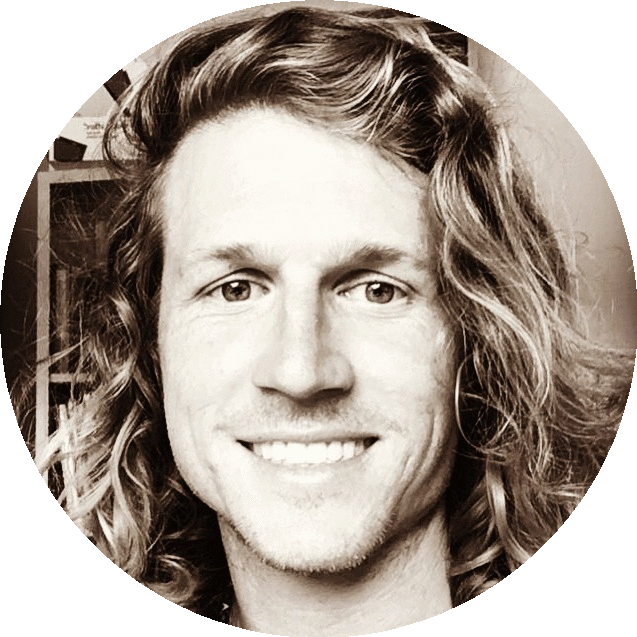
Blake Colaianne is a former Earth science teacher turned contemplative researcher. He is currently a Ph.D. Candidate in Penn State University. His research focuses on supporting adolescent development using both a culture of belonging in high schools and prevention and promotion programs that teach mindfulness and compassion skills. His commitment to exploring anti-oppressive, caring school practices has given him the chance to work with school districts across the United States, teaching mindfulness and compassion workshops to students, teachers, and community members. He loves meditation, music, movies, and mountains and is deeply grateful for his family and friends who continue to root for him.
Blake Colaianne SRI 2020 Poster Video
Parts of the interview have been edited for clarity and length.
What brought you to the field of contemplative sciences?
I often say how, as a teacher, I saw firsthand just how stressful it is to be a high school student and how this stress often stems from constant social comparison (compare and despair, as we say). At the same time, I also saw how interested young people were to connect with others and ask questions about life. Looking for a way to start talking about these issues in school, I began studying mindfulness and how it could be offered to students.
But the truth is, something happened before that. I was the one experiencing a lot of stress and social comparison. After college, I was a new teacher living by myself in a new area and trying to make sure that my friends and family perceived me as “successful.” My colleague and friend, Matt Rojahn, sensed that I was struggling and recommended the book, Train Your Mind, Change Your Brain by Sharon Begley. He had a feeling that the science behind it would keep me intrigued. Sure enough, a few months later, I took my first meditation class. I remember how novel it felt to be taking a class where the intention was to just be – to breathe, notice, and settle. I found so much leverage in becoming more aware of who I was. A year later, Matt and I began an after-school mindfulness program for students.
What was your last research study?
My advisor, Dr. Robert Roeser, and I teamed up with our friends at the University of Pittsburgh to conduct a few longitudinal studies with high schools in Pittsburgh. In our latest study, we were interested in the development of compassion and belonging in adolescence. We found that when students feel like teachers support them at the beginning of the year, they feel a stronger sense of school belonging in the middle of the year and show higher compassion at the end of the year. Put simply: When high school students receive care, they are more likely to extend care. In addition, we found that the development of compassion and belonging seem to be intertwined. For example, students who reported an increase in their sense of belonging to the school community throughout the year also reported an increase in their compassion. This is important to understand how to think at a systems-level about cultivating compassion in students.
How can mindful teaching impact student development?
Great question. Perhaps first, we might ask: How can mindful teaching impact teacher development? High school students are keenly aware of people’s intentions; they can sense a fraud in a heartbeat. When a teacher wants to explore how mindful teaching can impact their students, I always encourage them to explore mindfulness for themselves first. See if it feels authentic and meaningful for them, and then invite them to consider how it can impact their students and classroom environment.
My advisor developed a mindful teaching model around the qualities of “calm, clear, and kind,” inspired by a Mind & Life conference around contemplative education. In one study, we found that high school students who see their teachers demonstrating these qualities show improvements in these same qualities. Mindful teachers might help create mindful students.
This is usually the moment when someone asks, “Ok, but did these qualities also improve the students’ grades?” And I know that’s important. But honestly, let’s make sure they are taking care of themselves and each other, too.
Courage of Care Retreat in Seattle, WA – 2019
“Mindful teachers might help create mindful students.”
How might school climates also impact student development?
This is the heart of it. We spend so much time building individual skills that we often forget how much a person’s environment influences their behavior. In fact, in the study I just described above, we found that teachers who were perceived as “calm, clear, and kind” created an environment conducive to fulfilling the needs of adolescents (autonomy, competence, social connection). It seems this kind of environment provided a supportive “fit” that led to an increase in students’ mindfulness and compassion. This is all rooted in stage-environment fit theory, developed by Dr. Jacquelynne Eccles. Dr. Eccles was my advisor’s advisor, so this view has really impacted my academic perspective.
Do you think there are good interventions designed for improving mindful teaching and supportive school communities? What are some of the primary barriers to implementing these types of programs?
Yes, and there’s a lot of evidence to support this. But there’s much more work that needs to be done before we start providing it to the masses. There are several studies on mindfulness programs, but I think we get so caught up in the classic pre/post statistical changes in desirable outcomes that we forget to fully explore whether the program was implemented well.
Is there a sense of trust between the researchers and the school community? Is there a commitment to finding time to teach and merge it with the million other state requirements? Does the program teach the content in a way that honors teachers’ and students’ identities? Are we teaching concepts that matter to teachers and young people in a way that meets them where they are?
Many barriers, but not impossible to overcome. So, I believe there are contemplative practices and programs that can bring an enormous amount of relief and joy to teachers and students (I’ve seen it happen many times). But I also think we need to move forward carefully.
What is the Art and Science of Human Flourishing course that you’ve been co-developing with your colleagues?
The course presents a model for flourishing that cultivates skills of awareness and compassion while also instilling the wisdom of what it means to live a meaningful life. In addition to the lectures, students participate in a weekly “meditation lab,” where they learn a different practice each week and discuss the week’s topics. We’ve collected data at all three universities across a few semesters now. Through quasi-experimental trials, we’ve shown that the course has a positive impact on flourishing skills and perspectives (like attention, self-compassion, shared humanity), which is really exciting.
When I talk with the students, they say they like the course because it’s just so different from what they’re used to. Young people want to explore and question life. We pull from many fields (psychology, philosophy, art) in hopes of providing them with all sorts of possible answers. In the end, students realize that there isn’t a set “recipe” for flourishing. But being open to the journey, and desiring to bring others along with you, just might be enough.
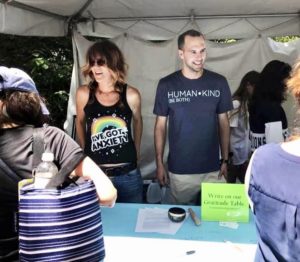
Mindfulness Booth at Penn State Arts Fest in Summer 2019
“In the end, students realize that there isn’t a set “recipe” for flourishing. But being open to the journey, and desiring to bring others along with you, just might be enough.”
What are some of the current projects you are working on and what gaps do you anticipate to fill in the field?
For my dissertation, I developed a new compassion-based program for high school students. We assessed program implementation and pre/post/follow-up impact at one high school. The program was based on the framework of Courage of Care, which is an incredible non-profit that merges contemplative training with social activism. The high school program aims to cultivate skills of compassion for the self and others and to realize the bridge between these two kinds of care. This approach makes this training so unique – while most mindfulness programs for youth focus almost entirely on self-care, this program sends the message that the way we care for ourselves is rooted in the way we care for others and vice versa. It’s not just “my story, my struggle,” it’s “our story, our struggle.” At least, I can tell you that one of the most common pieces of feedback I got was that the program made students feel “not alone.”
What are your aspirations for how your body of work will impact the field of contemplative sciences?
My goal is to advance current frameworks for school-based mindfulness programs, focusing primarily on individual outcomes, by including more relational-oriented skills. Reducing stress and mental health difficulties is certainly important, but I think we’re missing a key reason for those struggles: a young person’s social sphere. Also, we know that adolescents seek the need for self-transcendence – to be part of something beyond themselves and contribute to their communities. I think contemplative practices can help fulfill these needs, but it doesn’t stop at the word “mindfulness.” Adolescence is a perfect opportunity to talk about compassion, empathy, systems-thinking, and what it means to belong. I hope to help steer contemplative education programs in that direction.
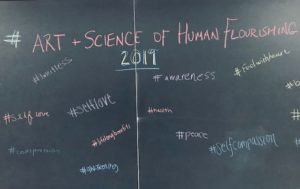
Students provided hashtags for The Art and Science of Human Flourishing course at Penn State.
“The high school program aims to cultivate skills of compassion for the self and others and to realize the bridge between these two kinds of care.”
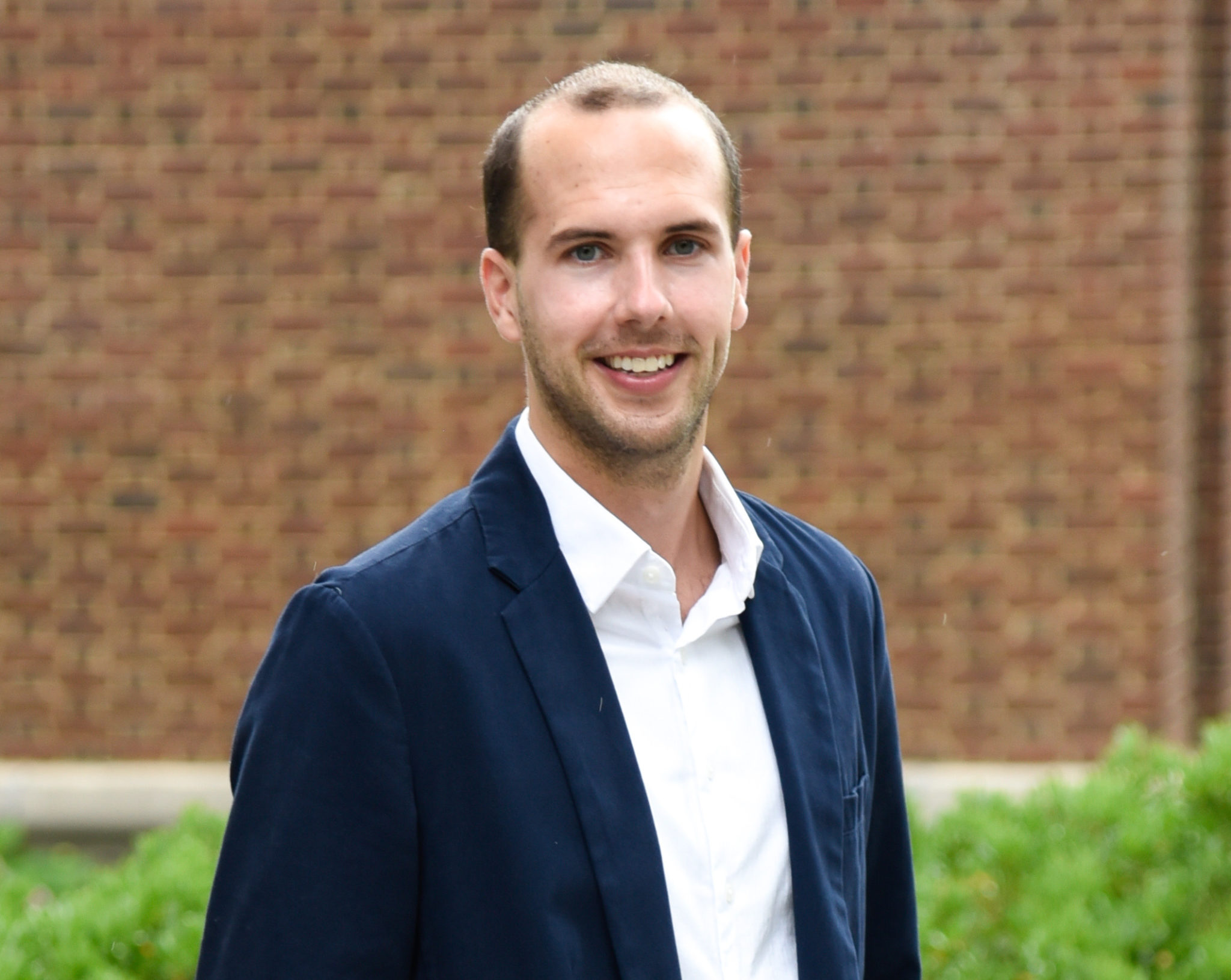
University of Pittsburgh and works in his advisor Mindfulness and Self-Regulation Lab. In his research, he utilizes both quantitative and qualitative methods to examine how mindfulness meditation training can support positive youth development from adolescence to young adulthood. In addition to his research, Michael recently joined the team at
“At that moment I realized that death was way closer than I would have ever imagined…”
What was your last research study?
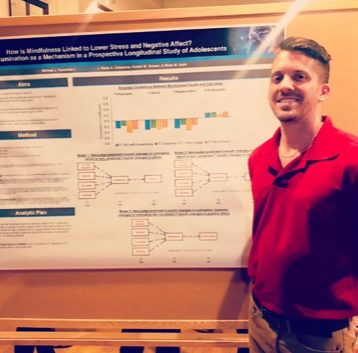
We recently completed a longitudinal study to administer self-report assessments to high school students across a full academic year. We captured their self-reported levels of mindfulness, rumination, and positive and negative affect, among a host of other measures. We were interested in examining rumination as a mediating psychological process linking mindfulness to positive and negative mood.
We found that higher levels of the non-judgment component of mindfulness (and total mindfulness) in September predicted a reduction in rumination in January that, in turn, predicted longitudinal reductions in negative affect at the end of the school year. In other terms, greater mindfulness predicted less rumination, which predicted less negative affect over the course of a full academic year. We didn’t see any changes in positive affect.
The way we kind of understand these findings is that the reduction of rumination may be more tightly linked with negative emotion than positive emotion, which is that simply removing causes of suffering may not be sufficient to simultaneously enhance well-being.
What is the concept of rumination and how does it contrast with the concept of mindfulness?
They’re like two sides of the same coin: they’re similar in some ways but very different. I would say rumination is a negative, cyclical, self-reflective mode of thinking that proliferates from a place of automaticity. It kind of snowballs and gets of a mind of its own. In some ways, it’s devoid of a receptive, intentional awareness of that process.
On the other hand, mindfulness is more of an intentional awareness of the ongoing mental stream of consciousness, the unfolding thought patterns and body sensations. When this cyclical negative process occurs, you might notice that it’s occurring, which can dampen the snowballing effect. You just watch that unfold and notice that proliferation without giving it fuel.
How is nonjudgmental acceptance associated with reductions in rumination?
So whereas judgment of these cyclical negative thoughts would give it fuel, a nonjudgmental orientation towards rumination reduces resistance and slows down the proliferation of this rumination cycle. You can stop it in its tracks. Instead of saying, “I’m no good,” you can inoculate against that type of thinking. A nonjudgmental stance gives that psychological distance or space; you can watch it unfold and become curious about it.
“A nonjudgmental stance gives that psychological distance or space; you can watch it unfold and become curious about it.”
Why are longitudinal study designs important for your study of mindfulness?
It’s important to have repeated snapshots over time to be able to observe a naturalistic development of some of these psychological processes. Especially in the work that I do with adolescents and young adults, it’s a time period of profound growth and changes in metacognition and self-reflective processes. I think longitudinal designs allow you to map these trajectories across time and sometimes provide insight into critical inflection points that provide unique opportunities to intervene.
What are some of the current projects that you’re working on?
I’m writing up the results of a study I conducted in the summer of 2019 where I attended a weeklong residential mindfulness meditation retreat for adolescents. I was both a researcher and a retreatant. I administered daily diary assessments each day and conducted focus groups on the final day of the retreat with the goal of uncovering the sources of suffering for adolescents and constituents of well-being that arose during their meditation practice.
It was motivating to hold a space for their experiences instead of assuming their experiences nicely fit into an adult framework. Teens care about very different things when they are mediating and ask questions like, “who am I, how can I feel like I have a sense of belonging with my peers?” Adult approaches to mindfulness tend to put an emphasis on stress reduction. I would argue that these developmental insights add value to the conversation. It leaves us wondering how we can incorporate those youth voices, values, and experiences into our interventions to meet them “where they are” so that they are designed for youth, by youth.
Do you think there are good interventions designed for adolescents or do you think that’s a gap that could be addressed?
There are good interventions designed for teens, but I think generally there is an adult-oriented framework of stress reduction without considering the struggles they face in their practice as well as the constituents of well-being that emerge and develop. Are they learning about who they are more so than reducing stress? Are they able to kind of observe their thought patterns and motivations and align their values and their behaviors? I think there are good programs out there but I think we can still improve. I think we can honor the voices of youth by incorporating them into our programs to increase program motivation and uptake.
How are you using mobile mindfulness training programs in your research?
Currently, we are piloting and testing a tailored mobile mindfulness training program to support students’ engagement and learning. I emphasize the word tailored because this is where I think there’s a huge gap in the programs currently administered to adolescence and young adults. We built a tailored mobile mindfulness program derived from focus groups with the explicit goal of boosting engagement and learning.
I think there’s a lot of promise with mobile mindfulness interventions because adolescents and young adults are engaged with their cellular devices more than ever. I think it goes back to meeting youth “where they are” and mobile mindfulness training programs can potentially benefit youth in ways that might not be possible through traditional mindfulness training formats.
“It leaves us wondering how we can incorporate those youth voices, values, and experiences into our interventions to meet them “where they are” so that they are designed for youth, by youth.”
What is your dream study?
Honestly, I miss and appreciate retreat contexts especially since they are structured and standardized almost like a laboratory “out in the wild,” which is hard to achieve. I would say my dream study would be a long term retreat with a racially diverse sample of teens or young adults. It would either be a 15 or 30-day retreat with a group of meditation-naïve youth. I would implement a mixed-methods approach to better understand how meditative insights might promote flourishing outcomes, such as authenticity and meaning in life. I would include focus groups both pre- and post-retreat, daily diary assessments each day of the retreat, and follow-up interviews and ecological momentary assessments to map participant’s trajectories and learn whether continued practice and dosage impact participants’ authenticity and meaning in life. I’m still working out the details of my dream study but the insights gleaned from contemplative practice and the ways in which it informs who we are, who we want to be, and how we can live a life of great purpose (especially during key developmental periods) deserves greater attention!
Where do you see the field of contemplative sciences heading and how will you take it there?
I think it’s starting to move in the direction of becoming more contextualized and tailored. Mindfulness is less of a one size fits all panacea, which is becoming clearer in the literature. I think we also need to seek out opportunities to accurately describe and contextualize how it can be applied in everyday life for a diversity of people with a diversity of challenges. That level of ideographic precision is increasingly important.
At the Mind & Life Summer Research Institute, the first year I attended focused on diversity and inclusion and it really opened my eyes and mind to where we have been and where we need to go. And so I think a stronger emphasis on interdisciplinary approaches is a vital path forward that we need in order to move toward.
As far as youth and adolescent development are concerned, we should consider implementing ways to align mindfulness programs with their motives and values. Importantly, we’ll contextualize and tailor these mindfulness interventions to create more developmentally appropriate programs and ultimately foster positive youth development, setting them up on trajectories to be adults who are calm in body, clear in mind, and kind in approach. What will a world with more of that look like?
“I think we also need to seek out opportunities to accurately describe and contextualize how it can be applied in everyday life for a diversity of people with a diversity of challenges.”