
Interview with Dr. Amy Brown
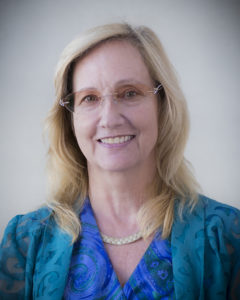
Amy Brown, PhD, RDN
Amy Brown, PhD, RDN, is a Professor in the John A. Burns School of Medicine at the University of Hawai’i at Mānoa. Her clinical and laboratory research is the area of Integrative Medicine and Medical Nutrition Therapy as it relates to diet, foods, and plant extracts that may hold therapeutic potential for disease. Dr. Brown has published in the field of diet and disease with regard to inflammatory bowel disease, psoriasis, dietary supplements, probiotics, autism, and the in vitro anti-proliferation of cancer cells by Pacific Basin plant substances from poi, ginger, and guava. She has authored over 44 scientific publications, along with “Understanding Food (6th Ed),” the number one college textbook in its field. Dr. Brown has also recognized the need for mindfulness in education and now teaches a mindfulness course for college students at the University of Hawai’i at Mānoa.
Parts of the interview have been edited for clarity and length.
What inspired you to develop a mindfulness course for the University of Hawai’i?
It was a confluence of events that melded into one path that gently guided me into teaching mindfulness to college students. About 15 years ago, I joined a small group meditating weekly in the beautiful hills of Honolulu, Hawai’i in a Buddhist temple led by a community volunteer with a deep, calming voice. Working at a university is not easy, and I had to deal with some pretty petty politics, and a part of me just gave up and gave it all to God-completely. At this point, I was alone in the Diamond Head theater waiting for the Christian service to begin, and to my amazement everything just melded together into this beautiful symphony of moving color. The energy was all encompassing infusing me with the feeling of pure God universally intertwined with Love. My perspective shifted where I could look down and saw myself with my silly problems and I just began to laugh. Nothing could bother me now.
The researcher bug in me sent me searching for everything I could find on mindfulness. I found and joined a local mindfulness group called Mindful Hawai’i. The leader asked me why there wasn’t a mindfulness class at the university. There was one, but limited to about 20 student a semester. The initial barrier of not having a “degree” in mindfulness was swept out into the ocean. After all, what did people do before degrees existed? They learned!
I meekly submitted the paperwork for a new class called CAAM 401 Mindfulness Meditation and Stress Reduction. It grew from 20 students in 2017 to over 100 students by 2021. The feedback is incredible and it’s the best and the most fulfilling class I’ve ever taught.
“I wanted to help people learn the life-coping skills I did not have at their young age.”
I wanted to help people learn the life-coping skills I did not have at their young age. Ultimately, it will change the world, because when you change each person’s heart, a “positron” is born. A mindful person or “positron” does not hurt others or the world. My vision is that when you change a person’s heart-centeredness, it will benefit the world to make people less unaware, harmful, and ego-driven and instead more aware, peaceful, and working toward the greater good.
How have you structured the class to optimize engagement for a larger course? Do you have homework, quizzes, or take attendance?
I wanted to reduce stress, so there are no quizzes, tests, papers, presentations or even a final. The only requirement is attendance. You just have to “be present.” Zoom takes attendance through Excel and even logs if they are late or leave early. No slouching is another requirement because a relaxed, yet somewhat straight spine is important for staying at “attention” and experiencing the deeper benefits of meditation. Despite these simple requirements, there’s always someone at the end of the semester with an “F” grade, asking me, “How could you do this?” Even the attendance could tell that these students weren’t present…
“The feedback is incredible and it’s the best and the most fulfilling class I’ve ever taught.”
What are some of the challenges of teaching mindfulness as a university course on Zoom?
I was one of the first professors to create and teach an online course 15 years ago, but it’s a burden when it’s all your classes due to COVID. You can’t feel the pulse of the class. They stare at you like zombies. You crack jokes and no one cracks a smile. The students are tired and exhausted. I feel for them, but there’s only so much saline you can pump into the lifeless. Yet, they end the class with a symphony of thank you “Aunties,” and it pumps me up, makes me smile, and continue trekking on.
Do you feel that the COVID pandemic has increased the need for mindfulness skills training in university settings?
Yes. I grew up with not much life skill teachings. I had plenty of academic education, but real life lessons were left to chance and circumstance. I literally could have been killed, but made it through. Anyway, I think it’s terribly insufficient not to teach life skills; it’s literally akin to throwing someone overboard and telling them to swim. Well, I swam like hell, but wanted to make it easier for these emerging adults to have some rope to haul themselves onto shore. I didn’t want them to needlessly struggle and suffer as much as I did, and mindfulness is one of those tools that definitely helps us all during this time. I’m helping them in the way that I wish I would have been helped.
Do you have any quotes from your class that students particularly resonate with?
“It was only a sunny smile, and little it cost in the giving, but like morning light it scattered the night and made the day worth living. “
F. Scott Fitzgerald