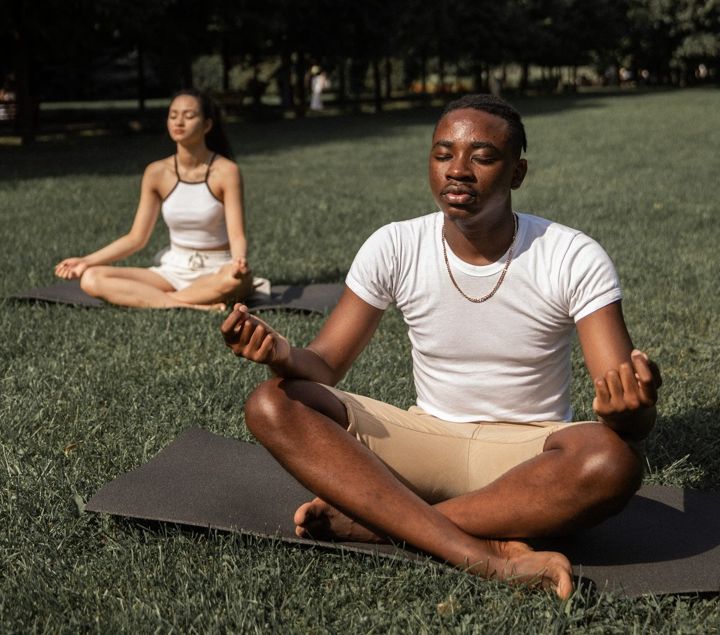
What is Mindfulness-Oriented Recovery Enhancement (MORE)?
By The Science of Mindfulness
Mindfulness-Oriented Recovery Enhancement (MORE)
Mindfulness-Oriented Recovery Enhancement, also known as MORE, is a group program developed by Eric Garland and colleagues for people living with chronic pain, opioid misuse, and other addictive behaviors1. It was designed to target the mechanisms that chronic pain and opioid misuse have in common2. MORE combines three elements: training in mindfulness, cognitive reappraisal (reinterpreting stressful or painful experiences), and savoring positive experiences3.
Course Format: MORE is delivered as eight weekly group sessions of about two hours each3. Sessions teach participants to notice automatic reactions to pain, stress, and craving, to reinterpret difficult experiences, and to deliberately attend to natural, healthy sources of reward. Home practice supports the work between sessions.
Instructor Requirements: MORE is delivered by clinicians who have completed training in the protocol, typically behavioral health professionals with experience in pain or addiction care and a personal mindfulness practice.
Course Outcomes: An early-stage randomized trial of 115 people with chronic pain compared eight weeks of MORE with a support group. MORE participants reported significantly greater reductions in pain severity and pain interference, less stress arousal, and less desire for opioids, and were more likely to no longer meet criteria for opioid use disorder right after treatment. The improvements in pain were maintained at three-month follow-up, but the effects on opioid use disorder status were not sustained2.
A larger interviewer-blinded trial in primary care clinics in Utah enrolled 250 adults who were receiving long-term opioid therapy for chronic pain and misusing their medication. Participants were randomized to MORE or supportive group psychotherapy. Through nine months of follow-up, the odds of reduced opioid misuse were about twice as high with MORE (odds ratio 2.06; 95% CI 1.17–3.61). At nine months, 45.0% of MORE participants with available data were no longer misusing opioids, compared with 24.4% of those in supportive therapy. MORE was also superior for pain severity and pain-related interference, and was associated with a larger reduction in opioid dose, less emotional distress, and lower opioid craving. The authors noted that attrition, partly linked to the COVID-19 pandemic, was a limitation: 36.8% of participants had discontinued the study by nine months3.
Clinical Populations: MORE has been studied in adults with chronic pain who are misusing prescription opioids, including those in primary care settings3. It should be delivered alongside, not instead of, appropriate medical care.
Learn More: The 2022 JAMA Internal Medicine trial is the best starting point. For related programs, see Mindfulness-Based Relapse Prevention (MBRP) and Mindfulness-Based Pain Management (MBPM).
This page is for general education and is not medical advice. Please speak with a qualified health professional about treatment options.
References
- Garland, E. L. (2013). Mindfulness-oriented recovery enhancement for addiction, stress, and pain. NASW Press.
- Garland, E. L., Manusov, E. G., Froeliger, B., Kelly, A., Williams, J. M., & Howard, M. O. (2014). Mindfulness-oriented recovery enhancement for chronic pain and prescription opioid misuse: Results from an early-stage randomized controlled trial. Journal of Consulting and Clinical Psychology, 82(3), 448-459. https://doi.org/10.1037/a0035798
- Garland, E. L., Hanley, A. W., Nakamura, Y., Barrett, J. W., Baker, A. K., Reese, S. E., Riquino, M. R., Froeliger, B., & Donaldson, G. W. (2022). Mindfulness-Oriented Recovery Enhancement vs Supportive Group Therapy for Co-occurring Opioid Misuse and Chronic Pain in Primary Care. JAMA Internal Medicine, 182(4), 407. https://doi.org/10.1001/jamainternmed.2022.0033