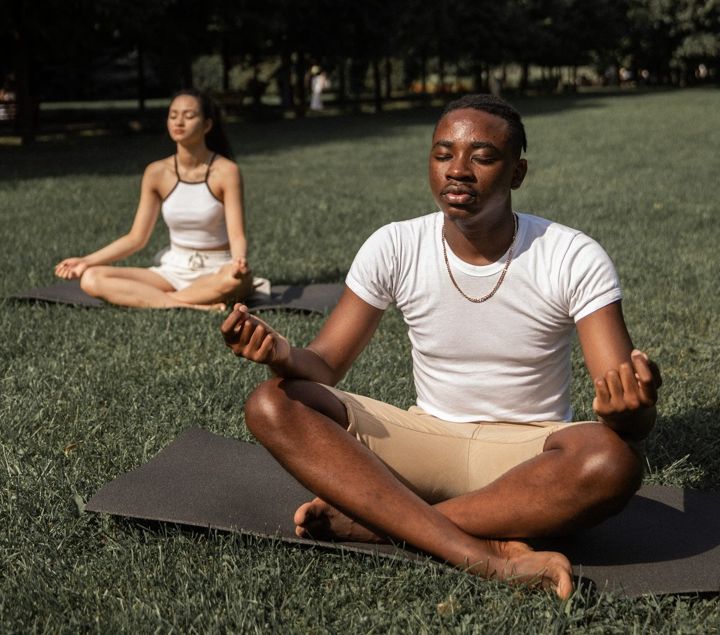
What is Compassion Cultivation Training (CCT)?
By The Science of Mindfulness
Compassion Cultivation Training (CCT)
Compassion Cultivation Training, also known as CCT, is a secular group course developed at Stanford University’s Center for Compassion and Altruism Research and Education (CCARE) by Thupten Jinpa and colleagues. It combines contemplative practices with findings from psychological science to help people strengthen their capacity for compassion toward others and toward themselves1, 2.
Course Format: CCT is taught as a group course with weekly classes and daily home practice. In the research trials it lasted nine weeks1; current schedules vary by provider. The curriculum builds gradually: participants begin by settling and focusing the mind, then cultivate compassion for a loved one, then for themselves, and then for other people, and finish with practices for putting compassion into action in daily life.
Instructor Requirements: CCT teachers complete a teacher training program and are expected to have their own meditation practice. Teacher training and information about courses are available through Stanford CCARE and affiliated organizations.
Course Outcomes: In a randomized controlled trial, 100 community adults were assigned to CCT or a waitlist control. Compared with the waitlist group, the CCT group showed greater mindfulness and happiness, less worry, and less emotional suppression. Within the CCT group, more formal meditation practice was linked to larger reductions in worry and emotional suppression1. An earlier randomized trial tested whether the program increases compassion itself2.
CCT belongs to the wider family of compassion-based interventions, which a meta-analysis of 21 randomized controlled trials found to improve compassion, self-compassion, mindfulness, depression, anxiety, distress, and well-being, though the evidence relies mostly on small samples3.
Clinical Populations: CCT was designed for the general public, not as a treatment for a specific disorder, and the research to date has mainly involved community adults. Because the trials used waitlist controls and self-report measures, larger studies with active comparison groups would give a clearer picture.
Learn More: Stanford CCARE shares information about the program and its research. For a self-compassion course with a different emphasis, see Mindful Self-Compassion (MSC).
This page is for general education and is not medical advice. Please speak with a qualified health professional about treatment options.
References
- Jazaieri, H., McGonigal, K., Jinpa, T., Doty, J. R., Gross, J. J., & Goldin, P. R. (2013). A randomized controlled trial of compassion cultivation training: Effects on mindfulness, affect, and emotion regulation. Motivation and Emotion, 38(1), 23-35. https://doi.org/10.1007/s11031-013-9368-z
- Jazaieri, H., Jinpa, G. T., McGonigal, K., Rosenberg, E. L., Finkelstein, J., Simon-Thomas, E., Cullen, M., Doty, J. R., Gross, J. J., & Goldin, P. R. (2012). Enhancing Compassion: A Randomized Controlled Trial of a Compassion Cultivation Training Program. Journal of Happiness Studies, 14(4), 1113-1126. https://doi.org/10.1007/s10902-012-9373-z
- Kirby, J. N., Tellegen, C. L., & Steindl, S. R. (2017). A Meta-Analysis of Compassion-Based Interventions: Current State of Knowledge and Future Directions. Behavior Therapy, 48(6), 778-792. https://doi.org/10.1016/j.beth.2017.06.003