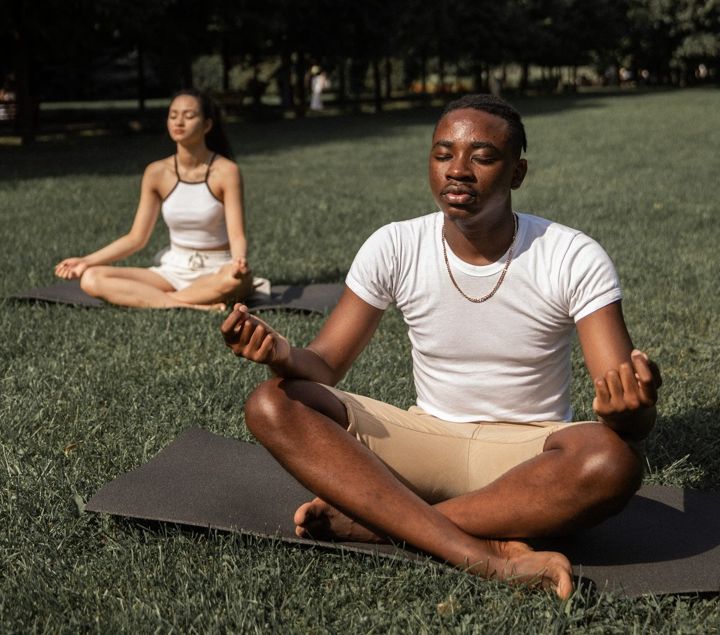
What is Mindfulness-Based Pain Management (MBPM)?
By The Science of Mindfulness
Mindfulness-Based Pain Management (MBPM)
Mindfulness-Based Pain Management, also known as MBPM, is an eight-week group program for people living with chronic pain and illness. It was developed by Vidyamala Burch, who lives with chronic pain from spinal injuries, and is taught through the organization Breathworks1, 2. While MBSR was also first designed for people with chronic pain, MBPM was built specifically around pain and the distress that surrounds it, with a strong emphasis on kindness toward the body and on distinguishing the pain sensations themselves from the suffering added by resistance and self-criticism.
Course Format: In a recent randomized trial, MBPM was delivered as eight weekly group sessions of about two and a half hours each, totaling roughly 20 hours of training3. Sessions combine mindfulness of the breath and body, gentle movement, and practices for working with difficult emotions, along with home practice.
Instructor Requirements: Breathworks trains and accredits its own teachers; accredited courses are offered in the UK and internationally.
Course Outcomes: An early evaluation of the Breathworks program reported two studies. In the first, the intervention group improved significantly on self-report measures of depression, outlook, catastrophizing, and pain self-efficacy, whereas the comparison group did not. Particularly large effects were found for pain acceptance. In the second, scores on a mindfulness questionnaire (the Mindful Attention Awareness Scale) were significantly higher after the program in the intervention group only2.
A randomized clinical trial in Spain assigned 90 adults with chronic pain to MBPM (50 participants) or a wait-list control (40 participants). The MBPM group showed moderate to large improvements over controls in pain management and acceptance, use of pain medication, psychological symptoms, negative thinking, self-blame, mental-health-related quality of life, and resilience. Participants without fibromyalgia benefited significantly more than those with fibromyalgia, and the authors suggested that adding cognitive-behavioral components might help with sleep problems, need for control, and rumination, which MBPM did not appear to address3.
Clinical Populations: MBPM has been studied in adults with chronic pain of various kinds, including fibromyalgia. As with other pain programs, it is meant to be used alongside medical care.
Learn More: Burch’s book Living Well with Pain and Illness1 sets out the approach. For another program that combines mindfulness with pain and recovery, see Mindfulness-Oriented Recovery Enhancement (MORE).
This page is for general education and is not medical advice. Please speak with a qualified health professional about treatment options.
References
- Burch, V. (2008). Living well with pain and illness: The mindful way to free yourself from suffering. Piatkus.
- Cusens, B., Duggan, G. B., Thorne, K., & Burch, V. (2010). Evaluation of the Breathworks mindfulness-based pain management programme: Effects on well-being and multiple measures of mindfulness. Clinical Psychology & Psychotherapy, 17(1), 63-78. https://doi.org/10.1002/cpp.653
- Pérez-Fernández, J. I., Salaberria, K., & Ruiz de Ocenda, Á. (2022). Mindfulness-Based Pain Management (MBPM) for chronic pain: A randomized clinical trial. Mindfulness, 13(12), 3153-3165. https://doi.org/10.1007/s12671-022-02023-1