Interview with Blake Colaianne

By Michael Tumminia
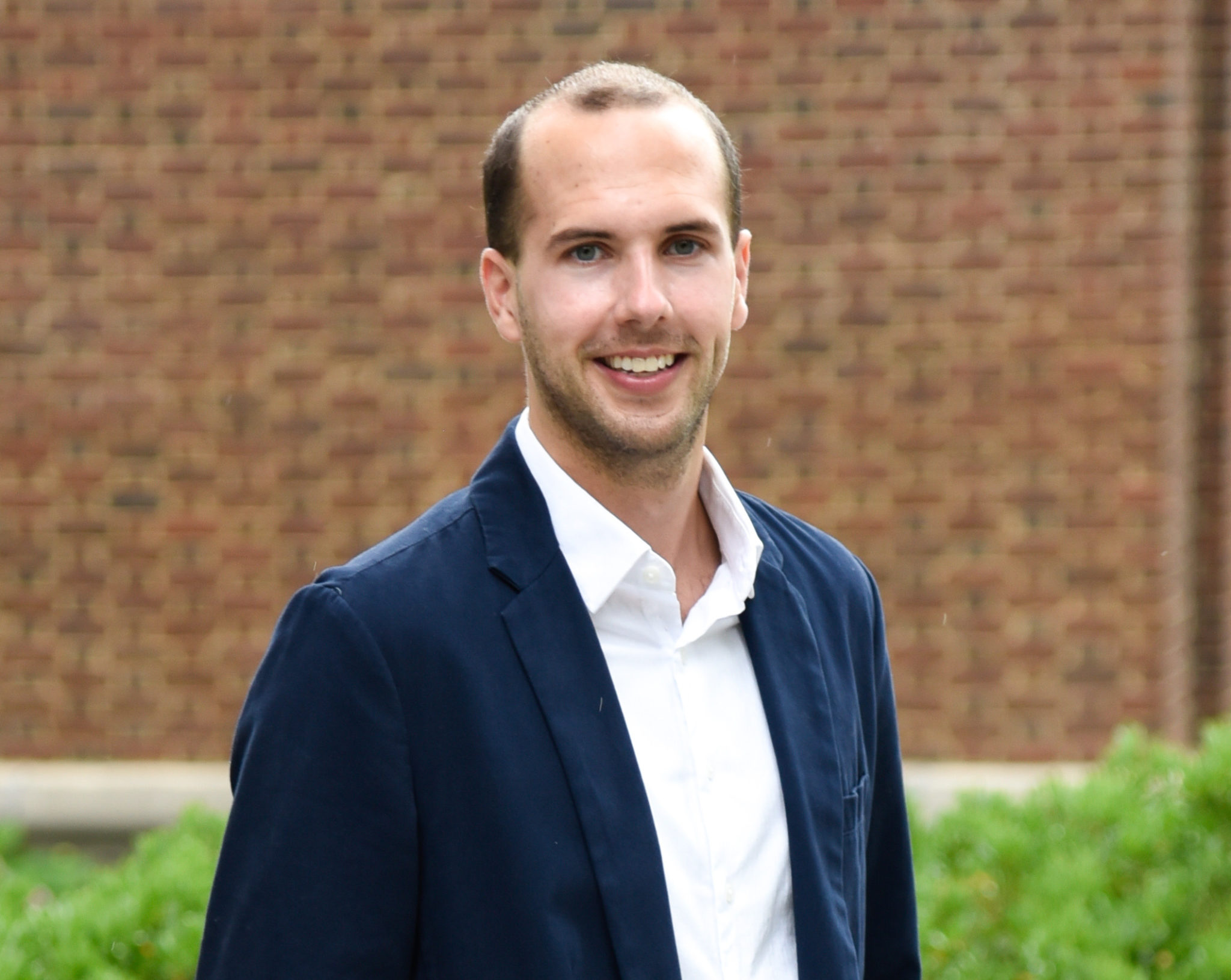
Blake Colaianne
Blake Colaianne is a former Earth science teacher turned contemplative researcher. He is currently a Ph.D. Candidate in Penn State University. His research focuses on supporting adolescent development using both a culture of belonging in high schools and prevention and promotion programs that teach mindfulness and compassion skills. His commitment to exploring anti-oppressive, caring school practices has given him the chance to work with school districts across the United States, teaching mindfulness and compassion workshops to students, teachers, and community members. He loves meditation, music, movies, and mountains and is deeply grateful for his family and friends who continue to root for him.
Blake Colaianne SRI 2020 Poster Video
Parts of the interview have been edited for clarity and length.
What brought you to the field of contemplative sciences?
I often say how, as a teacher, I saw firsthand just how stressful it is to be a high school student and how this stress often stems from constant social comparison (compare and despair, as we say). At the same time, I also saw how interested young people were to connect with others and ask questions about life. Looking for a way to start talking about these issues in school, I began studying mindfulness and how it could be offered to students.
But the truth is, something happened before that. I was the one experiencing a lot of stress and social comparison. After college, I was a new teacher living by myself in a new area and trying to make sure that my friends and family perceived me as “successful.” My colleague and friend, Matt Rojahn, sensed that I was struggling and recommended the book, Train Your Mind, Change Your Brain by Sharon Begley. He had a feeling that the science behind it would keep me intrigued. Sure enough, a few months later, I took my first meditation class. I remember how novel it felt to be taking a class where the intention was to just be – to breathe, notice, and settle. I found so much leverage in becoming more aware of who I was. A year later, Matt and I began an after-school mindfulness program for students.
What was your last research study?
My advisor, Dr. Robert Roeser, and I teamed up with our friends at the University of Pittsburgh to conduct a few longitudinal studies with high schools in Pittsburgh. In our latest study, we were interested in the development of compassion and belonging in adolescence. We found that when students feel like teachers support them at the beginning of the year, they feel a stronger sense of school belonging in the middle of the year and show higher compassion at the end of the year. Put simply: When high school students receive care, they are more likely to extend care. In addition, we found that the development of compassion and belonging seem to be intertwined. For example, students who reported an increase in their sense of belonging to the school community throughout the year also reported an increase in their compassion. This is important to understand how to think at a systems-level about cultivating compassion in students.
How can mindful teaching impact student development?
Great question. Perhaps first, we might ask: How can mindful teaching impact teacher development? High school students are keenly aware of people’s intentions; they can sense a fraud in a heartbeat. When a teacher wants to explore how mindful teaching can impact their students, I always encourage them to explore mindfulness for themselves first. See if it feels authentic and meaningful for them, and then invite them to consider how it can impact their students and classroom environment.
My advisor developed a mindful teaching model around the qualities of “calm, clear, and kind,” inspired by a Mind & Life conference around contemplative education. In one study, we found that high school students who see their teachers demonstrating these qualities show improvements in these same qualities. Mindful teachers might help create mindful students.
This is usually the moment when someone asks, “Ok, but did these qualities also improve the students’ grades?” And I know that’s important. But honestly, let’s make sure they are taking care of themselves and each other, too.
“Mindful teachers might help create mindful students.”
How might school climates also impact student development?
This is the heart of it. We spend so much time building individual skills that we often forget how much a person’s environment influences their behavior. In fact, in the study I just described above, we found that teachers who were perceived as “calm, clear, and kind” created an environment conducive to fulfilling the needs of adolescents (autonomy, competence, social connection). It seems this kind of environment provided a supportive “fit” that led to an increase in students’ mindfulness and compassion. This is all rooted in stage-environment fit theory, developed by Dr. Jacquelynne Eccles. Dr. Eccles was my advisor’s advisor, so this view has really impacted my academic perspective.
Do you think there are good interventions designed for improving mindful teaching and supportive school communities? What are some of the primary barriers to implementing these types of programs?
Yes, and there’s a lot of evidence to support this. But there’s much more work that needs to be done before we start providing it to the masses. There are several studies on mindfulness programs, but I think we get so caught up in the classic pre/post statistical changes in desirable outcomes that we forget to fully explore whether the program was implemented well.
Is there a sense of trust between the researchers and the school community? Is there a commitment to finding time to teach and merge it with the million other state requirements? Does the program teach the content in a way that honors teachers’ and students’ identities? Are we teaching concepts that matter to teachers and young people in a way that meets them where they are?
Many barriers, but not impossible to overcome. So, I believe there are contemplative practices and programs that can bring an enormous amount of relief and joy to teachers and students (I’ve seen it happen many times). But I also think we need to move forward carefully.
What is the Art and Science of Human Flourishing course that you’ve been co-developing with your colleagues?
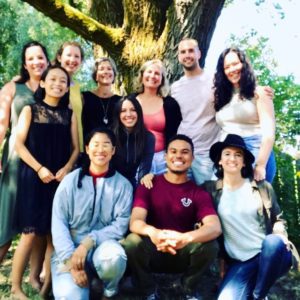
The Art and Science of Human Flourishing is a new course for undergraduates that we’ve been designing and studying here at Penn State, the University of Wisconsin-Madison, and the University of Virginia. It’s truly been a team effort. I’ve had the opportunity to teach the course and help design and conduct the research around it.
The course presents a model for flourishing that cultivates skills of awareness and compassion while also instilling the wisdom of what it means to live a meaningful life. In addition to the lectures, students participate in a weekly “meditation lab,” where they learn a different practice each week and discuss the week’s topics. We’ve collected data at all three universities across a few semesters now. Through quasi-experimental trials, we’ve shown that the course has a positive impact on flourishing skills and perspectives (like attention, self-compassion, shared humanity), which is really exciting.
When I talk with the students, they say they like the course because it’s just so different from what they’re used to. Young people want to explore and question life. We pull from many fields (psychology, philosophy, art) in hopes of providing them with all sorts of possible answers. In the end, students realize that there isn’t a set “recipe” for flourishing. But being open to the journey, and desiring to bring others along with you, just might be enough.

“In the end, students realize that there isn’t a set “recipe” for flourishing. But being open to the journey, and desiring to bring others along with you, just might be enough.”
What are some of the current projects you are working on and what gaps do you anticipate to fill in the field?
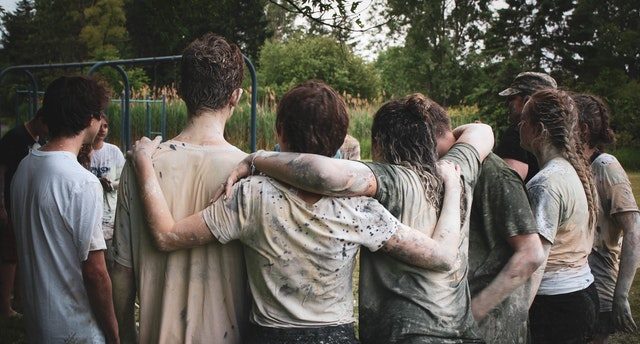
For my dissertation, I developed a new compassion-based program for high school students. We assessed program implementation and pre/post/follow-up impact at one high school. The program was based on the framework of Courage of Care, which is an incredible non-profit that merges contemplative training with social activism. The high school program aims to cultivate skills of compassion for the self and others and to realize the bridge between these two kinds of care. This approach makes this training so unique – while most mindfulness programs for youth focus almost entirely on self-care, this program sends the message that the way we care for ourselves is rooted in the way we care for others and vice versa. It’s not just “my story, my struggle,” it’s “our story, our struggle.” At least, I can tell you that one of the most common pieces of feedback I got was that the program made students feel “not alone.”
What are your aspirations for how your body of work will impact the field of contemplative sciences?
My goal is to advance current frameworks for school-based mindfulness programs, focusing primarily on individual outcomes, by including more relational-oriented skills. Reducing stress and mental health difficulties is certainly important, but I think we’re missing a key reason for those struggles: a young person’s social sphere. Also, we know that adolescents seek the need for self-transcendence – to be part of something beyond themselves and contribute to their communities. I think contemplative practices can help fulfill these needs, but it doesn’t stop at the word “mindfulness.” Adolescence is a perfect opportunity to talk about compassion, empathy, systems-thinking, and what it means to belong. I hope to help steer contemplative education programs in that direction.
“The high school program aims to cultivate skills of compassion for the self and others and to realize the bridge between these two kinds of care.”