What is Mindful
Self-Compassion (Msc)?
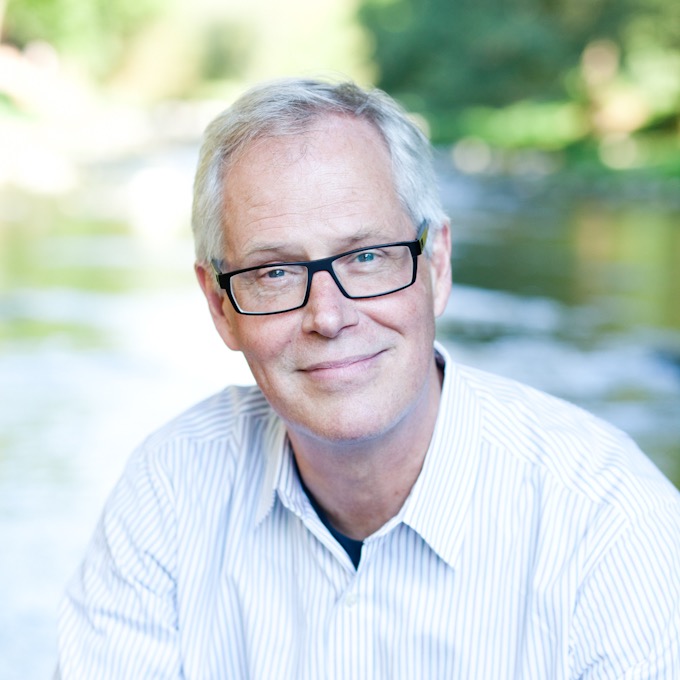
By Dr. Christopher Germer

Mindful Self-Compassion (MSC)
Mindful Self-Compassion, also known as MSC, is an evidence-based group training that was developed originally by Christopher Germer, PhD (clinical psychologist, Harvard Medical School) and Kristin Neff, PhD (developmental psychologist, University of Texas, Austin). Inspired by research studies showing that self-compassion is consistently associated with health and wellbeing, MSC was designed to help people become more self-compassionate. MSC is “mindfulness-based self-compassion training” and is complementary to the MBSR training. Based on Kristin Neff’s definition of self-compassion, MSC specifically teaches mindfulness versus overidentification, common humanity versus isolation, and self-kindness versus self-criticism. By becoming more self-compassionate, participants find it easier to manage difficult emotions and make positive changes in their lives.
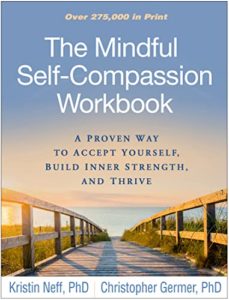
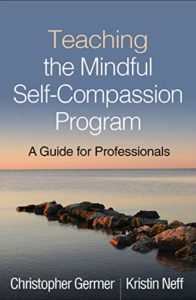
Course Format: The MSC program follows a manualized protocol described in Teaching the Mindful Self-Compassion Program (Germer & Neff, 2019). The Mindful Self-Compassion Workbook (Neff & Germer, 2018) is used by participants in conjunction with MSC. MSC is an 8-week, 9-session program with 24+ hours of direct classroom content, and is taught in-person or online. The first two sessions introduce participants to mindfulness, self-compassion and the program itself, especially by embracing each participant’s unique identities. In session 3, participants start to warm up their awareness with loving-kindness practice. Sessions 4-7 teach participants how to be self-compassionate when they encounter challenging situations such as difficult emotions and relationships. Session 8 shows participants how to savor the positive aspects of our lives. MSC includes 7 formal meditations, 20 informal practices, and 14 class exercises. Graduates of MSC are encouraged to continue to practice self-compassion in whatever form is most meaningful to them and to stay connected with the global community of practitioners.
“By cultivating warmth and goodwill towards ourselves when we struggle, fail or feel inadequate, we feel safer and more connected to ourselves and others, which enhances our awareness, helps us make better decisions, motivates us to live in accord with our core values, and allows us to be more fully human.”
Instructor Requirements: Similar to other mindfulness-based programs, there is a formal teacher training process with certain prerequisites, including an established mindfulness practice of at least 2 years, participation in a MSC class, a silent meditation retreat, and previous experience teaching meditation in groups. MSC teacher training is coordinated through the Center for MSC and includes 3 steps: a teacher training course (in-person or online), an online teacher practicum, and online group consultation while teaching one’s first class. While teaching MSC, teachers are required to have a personal mindfulness and self-compassion practice, and they are strongly encouraged to continue evolving as teachers through engagement with the global community of MSC teachers.
Course Outcomes: MSC was designed to develop the inner resource of self-compassion. According to empirical studies, MSC participants report increases self-compassion, compassion for others, mindfulness, happiness, and life satisfaction, and reductions in stress, anxiety and depression.
Clinical Populations: Although MSC was developed for the general population, it has also been adapted for clinical populations. For example, among people suffering from chronic pain, MSC enhanced pain acceptance and reduce pain interference compared to cognitive behavioral therapy. In a sample of diabetics, MSC reduced distress about diabetes-specific distress and glucose levels. An adaptation of MSC for healthcare providers reduced secondary traumatic distress and burnout. MSC adapted for adolescents enhanced social connection and reduced anxiety. Participants must be aware that self-compassion training can activate old emotional wounds. MSC teachers are committed to helping participants feel safe and comfortable during the course, but participants need to take primary responsibility for their own wellbeing.
The Official MSC Workbook
The Official MSC Guide for Professionals
References (Updated 2022)
- Albertson, E. R., Neff, K. D., & Dill-Shackleford, K. E. (2014). Self-Compassion and Body Dissatisfaction in Women: A Randomized Controlled Trial of a Brief Meditation Intervention. Mindfulness, 1-11. PDF
- Bluth, K., & Eisenlohr-Moul, T. A. (2017). Response to a mindful self-compassion intervention in teens: A within-person association of mindfulness, self-compassion, and emotional well-being outcomes. Journal of Adolescence, 57, 108-118. PDF
- Bluth, K., Gaylord, S. A., Campo, R. A., Mullarkey, M. C., & Hobbs, L. (2015). Making Friends with Yourself: A Mixed Methods Pilot Study of a Mindful Self-Compassion Program for Adolescents. Mindfulness, 1-14. PDF
- Bluth, K., Lathren, C., Silbersack Hickey, J. V. T., Zimmerman, S., Wretman, C. J., & Sloane, P. D. (2021). Self-compassion training for certified nurse assistants in nursing homes. Journal of the American Geriatrics Society, 69(7), 1896–1905. PDF
- Boggiss, A. L., Consedine, N. S., Schache, K. R., Jefferies, C., Bluth, K., Hofman, P. L., & Serlachius, A. S. (2020). A brief self-compassion intervention for adolescents with type 1 diabetes and disordered eating: A feasibility study. Diabetic Medicine, 37(11), 1854–1860. PDF
- Brooker, J., Julian, J., Millar, J., Prince, H. M., Kenealy, M., Herbert, K., … & Frydenberg, M. (2020). A feasibility and acceptability study of an adaptation of the Mindful Self-Compassion program for adult cancer patients. Palliative & Supportive Care, 18(2), 130-140. PDF
- Campo, R. A., Bluth, K., Santacroce, S. J., Knapik, S., Tan, J., Gold, S., … & Asher, G. N. (2017). A mindful self-compassion videoconference intervention for nationally recruited posttreatment young adult cancer survivors: feasibility, acceptability, and psychosocial outcomes. Supportive Care in Cancer, 25(6), 1759-1768. PDF
- Delaney, M. C. (2018). Caring for the caregivers: Evaluation of the effect of an eight-week pilot mindful self-compassion (MSC) training program on nurses’ compassion fatigue and resilience. PloS one, 13(11), e0207261. PDF
- Finlay-Jones, A., Strauss, P., Perry, Y., Waters, Z., Gilbey, D., Windred, M., Murdoch, A., Pugh, C., Ohan, J. L., & Lin, A. (2021). Group mindful self-compassion training to improve mental health outcomes for LGBTQIA+ young adults: Rationale and protocol for a randomised controlled trial. Contemporary Clinical Trials, 102, 106268. PDF
- Finlay-Jones, A., Xie, Q., Huang, X., Ma, X., & Guo, X. (2017). A Pilot Study of the 8-Week Mindful Self-Compassion Training Program in a Chinese Community Sample. Mindfulness, 1-10. PDF
- Friis, A. M., Johnson, M. H., Cutfield, R. G., & Consedine, N. S. (2016). Kindness matters: a randomized controlled trial of a mindful self-compassion intervention improves depression, distress, and HbA1c among patients with diabetes. Diabetes Care, dc160416. PDF
- Guo, L., Zhang, J., Mu, L., & Ye, Z. (2020). Preventing Postpartum Depression With Mindful Self-Compassion Intervention: A Randomized Control Study. The Journal of Nervous and Mental Disease, 208(2), 101-107. PDF
- Halamova, J., Kanovsky, M., Jakubcova, K., & Kupeli, N. (2020). Short online compassionate intervention based on Mindful Self-Compassion program. Československá Psychologie, 64(2), 236–250. PDF
- Jiménez-Gómez, L., Yela, J. R., Crego, A., Melero-Ventola, A. R., & Gómez-Martínez, M. Á. (2022). Effectiveness of the Mindfulness-Based Stress Reduction (MBSR) vs. The Mindful Self-Compassion (MSC) programs in clinical and health psychologist trainees. Mindfulness. PDF
- Lathren, C., Bluth, K., Campo, R., Tan, W., & Futch, W. (2018). Young adult cancer survivors’ experiences with a mindful self-compassion (MSC) video-chat intervention: A qualitative analysis. Self and Identity, 17(6), 646-665. PDF
- Lathren, C., Sheffield-Abdullah, K., Sloane, P. D., Bluth, K., Hickey, J. V. T. S., Wretman, C. J., Phillips, L. P., & Zimmerman, S. (2021). Certified nursing assistants’ experiences with self-compassion training in the nursing home setting. Geriatric Nursing, 42(6), 1341–1348. PDF
- Lutz, J., Berry, M. P., Napadow, V., Germer, C., Pollak, S., Gardiner, P., Edwards, R.R., Desbordes, G., & Schuman-Olivier, Z. (2020). Neural activations during self-related processing in patients with chronic pain and effects of a brief self-compassion training–a pilot study. Psychiatry Research: Neuroimaging, 111155. PDF
- Neff, K. D., & Germer, C. K. (2013). A pilot study and randomized controlled trial of the Mindful Self-Compassion program. Journal Of Clinical Psychology, 69(1), 28-44. PDF
- Neff, K. D., Knox, M. C., Long, P., Gregory, K. (2020). Caring for others without losing yourself: An adaptation of the Mindful Self-Compassion program for healthcare communities. Journal of Clinical Psychology. DOI: 10.1002/jclp.23007 PDF
- Serpa, J. G., Bourey, C. P., Adjaoute, G. N., & Pieczynski, J. M. (2020). Mindful Self-Compassion (MSC) with Veterans: a Program Evaluation. Mindfulness, 1-9. PDF
- Smeets, E., Neff, K., Alberts, H., & Peters, M. (2014). Meeting Suffering With Kindness: Effects of a Brief Self-Compassion Intervention for Female College Students. Journal of clinical psychology, 70(9), 794-807. PDF
- Torrijos-Zarcero, M., Mediavilla, R., Rodríguez-Vega, B., Del Río-Diéguez, M., López-Álvarez, I., Rocamora-González, C., & Palao-Tarrero, Á. (2021). Mindful Self-Compassion program for chronic pain patients: A randomized controlled trial. European Journal of Pain, 25(4), 930–944. PDF
- Yela, J. R., Gómez‐Martínez, M. Á., Crego, A., & Jiménez, L. (2020). Effects of the Mindful Self‐Compassion programme on clinical and health psychology trainees’ well‐being: A pilot study. Clinical Psychologist, 24(1), 41-54. PDF
Enjoy? Share with your friends
Share on facebook
Share on twitter
Share on linkedin
Share on reddit
Leave a Reply