Interview with Dr. Thao Le
Thao Le, PhD, MPH
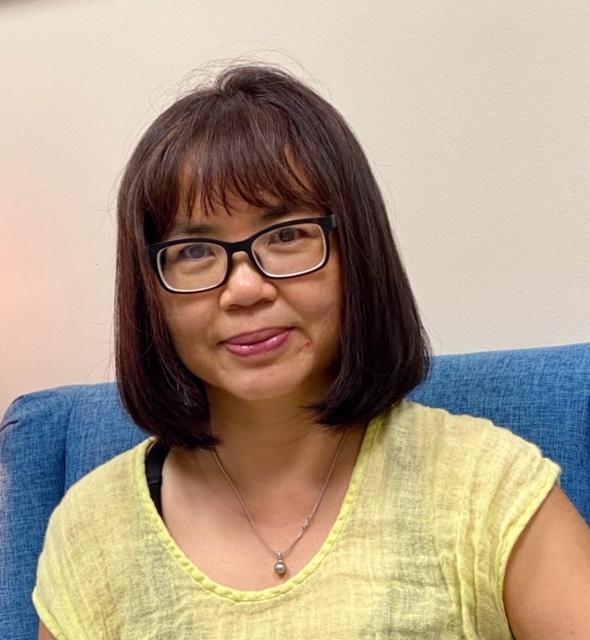
Dr. Thao Le is currently serving as professor in Human Development & Family Studies at the University of Hawai’i Mānoa. She was previously at Colorado State University where she gave up promotion & tenure to come to Hawai’i because of her connection to the island/sea, and with Native Hawaiian collaborators. Prior to academia, she worked in a non-profit in Oakland, California for 14 years focusing on preventing youth delinquency, with particular attention to Asian and immigrant population. Her current research work at UHM is focusing on farmer stress, restoration of native ecology (with her NH collaborators), and mindfulness for Keiki/educators in Hawai’i.
Parts of the interview have been edited for clarity and length.
When did you first bring mindfulness to the University of Hawai’i and what inspired you?
I came to the University of Hawai’i, Mānoa in 2011 and I started a mindfulness course in 2013. It started off as an experimental class. I taught it for two years so that I could collect data and confirm that students were interested in a mindfulness curriculum. It started off with small groups of six students and then just kept building. It was in 2016 when I received a designated course number designation. So it’s been a 3-credit course for UHM students for the past eight years.
I arrived to UHM by way of Colorado State University where I was already working with youth development in terms of suicide prevention with the Native American tribes in Montana. It was a pilot study to incorporate mindfulness within their tribal school. That inspired me. When I arrived to Hawai’i, I asked whether I could try to get mindfulness on campus, because I didn’t see anyone doing it at that time. It was very different from what it is now- everybody knows about mindfulness these days. That was absolutely not the case eight years ago.
What is the focus of the upper division mindfulness course you teach at the University of Hawai’i?
The focus is to introduce the concept of mindfulness, encourage practice, and foster reflective writing. Students have homework practice and writing assignments. It’s also an ethics focused course and students are required to do a considerable amount of reflection. Since I’m in the Human Development Family Studies program, I see mindfulness as part of human development. Mindfulness helps with social emotional regulation and understanding the workings of the mind. Our students acquire different types of training and development courses like infant and youth development, financial and family planning, and conflict management. This is a nice fit because it’s about fostering understanding of who we are, why we developed a certain way, with certain habits and dispositions, and how to live skillfully.
You cannot provide the resources and serve others if you don’t understand the inner-workings of the mind. I try to challenge students to reflect and explore ethics through the course materials. Mindfulness is just a tool in practice, but without ethics, mindfulness can be appropriated in different ways than it was intended.
“I see mindfulness as part of human development.”
What is the Pause Space and how do you see the campus community engaging in it?
My mindfulness course has evolved and continues to evolve depending on the students. But the Pause Space was developed because I wanted a physical place to cultivate the practice so that students taking the course weren’t limited to doing the exercises only in class. The Pause Space was another venue in which students as well as the community could also join the practice. Ultimately, my intention is for it to be a service space to help students, faculty, staff, or anyone from the community to connect with themselves. Don’t we all need to pause?
There’s a small community of us who have continued to gather throughout this whole pandemic. Every Friday we gather and some students casually drop in. Sometimes though my schedule doesn’t allow it, but somehow it always works out, and it’s helpful to have fellowship in the practice.
What lessons do you wish you knew when you first started the Pause Space?
I wish that there was more administrative support. When we start initiatives as educators, it’s based on our own resources. I would like to have a more aesthetically pleasing and welcoming space because the physical environment is important.
I also could have been more politically involved. The university’s counseling center offers important mental health services but many students come to my course saying they were told by their university mental health and academic counselors to take my course. My class was never supposed to be a counseling course and it is not. Maybe I should have reached out to the counseling center and offered to do a collaboration. I don’t want to encroach upon anyone’s territory, for me I see it more as a service, a prevention service, and a skill that could be helpful to students in their learning journey.
What advice would you give to educators hoping to bring mindfulness into their campus communities?
Do it. You learn by trial and error and you learn a lot when you try it yourself, rather than take the learnings from others. If I were to tell you how to cook a dish and there’s a recipe, unless you do your own cooking, you’re not going to know which ingredients work and what the dish tastes like- everybody’s got their own flavor and style.
When I first asked some of my colleagues about starting a mindfulness course, they dissuaded me saying that you can’t mix religion and science, or religion with education. This has nothing to do with religion. I’m not professing to make everybody mindful or promoting any religion, but I didn’t get any slack. I went ahead and did it anyway. So that’s why I say let’s do it!
You also recently wrote two children’s books on mindfulness: Mindfulness with Aloha Breath and Akahai. How do these books fit into your overall vision for mindfulness in education?
This was my attempt to address a fundamental concern about the cultural adaptation of mindfulness curricula. Hawaii educators acquire most of the resources on mindfulness from mainstream mindfulness curriculum being promoted on the mainland, and it’s not always culturally relevant with little buy-in among line staff like teachers. These two children’s books are based in the local culture. It’s important to fuse the values that are locally meaningful. So that’s why I felt compelled to create Mindfulness with Aloha Breath and Akahai, which means kindness in Hawaiian. Plus, Uncle Bruce Keaulani, a Native Hawaiian cultural practitioner, said I must do it because he tells me I’m Hawaiian, I guess at heart!
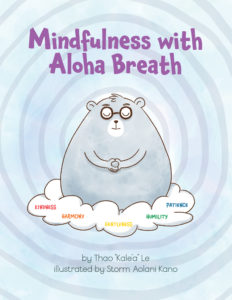
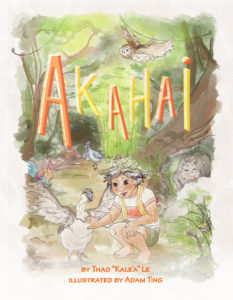
I’ve offered these books for free and it has been sponsored generously by the Office of Youth Services. I’m able to provide mindfulness training using these books to different educators and social service providers on O’ahu and Big Island. I have provided over 5,000 copies to date. I love being a local resource for K-12 educators here in the Hawaiian educational and social service communities.
These books teach mindfulness through a Hawaiian framework. Why is that important?
It is important because we are meaning-making creatures; when it’s presented in a way that resonates with the way that we understand the world, then it’s much more likely to have buy-in, to resonate in people’s heart and mind.
My books were developed with the intent of using the values and understanding taught here in Hawai’i. I wish there was a research study that would explore whether making mindfulness culturally appropriate is effective. I think a study that compares a standard mindfulness curriculum to one with cultural adaptation would be very interesting. I’m waiting to see that research for the various cultural contexts that exist in Hawai’i, America, and the world, or happy to collaborate with anyone on this study!
” Ultimately, my intention is for it to be a service space to help students, faculty, staff, or anyone from the community to connect with themselves. Don’t we all need to pause?.”