THE EMERGING TREND
OF MINDFULNESS IN EDUCATION

By Annette Konoske-Graf
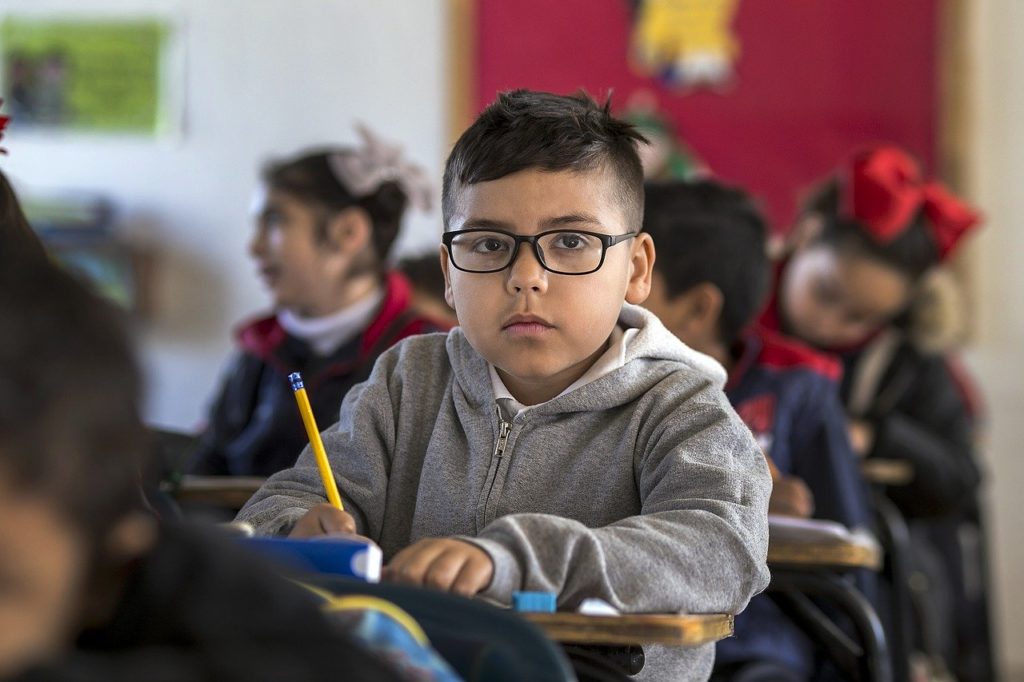
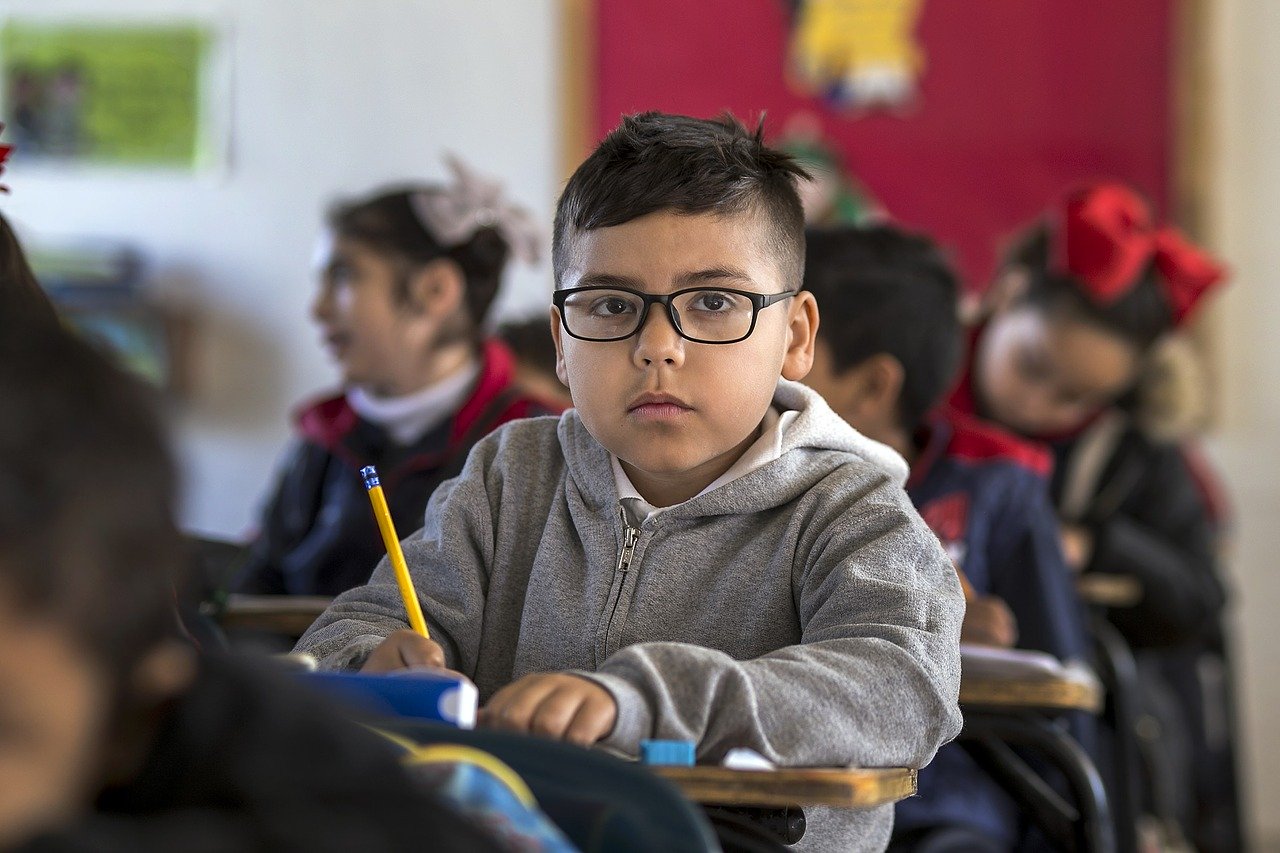
When I used to teach ninth and tenth grade, I kept a big poster at the front of the classroom that read, “Act, Don’t React.” I was a 21-year-old novice, so the sign was more wishful thinking than a reflection of some powerful conviction I taught my students.
Still, even then, I knew there was something to be said for that kind of self-awareness in the classroom. I didn’t quite know how to teach it, or even how to embody it. But I knew that my students could learn more if they could recognize their stress and control their breathing.
Honestly, as a teacher, I could have taught more if I had done the same.
According to UC Berkeley’s Greater Good Science Center, mindfulness means, “maintaining a moment-by-moment awareness of our thoughts, feelings, bodily sensations, and surrounding environment.” This non-judgmental awareness has been shown to have positive physical, social, and psychological effects—from improved concentration and increased empathy, to lower blood pressure and reduced anxiety.
Today, more and more research points to mindfulness as a lever to improve student achievement. According to the Association for Mindfulness in Education, mindfulness can increase students’ emotional regulation, social skills, self-esteem, and organizational capacities.
A study published this month in Australia—one of the largest studies of mindfulness in schools to date—found that students learning mindfulness techniques improved both their academic and social aptitudes.

Mindfulness training could be particularly beneficial for our most high-need students, too many of who have experienced traumatic events. The rates are staggering: Four of every 10 children in American say they experienced a physical assault during the past year. Fifty-eight percent of all children in America have either witnessed or been a victim of crime during that same time period.
Mindfulness has been shown to reduce the symptoms of post-traumatic stress disorder in veterans. Though more research is required, students who have experienced trauma could similarly benefit from mindfulness training. If prisons and hospitals are embracing mindfulness as a healing mechanism, so too should schools.
“Act, Don’t React.”
The benefits of mindfulness don’t stop with students. A recent study out of the University of Virginia suggests that teachers who regularly use mindfulness strategies are more emotionally supportive of their students.
This kind of empathy is a trait shared by some of the country’s most effective teachers. Groups like Breathe for Change and CARE for Teachers are endeavoring to provide teachers with the skills teachers need to reduce their stress and thrive, hopefully contributing to higher teacher retention rates.
Granted, it’s hard for school districts and school leaders to prioritize what some consider a fad. The general public still struggles to identify a consensus definition of mindfulness. And mindfulness is also proving to be profitable industry—from all-inclusive retreats to frameable Pinterest quotes (“Feelings are just visitors, they come and go,” or “Rule your mind or it will rule you”). These kinds of exclusive sanctuaries and kitsch items don’t speak to the true value of mindfulness, which doesn’t require a beachfront setting or fancy accouterments.
Recognizing the intrinsic value of mindfulness, school districts and schools nationwide are infusing mindfulness strategies into curricula and teachers’ professional learning. Though participating schools are generally clustered in California and the Northeast, mindfulness is gaining traction. It still has hoops to jump, though—some school districts that have implemented a mindfulness curriculum have faced criticism from community members who believe that the practice is exclusively linked with Eastern religions, like Buddhism.
This same line of reasoning would limit educators from teaching compassion, community-building, and altruism, lest they be reflections of Christianity, Judaism, and Islam. Though mindfulness has Buddhist roots, it isn’t owned by any one religion or philosophy. As Barry Bryce, the Editor-in-Chief of mindful.org says, “Newton didn’t invent gravity, nor did the Buddha invent mindfulness.”
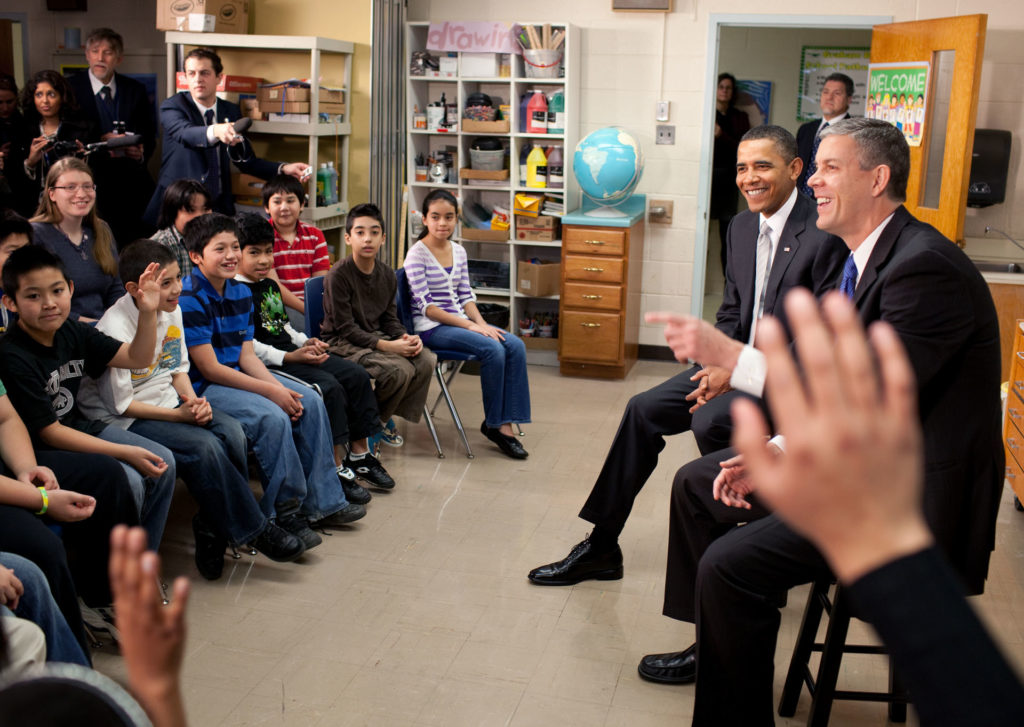
Thankfully, the Every Student Succeeds Act, signed into law by President Obama in December 2015, broadens the capacities of states and school districts to address their students’ unique needs, possibly through programs that encourage mindfulness in the classroom. The law allows states and districts to dedicate funds to support a “well-rounded education” for students, which could incorporate social and emotional learning like mindfulness training.
In the coming years, we’ll see if states and school districts choose to prioritize programs that could contribute to students’ emotional and academic success.
If I had taught my students how to be more mindful, maybe it would have been easier for them to see their own value, beyond the put-downs and trauma they experienced all too frequently. With mindfulness training, the “Act, Don’t React” sign could have become a lifelong motto.
Enjoy? Share with your friends
Share on facebook
Share on twitter
Share on linkedin
Share on reddit