
Category: Opinions

  • The challenges of bringing mindfulness into schools

    The challenges of bringing mindfulness into schools

    Nona Kiknadze

    Nona’s introduction to mindfulness occurred during her undergraduate education at Duke University, where she jointly majored in Psychology and Middle Eastern/ Asian Studies. She currently lives in Honolulu, Hawai’i and works as an Asia-Pacific intelligence analyst for the US Government. She is planning to begin her graduate studies in counseling psychology in Fall 2021 at the University of Miami. In her free time, Nona enjoys spending time outside surfing and hiking, and she maintains a daily meditation and yoga practice.

    After nearly three decades, a ban prohibiting public schools to offer yoga as an elective for grades K-12 has been overturned in Alabama. The controversial bill was passed on May 17th and has made national headlines, with coverage from major national outlets, such as CNN1, NPR2, New York Times3, The Guardian4, and Al Jazeera5,6,7. The new pro-yoga legislation has been the subject of heated debate in the conservative state and has brought the debate over the secularization of yoga front and center into the national consciousness. The bill has been vocally opposed by several conservative groups, including the Eagle Forum Alabama chapter, who unequivocally equate yoga with Eastern mysticism and religious tradition8. Other conservatives have also gone on record stating that the lifting of the ban will open the doors for the State’s youth to be converted to Hinduism and therefore infringes on the 1st Amendment, which states that American public schools cannot promote school-sponsored prayer or religious indoctrination9.  

    State Representative Jeremy Gray first introduced the bill to revoke the yoga ban more than a year ago. A college football athlete at North Carolina State University in his youth, Gray was first introduced to yoga as a complement to his athletic pursuits. He cites the cognitive, emotional, and social benefits of yoga and mindfulness as advantages of introducing these programs into school curriculums. 

    Research on the psychological and physiological effects of yoga have increased exponentially in the past few years. In the past two years alone, research has provided evidence for yoga’s positive effects across a wide variety of contexts and populations, such as: improving self-regulation skills in vulnerable populations10, promoting positive health outcomes amongst adults with intellectual and developmental disabilities11, reducing negative affect amongst survivors of sexual trauma12, decreasing chronic pain13, improving divergent thinking associated with creative ability14, reducing anxiety15, and improving body image in young women16. It is important to note that due to the wide variety of yoga styles practiced today, using “yoga” as an umbrella term for all research makes it challenging to comparatively evaluate research on the health benefits of all styles. It appears that the majority of studies that refer to “yoga” programs utilize the Hatha style of yoga.

    In addition, the associated fields of mindfulness and meditation research have grown dramatically over the last decade. The use of yoga and meditation for children has significantly increased in the U.S in the past few years, according to the CDC’s National Center for Health Statistics (NCHS). A 2017 study, the “Use of Yoga, Meditation and Chiropractors Among U.S. Children Aged 4–17 Years,” revealed that the use of meditation increased significantly for U.S. children from 0.6% in 2012 to 5.4% in 2017 and that U.S. children who used yoga in the past 12 months also increased significantly from 3.1% in 2012 to 8.4% in 201717. The Centers for Disease Control and Prevention (CDC)  explicitly promotes the use of yoga and meditation in schools on its website, stating that “yoga leads to improved physical fitness, increased ability to concentrate, and decreased stress” for children18. 

    The Alabama bill has undergone several key modifications since its inception over a year ago, and the final legislation has been scrubbed clean of any references to yoga’s historical or cultural roots. The bill contains language restricting school personnel from using “hypnosis, the induction of a dissociative mental state, guided imagery, meditation or any aspect of Eastern philosophy.” Participants will be barred from using the traditional Sanskrit greeting “namaste,” and chanting “om,” and from using the Sanskrit names for poses19. This is not the first time in recent history that introducing yoga into American schools has been met with heated debate. In 2016, Bullard Elementary School in Kennesaw, GA became the subject of controversy after introducing a yoga program into its curriculum. After strong objections from parents, the program was restructured to remove the “namaste” greeting, to place hands in prayer position at “heart center,” and to conduct mandala coloring exercises20. 

    “Vocal critics of incorporating yoga into school curriculums who equate yoga with Eastern religion and tradition often argue that the line between the secular practice of yoga and its origins are blurred. While it is undeniable that yoga’s roots are based in Hindu and Buddhist tradition, it is clear that modern yoga has drastically departed from its historical manifestations.”

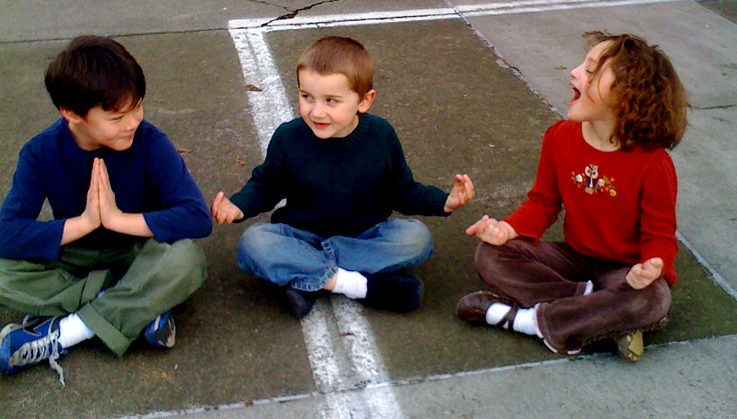
    In reality, school-based yoga programs are less of an indoctrination in theology and philosophy and are more often built around very simple secular yoga and meditation curricula. These often contain simple physical poses that are cued with entertaining stories or songs to retain the attention of children, and plan for some time spent focusing on relaxation and mindfulness21. The format in which this yoga is delivered can vary, with some school programs incorporating yoga into a PE class, an after-school program, or during breaks in the classroom to get students up from their desks22. Interestingly, the Alabama bill does not clearly demarcate between mindfulness and meditation training, so while meditation is explicitly called out as forbidden, it is unclear if school curriculums will teach children some components of mindfulness in conjunction with yoga. As anyone who has taken a yoga class will attest, mindfulness and meditation are often intrinsically integrated into yoga, as the practice naturally promotes attention to the present moment, awareness of physical and mental states, and concentration on the task at hand.

    Vocal critics of incorporating yoga into school curriculums who equate yoga with Eastern religion and tradition often argue that the line between the secular practice of yoga and its origins are blurred. While it is undeniable that yoga’s roots are based in Hindu and Buddhist tradition, it is clear that modern yoga has drastically departed from its historical manifestations. If a Hindu priest stepped into a cardio-based, 90-degree hot yoga class on a Saturday morning, with an energetic teacher instructing the class to pump their arms and squat, they would hardly recognize the scene as yoga. For better or worse, it’s not uncommon to walk into a yoga class that’s been stripped of its philosophical and historical context and has been rebranded as an exercise sequence. Granted, modern classes will often incorporate aspects of mindfulness and meditation, but the practice of yoga as it stands now compared to its roots is widely posture-based. This is a stark departure from the practice of yoga in the Hindu tradition, where yoga was seen primarily as a process of meditation and introspection. 

    The origin of “yoga” can be traced back to the Vedas, the ancient Hindu scriptures composed over 5,000 years ago, specifically the Rig Veda of 1500-1200 BC23. The Vedas were a collection of texts containing mantras and rituals to be used by the elite class of Brahmans, the Vedic priests. (The word “yoga” originates from these texts and is a translation of the Sanskrit words of “yoking” or “union.”) Following the Vedas, Patanjali created the Yoga Sutras around 500 BC, which contained the first written systematic presentations of yoga: the unifying theory of the Eight Limbs of Yoga, or ashtanga, as they are known in Sanskrit. The Eight Limbs are guidelines on how to live a purposeful and meaningful life and are made up of the principles of yama (moral restraints), niyama (observances), asana (postures), pranyama (breath control), pratyahara (withdrawal of the senses), dharana (concentration), dhyana (meditation), samadhi (enlightenment)24. The postures originally described by Patanjali were seated, meditative poses, rather than the acrobatic postures seen in modern yoga practice, and the emphasis was on mindfulness, breathing, concentration and meditation rather than on physical movement. The Yoga Sutras were followed by the Tantra and Hatha Yoga traditions, which later expanded into several other lineages. Now there are a wide variety of yoga styles, such Restorative, Yin, Hatha, Vinyasa, or specific sequences and trainings like Iyengar, Ashtanga or Bikram, to name a few. In fact, the poses we recognize in modern yoga are largely attributed to relatively new interpretations arising from the last 200 years25. 

    “Granted, modern classes will often incorporate aspects of mindfulness and meditation, but the practice of yoga as it stands now compared to its roots is widely posture-based. This is a stark departure from the practice of yoga in the Hindu tradition, where yoga was seen primarily as a process of meditation and introspection.”

    Yoga as it is practiced in the West encompasses a wide variety of techniques and styles, some more spiritual than others. Critics of the incorporation of yoga in schools can point at the customary bowing during a greeting of “namaste” in a class, or the Sanskrit names given to poses as evidence of yoga’s cultural tradition, but it is just as easy to find a yoga class with these elements as one without. For every teacher who cues the class into tadasana, there is another who uses the English name, “mountain pose.” The debate surrounding the cultural appropriation of yoga is complex and will not be addressed here, but ultimately the exploding popularity of yoga around the world attests to the utility of this practice in helping people focus, relax, and connect with their bodies, be that in whatever form it is practiced.

    Despite criticism by conservative groups in the U.S. who believe yoga to be an esoteric religious tradition, the health benefits of yoga and mindfulness are getting harder to ignore. While the research in this field has dramatically increased in the last decade, there is still a long way to go in providing scientific evidence for the benefits of yoga and meditation, especially in youth populations. Further research is needed to clarify the benefits of yoga programs and the pathways underlying these benefits, including the best practices for the implementation of yoga programs in schools. 

    References

    1. https://www.cnn.com/2021/05/22/us/alabama-yoga-in-schools-ban-overturned-trnd/index.html

    2. https://www.npr.org/2021/05/21/999020140/its-now-legal-to-practice-yoga-in-alabamas-public-schools

    3. https://www.nytimes.com/2021/05/20/us/alabama-yoga-ban-public-schools.html

    4. https://www.theguardian.com/us-news/2021/apr/17/alabama-yoga-ban-public-schools-christian-groups

    5. https://www.aljazeera.com/news/2021/5/21/alabama-lifts-ban-on-yoga-in-public-schools

    6. https://www.npr.org/2021/05/21/999020140/its-now-legal-to-practice-yoga-in-alabamas-public-schools

    7. https://legiscan.com/AL/text/HB246/2021

    8. https://www.npr.org/2021/05/21/999020140/its-now-legal-to-practice-yoga-in-alabamas-public-schools

    9. https://www.aclu.org/other/establishment-clause-and-schools-legal-bulletin

    10. https://www-sciencedirect-com.access.library.miami.edu/science/article/pii/S0149718921000410

    11. https://www-sciencedirect-com.access.library.miami.edu/science/article/pii/S1744388121000311

    12. https://www-sciencedirect-com.access.library.miami.edu/science/article/pii/S0965229921000704

    13. https://www-sciencedirect-com.access.library.miami.edu/science/article/pii/S0965229921000637

    14. https://www-sciencedirect-com.access.library.miami.edu/science/article/pii/S0001691819305505#bbb0135

    15. https://www-sciencedirect-com.access.library.miami.edu/science/article/pii/S0883941718304795

    16. https://www-sciencedirect-com.access.library.miami.edu/science/article/pii/S1740144518301943

    17. https://www.cdc.gov/nchs/pressroom/nchs_press_releases/2018/201811_Yoga_Meditation.htm

    18. https://www.cdc.gov/healthyschools/bam/cards/yoga.html

    19. https://www.npr.org/2021/05/21/999020140/its-now-legal-to-practice-yoga-in-alabamas-public-schools

    20. https://www.washingtonpost.com/news/morning-mix/wp/2016/03/24/ga-parents-offended-by-the-far-east-religion-of-yoga-get-namaste-banned-from-school/

    21. https://www.littlefloweryoga.com/the-school-yoga-project/

    22. https://www.theatlantic.com/education/archive/2018/09/why-schools-are-banning-yoga/570904/

    23. https://www.britannica.com/topic/Veda

    24. https://chopra.com/articles/what-are-the-8-limbs-of-yoga

    25. https://www.verywellfit.com/how-old-is-yoga-the-history-of-modern-yoga-asana-3566729

    Enjoy? Share with your friends

    Share on facebook
    Share on twitter
    Share on linkedin
    Share on reddit
    Related Posts

  • What is Mindfulness?

    What is Mindfulness?

    What is Mindfulness?


    By Michael Juberg

    Table of Contents

    Key Points

    • No single definition of mindfulness
    • Buddhist conceptualizations of mindfulness differ based on emphasis on explicit ethical framework vs. direct insight
    • Buddhist non-dual conceptualizations of mindfulness inform current clinically-based mindfulness programs
    • Mindfulness is commonly described as “paying attention, with intention, nonjudgmentally”
    What is Mindfulness?

    With the increased interest in mindfulness research, there remains a practical and theoretical need to establish a testable, operational definition of mindfulness. Part of this challenge is that the concept of mindfulness is compatible with multiple explanatory frameworks from various disciplines such as contemplative theories,1 clinical, and neuroscientific frameworks.2 Framing mindfulness in a scientific context compatible to clinical medicine and psychology is helpful in that it can be communicated directly to patients, healthcare providers, and researchers. However, this secularized perspective might critically overlook elements that contribute to the potentially transformative effects of mindfulness practice that first emerged beyond the context of medicine, psychology, and neuroscience. 

    Rather than proposing a single definition, mindfulness might be better understood in relation to the phenomenology of the various contemplative traditions and practices that intend to develop mindfulness. This article will explore how early Buddhist conceptualizations of mindfulness led to varying theoretical accounts that consider how ethics,  concentration, and insight align with the concept of mindfulness.  These varying theoretical considerations will then be linked to contemporary Buddhist and modern scientific accounts of mindfulness. 

    While mindfulness is understood as both a process (mindful practice) and an outcome (mindful awareness),3 important differences are amplified by the various approaches that seek to cultivate mindfulness.4 Broadly, the construct of mindfulness has been used to refer to a mental trait or phenomenological state, a spiritual path that reduces suffering and promotes wellness, and as a cognitive process that is capable of being enhanced through training.5

    Buddhist Origins of Mindfulness

    Mindfulness as a concept rooted in Buddhist origins goes back 2,500 years. However, many spiritual traditions, psychological, and Western philosophical schools of thought also describe its phenomenological nature.6 While these diverse, yet converging conceptualizations of mindfulness attempt to convey mindfulness as a universal human capacity that transcends any single culture, philosophy, or religion,3 most clinical adaptations of mindfulness have drawn from Buddhist techniques and theories. Mindfulness was first introduced in its clinical capacity by Jon Kabat-Zinn, PhD, who drew on Zen Buddhist teachings and applied them in a secular, clinical context. Mindfulness has been considered the heart of Buddhist meditation,8 however Buddhist scholars point to a rich history of debate that concludes that there is no single authoritative account of mindfulness.9, 10 Examining these original Buddhist sources provides the basis for understanding whether our contemporary approaches align with original theoretical accounts. 

    Mindfulness, as it is described by Buddhist teachers, goes beyond simple practices and techniques.

    For Buddhist practitioners, mindfulness might entail a commitment to a way of living and a general orientation toward experiences. This sentiment has been captured by Nyanaponika Thera, who described mindfulness as “the clear and single-minded awareness of what actually happens to us and in us at the successive moments of perception.” 11 (p5) Thich Nhat Hanh has similarly characterized mindfulness as “keeping one’s consciousness alive to the present reality.” 12(p11) Buddhist scholars remind us that mindfulness practice includes motivation, goals, and often an ethical framework to live one’s life.10

    Mindfulness is the focus of the practice of satipatthana.13 This practice derives from ‘sati’ (mindfulness) and ‘sampajanna’ (clear comprehension). While the concept of ‘sati’ originally meant ‘memory,’ it is believed that the Buddha altered its meaning for his teachings to reflect ‘lucid awareness’ of the phenomenal field or the impermanence of all bodily and mental experiences. Mindfulness practices help reduce craving and aversion by allowing the practitioner to understand the selfless nature of all objective and subjective phenomena. Greater mindfulness leads to a clearer comprehension of the nature of those arising phenomena and interprets them as transient experiences until this process becomes direct insight (vipassana) and wisdom (panna).  

    When practitioners of mindfulness are better at distinguishing wholesome states of mind from harmful conditions, they can engage in purposeful action that nurtures more wholesome qualities. ‘Right mindfulness’ is included as the seventh factor in the Noble 8 Fold Path (samma sati) between ‘right effort’ and ‘right concentration’ and represents the mind’s energetic application to its stilling and purification. Buddhist scholars note that different traditions promote varying approaches to mindfulness. Each prescribes techniques that align with their theoretical account about the ability to observe mental phenomena as impermanent.1

    Via Pexels
    Via Pexels

    “…mindfulness has been used to refer to a mental trait or phenomenological state, a soteriological or spiritual path that reduces suffering and promotes wellness, and as a cognitive process that is capable of being enhanced through training.”

    Classical Buddhist Approaches 

    A Classical Buddhist perspective links suffering with distorted cognitions that lead to maladaptive actions and mental states. Suffering occurs when one misperceives phenomena as conducive to pleasure when they are actually creating suffering, and permanent when they are actually impermanent. Therefore, Classical contemplative practices’ central goal is to cease these distortions by attaining a level of insight (vipassana) that recognizes that these sensory phenomena and conditioned aspects of the mind are impermanent, selfless, and may lead to suffering. According to the traditional Abhidharma, a Buddhist theoretical account, mindfulness confers focus that allows the practitioner to see the true nature of these phenomena. The emphasis is placed on ‘remaining in the present’ without further conceptual elaboration. 

    The Classical contemplative approaches help the practitioner to see beyond distorted cognitions and prior conditioning of the mind. These approaches also call for a “heedfulness” (apramāda) of one’s ethical and spiritual intentions.1 During formal practices, an ethical framework (śīla) encourages the practitioner to make a discernment between mental states that are wholesome and are “to be adopted” (upādeya) versus those that are unwholesome and are “to be abandoned” (heya).1 

    Many Classical traditions hope to instill a capacity to sustain these efforts during contemplative training and beyond the context of training, thus encouraging practitioners to see beyond the dualistic notion of formal and informal practice and consistently maintain a heedful awareness of their activities. This requires a practitioner to employ judgment that explicitly connects back to an ethical framework. The Classical Buddhist style explicitly requires an intensive recollection of vows and ethics to live a mindful life. 

    Buddhist Non-Dual Approaches 

    Contrasting the Classical approach, a Non-Dual account of suffering is attributed to a false distinction between subject and object. A Non-Dual approach, encourages dissolving this false distinction through a non-dual experience (advaya).1 According to the Abhidharma account, mindfulness as a concept is a mental phenomenon and can only occur if there is a subject-object duality. In essence, there is only a phenomenological presentation of an object (e.g., apple) only when there is a separate phenomenological subject (e.g., person perceiving the apple). Since duality is viewed as the primary source of delusion, mindfulness as a concept is considered to be within this subject-object illusion. 

    A Non-Dual approach to contemplative practice does not encourage the practitioner to cultivate mindfulness, but rather the “non-mindfulness (asmrti),” 14 which is a “mindfulness of mere non-distraction.” 1(p263) This philosophical position would later be advanced by the Apoha theory, which invites the perspective of experiencing mental phenomena as a form of consciousness rather than the object that it represents.1 This theory underlies a contemplative technique known in contemporary terms as ‘decentering,’ ‘dereification,’ ‘cognitive insight,’ ‘mindfulness awareness,’ and ‘diffusion.’ Whereas Classical approaches to contemplative practices emphasize an ethical paradigm, Non-dual approaches are based on insight and therefore encourages one to abandon any paradigm during formal practice, which facilitates insight during informal settings as well. Ethical judgment is viewed as a form of conceptuality that can become an obstacle and, therefore, should be suspended as one maintains a present-centered focus.

    “This process, referred to as ‘decentering’ or ‘cognitive insight,’ allows the practitioner to observe mental phenomena without over-identifying and reacting to them habitually.”

    Contemporary Mindfulness

    Current conceptualizations of mindfulness include a non-elaborative, non-judgmental, and present-centered awareness whereby mental phenomena, including thoughts, feelings, and sensations, are acknowledged and accepted.15 This has been most commonly defined by Jon Kabat- Zinn, PhD,  as “paying attention in a particular way, on purpose, in the present moment, and non-judgmentally.” 16(p27) Formal training in a contemporary approach helps the practitioner develop present-centered attention to an object, most commonly the breath. Following a present-centeredness, practitioners are encouraged to monitor their awareness for distractions with a non-judgmental orientation. Practitioners are not to evaluate whether the distracting mental states are to be cultivated, abandoned, nor further analyzed. 1 Instead, practitioners are to recognize that they are distracted and are encouraged to return to the focal object, such as the breath, without further conceptual elaboration. 16 This process, referred to as ‘decentering’ or ‘cognitive insight,’ allows the practitioner to observe mental phenomena without over-identifying and reacting to them habitually. Instead, practitioners allow space for these thoughts, and they can respond with greater intention, skill, and equanimity. 

    In abandoning the explicit ethical framework central to the Classical tradition, contemporary approaches toward mindfulness align more closely with the Non-dual approaches that emphasize present-centeredness rather than ethics. Buddhist scholars note that an appeal is made to the emergence of innate capacities 16 similar to specific Non-dual traditions (e.g., Mahāmudrā);1 however, it is clear that contemporary approaches do not necessitate explicit ethical paradigms. Mindfulness-based Stress Reduction (MBSR) programs, a common form of mindfulness training utilized in clinical practice, do not teach evaluative nor ethical frameworks as a tool for mindfulness practice. Normative and simple goals are not recommended during MBSR training. Instead, practitioners are encouraged to cultivate a present-centeredness. 

    It is speculated that introducing a specific ethical code in secular clinical contexts could be problematic. A secularized format increases the accessibility of mindfulness practices and allows participants to embrace their own ethical framework that arises from their personal experience and creative appropriation.1 Despite the absence of an explicit ethical framework, an implicit framework is arguably provided in mindfulness-based training through its pedagogy, which includes poetry by Rumi, Mary Oliver, and others. These philosophical elements might implicitly suggest an intention by which to engage with the world. Even in the absence of an explicit ethical framework, practitioners’ intentions in clinical contexts appear to develop over time spontaneously. 17 At first, practitioners intend to improve their self-regulation, whereas further in their practice, they become motivated by self-exploration, followed by self-liberation, and finally devotion to selfless service.

    Andrea Piacquadio via Pexels

    “…a common underlying feature is the motivation to reduce suffering.”

    Scientific Approaches to Mindfulness

    Attempts to operationalize mindfulness have produced colorful and varied accounts. Mindfulness as a concept has been generally reconceived through a ‘family resemblance approach’ where the various cognitive processes are contextualized through postural, aspirational, and motivational dimensions that produce recognizable states within defined phenomenological dimensions. 5 In essence, these elements of mindfulness practice are first recognizable and then reproducible. Although various models have emerged to capture the complexity of mindfulness, two theoretical approaches are prominent.

    Two-Component Model of Mindfulness

    A systematic effort to establish an operational definition has led to a Two-Component model of mindfulness.18 The first component involves the self-regulation of attention to present-moment experiences. Through the practice of present moment awareness, practitioners should enhance their ability to sustain attention, switch attention back to the object of focus, and inhibit elaborative thinking. The second component of the model involves adopting a particular orientation that is curious, open, and accepting. Practitioners are encouraged to maintain a commitment to an attitude of curiosity, non-striving, and acceptance to the various mental experiences that arise. In summary, this model conceptualizes mindfulness as a process of openly relating to experiences. 

    Theoretically, this model predicts that practitioners abandon avoidance strategies over time as they progressively adopt a more open orientation to their distressing internal experiences. Mindfulness has been appropriated to psychotherapy interventions due to these shifts in metacognition. By gaining insight into the nature of their thoughts and emotions, patients can expand their repertoire of responses to uncomfortable internal experiences.19 Finally, this model considers mindfulness as a psychological process that more closely aligns with a temporary state rather than a stable trait since its evocation and maintenance depends on the active regulation of attention and a mindful orientation to experiences. 

     Phenomenological Matrix

    Another prominent theoretical account of mindfulness is the Phenomenological Matrix, a heuristic tool for mapping various practice styles and expertise levels of mindfulness onto a multidimensional model 5. This model decomposes the multiple elements of mindfulness practice into three independent dimensions, including object orientation- the awareness of a particular object, dereification- interpretation of mental phenomena as mental processes rather than depictions of reality, and meta-awareness – the mental state of noticing the current contents of consciousness. These three primary dimensions are considered the main targets for all styles of mindfulness training. 

    In addition to these core dimensions, four secondary qualities are described, which account for relevant features of meditation experience influenced directly or indirectly by the specific instructions for practicing mindfulness. They include aperture, clarity, stability, and effort. Aperture describes the scope of attention. Clarity refers to the vividness of one’s experience. Stability entails the degree to which a phenomenological experience persists over time, either spontaneously or intentionally. Lastly, effort describes the amount of intention and energy to maintain a state of awareness. Together, this operationalization allows scientists to empirically examine these theoretical dimensions and communicate back their discoveries to the scientific community in a common language.

    Conclusion

    Historically, the concept of mindfulness has provided fertile grounds for theoretical discussion for over 2,500 years. The secularization of mindfulness as it enters the realm of science and medicine comes with mixed reviews between caution and appreciation.13 Despite clear differences in axiological approaches, especially in regards to the ethics of mindfulness, a common underlying feature is the motivation to reduce suffering.20 As this emerging field of contemplative sciences matures, theorists ought to consider whether mindfulness can be fully adopted without the traditional elements that have led to its successful proliferation over centuries, including ethics, faith, and devotion. It poses an important consideration: does the secularization of mindfulness miss the point upon which Buddhism and other contemplative traditions have been premised? These multiple attempts to understand and operationally define mindfulness are helpful, yet as theorists continue to enter space considered sacred by ancient traditions, a scientific approach accompanied by both humility and gratitude is warranted.

    References
    1.  Dunne, John D. “Buddhist Styles of Mindfulness: A Heuristic Approach.” In Handbook of Mindfulness and Self-Regulation, edited by Brian D. Ostafin, Michael D. Robinson, and Brian P. Meier, 251–70. New York: Springer, 2015.
    2. Hölzel, B. K., Carmody, J., Vangel, M., Congleton, C., Yerramsetti, S. M., Gard, T., & Lazar, S. W. (2011). Mindfulness practice leads to increases in regional brain gray matter density. Psychiatry research: neuroimaging, 191(1), 36-43.
    3. Shapiro, S. L., & Carlson, L. E. (2017). Mindfulness-informed therapy.
    4. Chambers, R., Gullone, E., & Allen, N. B. (2009). Mindful emotion regulation: An integrative review. Clinical psychology review, 29(6), 560-572.
    5. Lutz, A., Jha, A. P., Dunne, J. D., & Saron, C. D. (2015). Investigating the phenomenological matrix of mindfulness-related practices from a neurocognitive perspective. American Psychologist, 70(7), 632.
    6. Cordon, S. L., Brown, K. W., & Gibson, P. R. (2009). The role of mindfulness-based stress reduction on perceived stress: Preliminary evidence for the moderating role of attachment style. Journal of Cognitive Psychotherapy, 23(3), 258-269.
    7. Kabat-Zinn, J. (2011). Some reflections on the origins of MBSR, skillful means, and the trouble with maps. Contemporary Buddhism, 12(1), 281-306.
    8. Nyanaponika (Thera). (1962). The Heart of Buddhist Meditation (Satipaṭṭhāna): A Handbook of Mental Training Based on the Buddha’s Way of Mindfulness, with an Anthology of Relevant Texts Translated from the Pali and Sanskrit. Rider.
    9. Gethin, R. (2011). On some definitions of mindfulness. Contemporary Buddhism, 12, 263–279
    10. Sharf, R. (2014). Mindfulness and mindlessness in early chan. Philosophy East and West, 64 (4), 933–964. 
    11. Thera, N. (2008). The power of mindfulness. Wheel Publication, 1-75.
    12. Hanh, T. N. (2016). The miracle of mindfulness: An introduction to the practice of meditation. Beacon Press.
    13. Bodhi, B. (2011). What does mindfulness really mean? A canonical perspective. Contemporary Buddhism, 12, 19–39. 
    14. Higgins, D. (2006). On the development of the non-mentation (amanasikāra) doctrine in Indo-Tibetan Buddhism. Journal of the International Association of Buddhist Studies, 255-303.
    15. Kabat-Zinn, Jon. Full Catastrophe Living : Using the Wisdom of Your Body and Mind to Face Stress, Pain, and Illness. New York, N.Y: Delacorte Press, 1990. Print.
    16. Kabat-Zinn, J. (2013). Full catastrophe living: Using the wisdom of your body and mind to face stress, pain, and illness (Revised and updated ed.). New York: Bantam Books. 
    17. Shapiro, D. H. (1992). A preliminary study of long term meditators: Goals, effects, religious orientation, cognitions. Journal of Transpersonal Psychology, 24(1), 23-39.
    18. Bishop, S. R., Lau, M., Shapiro, S., Carlson, L., Anderson, N. D., Carmody, J., … & Devins, G. (2004). Mindfulness: A proposed operational definition. Clinical psychology: Science and practice, 11(3), 230-241.
    19. Horowitz, M. J. (2002). Self- and relational observation. Journal of Psychotherapy Integration, 12(2), 115–127. https://doi.org/10.1037/1053-0479.12.2.115
    20. Wilson, J. (2014). Mindful America: Meditation and the mutual transformation of Buddhism and American culture. Oxford University Press.

    Enjoy? Share with your friends

    Share on facebook
    Share on twitter
    Share on linkedin
    Share on reddit

    Related Posts

  • What is the Present Moment? Some Warnings about Hanging out in it, and a New Scientific Theory of Meditation

    What is the Present Moment? Some Warnings about Hanging out in it, and a New Scientific Theory of Meditation

    What is the present moment?
    Some warnings about hanging out in it, and a new scientific theory of meditation.

    Ruben Laukkonen

    Ruben Laukkonen is a cognitive neuroscientist at the VU University of Amsterdam. His research focuses on sudden insight experiences and the effects of intensive meditation on the mind and brain. Using a combination of neuroimaging, machine learning, and neuro-phenomenology, Ruben is investigating some of the most rare states of consciousness accessible to human beings. He has published articles in leading journals, given talks at prestigious conferences, and has written on topics that range from artificial intelligence to psychedelics. Ruben has an eclectic contemplative background, including different meditation traditions such as Zen, Advaita, and Theravada.

    “Just be here now, and all your problems will go away. You’ll be more peaceful, you’ll be happier and you’ll be kinder. Live in the present, breathe, just flow…”.

    Familiar advice, isn’t it?

    But from the brain’s perspective, being in the present moment is no joke. Because what concept, feeling, or experience, is not built on the foundation of time? 

    For example, how do we know the taste of a good coffee, recognize our mother, or open a door without a vast history of learning based on the past? How do we drink water, instead of detergent, unless we project our knowledge all over that neutral liquid? 

    We can go some (many) steps further. To truly be in the present moment is to not exist. 

    Time—or rather the organization of regularities in time—is the very currency of construction within the brain. Without moulding the present based on the past, there simply is nothing meaningful to experience. Those jolts of electricity that climb your nervous system are empty of meaning, without the brain and the body’s capacity to regurgitate its own meaning.

    It’s sometimes tempting to think that we’re “drinking in” in the world, like a fancy cocktail of meaningful symbols that we saturate with our past, but basically, passively swig. But in fact, the brain is doing minimal drinking and much more vomiting. The brain-body is puking out this colorful world, full of self, relationship, feeling, thought, and…. Everything. Your very perception of these squiggles on the screen and their meaning is fundamentally compositional rather than passive, and what permits this generative organ its creative power… is regularities over time… patterns that we abstract into things.

    “…because what concept, feeling, or experience, is not built on the foundation of time? ” 

    If this time-based construction of our subjective reality goes wrong, we can develop psychopathology. Hallucinations, delusions, forgetting, and misunderstanding—they all rely on some mistaken projection of the past onto the present two-dimensional impressions on our body. The body is also generating its own internal signals all the time like hunger, proprioception, intuition, etc., and the brain is also a thought-engine bursting with fireworks of its own. 

    So, the vast majority of our experience is manifested from within. 

    Not in some law-of-attraction sense, but in the sense that it’s all made up based on what we have come to know. We literally would not notice that our house was burning if it wasn’t for the wisely orchestrated projections of the past; and that of all those clever hairy ancestors of ours. And even more profoundly—and this is a tricky point to grasp—it may not even be based on the electricity of the present. It is quite possible that the whole kaleidoscope is made up based on the past, and simply tested against the present. Where the present itself —those electrical signals grounded on something external—never even make a dent on what is experienced as if it was the present.  

    So, here’s the warning I promised: If you’re going to hang out in the present, like really do it, then you and almost everything you know might just disappear. 

    This will make more sense if I now (somewhat superficially) describe our new theory of meditation. 

    I present this theory with a lot of humility. Meditation is a huge subject, and we’re obviously still figuring out how the brain works. But we know so much more about meditation today than we did twenty years ago—scientifically speaking—and we have this new understanding of the brain where it ‘predicts’ (cf. vomits) out our experience. And putting these two things together somehow felt—as the cliché goes—timely. 

    In our recent paper we propose that the progression of meditation is just a journey deeper  into the present moment. And with this simple understanding, we can basically predict most of the wild things that can happen during very intensive and prolonged meditation practice. When you combine this present-centeredness with a view of the brain as a hierarchical prediction-machine that is habitually abstracting away from the present to create our experience, it all makes sense. 

    When you understand the brain as a system that builds our subjective experience in each moment in layers of abstraction, where the more abstract we go in this hierarchy the more ‘conceptual’ and less ‘present moment’ experience becomes, then all that stuff about non-self, impermanence, pure consciousness, timelessness, and perhaps even transcendence, begin to seem unsurprising.

    “It is quite possible that the whole kaleidoscope is made up based on the past and simply tested against the present” 

    Ruben Laukkonen via rubenlaukkonen.com

    Technical detour: What are current scientific conceptualizations of the present moment? Let’s take as a starting point John Kabat-Zinn’s (2003) famous secular definition of mindfulness as the “The awareness that emerges through paying attention on purpose, in the present moment, and nonjudgmentally to the unfolding of experience moment by moment.” There are several ways that this definition—which has informed hundreds of scientific studies on mindfulness—diverges from our view of the present moment. In Kabat-Zinn’s definition, there is still ‘paying attention with purpose,’ and there is still ‘the unfolding of experience.’ But, as we have briefly argued above, experience, purpose, and directed attention are very much still constructed through predictions derived from the past. Even the very process of paying attention to the breath implies the subtle generation of a subject with intentionality and agency, a thing which is the breath, and the idea that attention can be directed towards such a thing. There is nothing wrong with this view, but it is from the brain’s perspective premature to call that ‘the present’. It is perhaps “more” present than thinking, but it is all still a time-based abstraction. It is not yet being in the present moment because that would imply that time, space, the unfolding of experience, attention, intentionality, and the very idea of meditation or a meditator, are not constructed. This more radical view of the present opens doors for new empirical work. For example, we can potentially derive measures of meditative expertise, where the depth of the meditative state can be measured based on the extent to which one is constructing abstractions away from it: Even something as subtle as a startle response, responses to linguistic structure, or any signal of surprise in the brain, implies that one is not truly present.

    To illustrate: Imagine you’re a super-meditator, with a perfectly refined ability to be in the here and now. And you’ve decided you want to go from being completely not in the here and now, to totally immersed in the present. And imagine that you’re listening to a song, let’s say, ‘Beautiful World’ by Colin Hay. 

    At first, being in some very ordinary state, you might be kind of hearing the song, but also partly lost in thoughts, and also making all kinds of evaluations and judgments about what you like and don’t like about the music. You might think, “it’s a bit slow, I’m bored, what should I listen to next… etc.” 

    Then, you might tune in a bit. Really get your attention on the song. Now maybe you start to flow with it, really feeling into the sounds themselves… vibing with it. Perhaps your body is even subtly moving with the rhythm. You’ve dropped the ‘evaluating and judging’ abstraction. Now you’re just ‘in it,’ ‘with it,’ the sensations are what dominate. 

    But you’re eager to go deeper into the present. And as you do that, suddenly the words stop making sense. Colin Hay is singing “I like drinking Irish tea”, and all you’re taking in is… pure sound. Just… sound, prior to any interpretation, before any meaning. You’re so ‘in the present’ that you’re no longer projecting anything you know about language and concepts onto the sound vibrations emerging from Colin’s mouth.  

    The thing is, that the sound, and the ‘you’ that hears the sound, are also made up! Just at a level that’s a little less abstract, a little more ‘here and now’… you could say. But as with understanding language, the past plays an inevitable role. 

    What could a ‘you’ be without categories, without some concept of you as a ‘thing’ consistent from one moment to the next? Even the very capacity to discriminate this from that (i.e., like, a body as separate from the chair you’re sitting on) requires an inference, an abstraction, a projection… from the past. How else could electrical signals come alive?

    So now it’s really getting wild. 

    As you drop even deeper into the now, the sound goes ‘poof’. The whole idea of music… is gone. The whole concept of an organism that can listen to music has vanished. 

    But weren’t you just looking to ‘hang out in the present’? To be a bit more peaceful and relaxed? To reduce some stress?

    Being in the present is no joke.

    Enjoy? Share with your friends

    Share on facebook
    Share on twitter
    Share on linkedin
    Share on reddit
    Related Posts

  • Your Brain is also Part of Your Body: Contextual and Contemplative Approaches in Physical Illness

    Your Brain is also Part of Your Body: Contextual and Contemplative Approaches in Physical Illness

    Your brain is also part of your body: Contextual and contemplative approaches in physical illness


    By Inês Trindade, PhD


    Pedro Santos via Unsplash

    Despite significant advances in the field of psychology due to increased research, the complete rejection of the Cartesian dualist notion of a separate and distinct body and mind, and the exponential growth of psychoneuroimmunology, the usual care of people with chronic medical conditions still often neglects the psychological issues associated with the physical dimension of the disease.

    This is the unfortunate reality of some places such as Portugal, a good example of a European country with top research and medical treatment and departments– including oncology, radiotherapy, gastroenterology, or rheumatology departments – that somehow still operate without a single psychologist. This is particularly surprising and alarming especially considering the very well-known impact chronic medical conditions, which affect around a third of the world population, have on mental health and quality of life. Chronically ill people face functional impairment, decreased quality of life, and significant mental health difficulties. Moreover, the interplay between psychological processes and the nervous and immune systems, may contribute to a further decrease in psychological health, in a self-perpetuating cycle between psychological suffering and physical distress.

    “…people with illness would benefit the most if they had evidence-based psychological interventions available as soon as needed, which is often from the diagnosis.”

    I have the strong belief that it is in part on the hands of clinical psychology researchers to advocate for the inclusion of psychological interventions in the usual treatment of chronic medical conditions. To be able to advocate such need, research should focus on developing and improving the efficacy of and access to psychological interventions for populations in need – and this is what drives me to conduct research in this field.

    The research I have conducted has aimed to contribute to a better understanding of the psychological mechanisms that influence the vulnerability and persistence of psychological, social, and physical impairment in chronic illness. It has given further support to the pertinence of contextual and contemplative approaches in behavioral medicine, particularly Acceptance and Commitment Therapy (ACT) and mindfulness- and compassion-based therapies, and their integration in the treatment of chronic medical conditions. These approaches aim to change the relationship individuals have with their internal experiences (rather than changing the content of those experiences) by stimulating willingness to be aware, open and accepting about any type of internal events, while holding a nonjudgmental and compassionate attitude towards difficulties. This is particularly relevant in illness contexts – where some thoughts about one’s disease or prognosis may very well be realistic; where, it seems more useful to learn how to deal with those thoughts instead of battling their accuracy. Further, interventions based on these approaches have been found to effectively improve functioning, mental health, and even physiological markers (e.g., inflammation) in diverse medical populations.


    Keenan Constance via Unsplash

    It can thus be argued that such contextual and contemplative-based interventions should be integrated in the usual healthcare of people with chronic illness and that all interested individuals should be able to enroll in this type of intervention, as soon as they can or want. This has actually been pointed out by a participant in the preliminary efficacy study of the Mind Programme (a mindfulness, ACT, and compassion-based group intervention for cancer we have developed and tested). A 58-year-old woman with breast cancer stated, after completing the program:

    “This program made me feel emotionally stronger and more able to face life’s adversities. Learning to accept mine and other peoples’ problems is a step to recovery. After all, problems may just as well be only ghosts of our mind. I would have liked to have come in contact with this program years ago. But it’s never too late to trace the path of self-knowledge.”

    Although it may be in fact accurate that it is not too late to learn new tools (in this case, contemplative-based) to improve one’s mental health and well-being, people with illness would benefit the most if they had evidence-based psychological interventions available as soon as needed, which is often from the diagnosis. Given the evidence we now have available, this should be seen as a right each chronically ill person should have. Everywhere.

    Enjoy? Share with your friends

    Share on facebook
    Share on twitter
    Share on linkedin
    Share on reddit
    Related Posts

  • The Power of Their Own Breath

    The Power of Their Own Breath

    The Power of Their Own Breath


    By ML Parker

    The Vitória Hotel in downtown Campinas, Brazil looks like any other high-class, modern establishment. Sunlight dances across the wide, turquoise pool. The white marble floor shines so brightly it almost looks reflective. Fresh, floral scents waft across the lobby.

    Hendrée Jones, a psychologist who has traveled here from the United States, is standing in this swanky lobby, eyeing a large glass bowl of potpourri. She takes a few steps closer to examine the contents: brown star shapes with a sharp licorice scent and soft, fuzzy pine cones that smell like Christmas.

    These will do. Jones scoops a few handfuls into a plastic bag.

    “Don’t worry, I put it back later,” she says with a chuckle.

    Jones pockets the baggy of potpourri and walks outside to hail a cab. After 45 minutes of winding through traffic, the cab drops Jones in a favela outside Campinas. Like so many impoverished areas of Brazil, the houses here are lit (sometimes) by illegal electricity while children run through the streets, zigzagging between enormous piles of trash.

    Jones walks into the local drug treatment facility. She is here to manage a group therapy session for 35 children ranging in age from seven to 17. They sit in rows, classroom style.


    Hendrée Jones, PhD, a psychologist at UNC-Chapel Hill, is a drug addiction expert who works to help women and children with substance abuse issues across the world. She is the executive director of UNC Horizons.

    These are not your average underprivileged kids—they have been used and abused by local drug lords. Some of these children started using drugs at age six. Some of them were handed guns at age seven. They are tough to the core yet they exist in a constant state of fear. Many of them are orphans and live on the street.

    “What do you give to someone who has nothing?” Jones asks. “No home, no family, no purpose in life?”

    What?

    “The power of their own breath.”

    Today she’ll be teaching this group mindfulness exercises.

    “We focus on concentration,” Jones says. “So rather than sharpening your focus, which is what happens when you get anxious, the goal is to relax your focus.” The ability to utilize your breath to calm your nervous system is the first step to teaching mindfulness.

    She slowly walks around the room and asks everyone, if they feel comfortable, to close their eyes. If they don’t feel comfortable closing their eyes, they can look down towards the floor with a soft gaze. Then she places a small object in their hands—this is where the borrowed potpourri comes in. The children wrap their fingers around the small shapes. Jones begins by asking simple questions: Is the object rough or smooth? Is it heavy or light? What does it smell like?

    “They’re not answering outwardly,” Jones says. “We’re creating an inward dialogue designed to help them watch their own thoughts.” By asking them about all the different aspects of this object, Jones can focus their racing minds on something simple and peaceful.

    “The breathing techniques focus on the repetition of inhales and exhales. The rhythmic sense of specific patterns helps slow everything down, which helps to calm the central nervous system”.

    For another exercise, Jones stands in front of the group, stretches her arms over her head, and starts rapidly tapping her own head.

    “I put my hands on my head and make fast, quick motions to illustrate how we live in high vibrations of anxiety,” she explains. In the violent and unpredictable environments these children inhabit, stress and fear are constants. Racing thoughts, shallow breaths, and rapid heart rate are all signs of being prepared for a threat.

    Jones slowly lowers her arms down to her sides to symbolize the act of mentally and physically slowing down.

    “When we bring these kids into a treatment center, we work on physical safety as well as emotional safety,” she says. Without fearing for their physical safety, their heart rate lowers, and their breathing slows.

    The breathing techniques focus on the repetition of inhales and exhales. The rhythmic sense of specific patterns helps slow everything down, which helps to calm the central nervous system.

    “Fully using your lungs gets more oxygen to your brain and helps you think more clearly,” Jones says. “They can allow their thoughts to move in a more detached way, which helps them make better decisions.”

    The breathing exercises are tailored to what the children can tolerate. “They’re scared,” Jones says. “They’re used to surveying for threats, and they’re typically not able to pay attention to anything for long.” Knowing that their attention spans and patience are limited, she starts the session off with a couple of easy belly breathing exercises.

    To demonstrate, Jones lies down on the floor and places a small object, like a stuffed animal, on her stomach. As she breathes, the stuffed animal moves up and down. The children watch, and then imitate the exercise.

    Another exercise creates a rhythmic breathing pattern through counting—breathe in for a count of four, hold it for a count of seven, and then breathe out for a count of eight. “That’s not one we would start with,” Jones says. “It takes a little more concentration, and a lot of times kids don’t have the patience for that—so we build up to it.”


    Hendrée Jones travels all over the world – from Brazil to Afghanistan to India – to provide treatment to mothers and children suffering from substance use disorders. Illustration by Corina Cudebec

    In all her years of working with people who have been using drugs—both children and adults—Jones says the inability to feel is a constant. “They have a hard time feeling happy, and they have a hard time feeling sorrow,” she says. “They have great fear for feeling any type of emotion because when you take drugs, you numb everything—you can’t selectively numb out the sad or bad emotions, you numb out everything—the happiness as well as the sadness.”

    And that’s what the breathing exercises and slowing the pace of the mind is all about. Learning how to sit with emotions, even those that are painful, and learning how to separate from them. As we so often hear in mindfulness trainings, the ability to respond thoughtfully instead of reacting automatically is a crucial skill.

    “You have to learn how to be uncomfortable, and sit with it,” Jones says. “The more you can do that, the better off you are.” 

    Enjoy? Share with your friends

    Share on facebook
    Share on twitter
    Share on linkedin
    Share on reddit

    Related Posts