
Category: Latest Research

  • Neural Stress Reactivity Relates to Smoking Outcomes and Differentiates Between Mindfulness and Cognitive Behavioral Treatment (Kober et al., 2016)

    Neural Stress Reactivity Relates to Smoking Outcomes and Differentiates Between Mindfulness and Cognitive Behavioral Treatment (Kober et al., 2016)

    NEURAL STRESS REACTIVITY
    RELATES TO SMOKING OUTCOMES AND DIFFERENTIATES BETWEEN MINDFULNESS AND COGNITIVE BEHAVIORAL TREATMENT

    (Kober et al., 2016)


    By Michael Juberg


    cigarette, grim reaper, smoke
    Image from Pixabay

    According to the World Health Organization, cigarette smoking contributes to 5.4 million deaths per year and is the most preventable cause of morbidity and mortality in developed nations. While smoking rates are decreasing overall, approximately 1 in 5 Americans still continue to smoke. There is promising evidence that 70% of smokers would like to quit, but less than 5% of unassisted attempts at quitting are actually successful.

    Scientists have begun to focus on the mechanisms of stress and how it relates to smoking relapse. Previous research has established that acute moments of stress are linked to drug use and relapse and the magnitude of the stress response can actually predict relapse. Given this body of evidence, several smoking cessation treatments target stress as a potential mechanism for relapse prevention.

    A previous study directly compares two such treatments for smoking cessation. The first is Freedom From Smoking (FFS), which is a form of a cognitive-behavioral treatment developed by the American Lung Association. This treatment uses cognitive strategies for coping with cravings and stress and is divided into stages of preparation, action, and maintenance. 

    The FFS treatment that it is being compared to is Mindfulness Training (MT) for smoking, where the focus is to be present and accept both negative states and cravings, without the attempt to necessarily change their form or frequency.

    There were two parts to the study. The first part of the study compared the two treatments and showed that Mindfulness Treatment (MT) was more effective at reducing smoking than Freedom From Smoking (FFS) during the treatment and at a 3-month follow-up. The second part of the study examined how stress reactivity in several brain regions related to smoking outcomes between the two types of interventions. 

    To test this, a small subset of participants from the first part of the study (N=23) read a script of a personalized stress-inducing or neutral/relaxing scenario in an fMRI immediately after completing their treatment, and then repeated the tasks again 3 months later. Perceived stress and cravings were also assessed throughout the study.
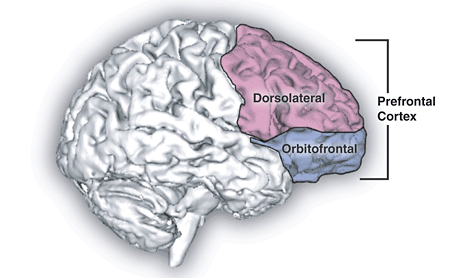

    Natalie M. Zahr, Ph.D., and Edith V. Sullivan, Ph.D. / Public domain

    Both groups showed neural activity in similar brain regions to the stress-inducing scenario, including the amygdala, mid-insula, and hippocampal regions. There were no significant differences of neural activity in the neutral/relaxing scenarios. Additionally, both groups showed that neural activity during these stressful scenarios had a negative correlation to smoking reduction. In other words, the greater their brain activity responded to stress, the less likely they were to have reduced their smoking throughout the study.

    However, for the stress-inducing tasks, the Freedom From Smoking group showed greater stress reactivity in these same neural regions. These findings, coupled with the results that the Mindfulness Training group had a greater reduction in smoking, provide evidence that reducing stress reactivity at the neural level may be one of the primary mechanisms that make Mindfulness Training more effective for smoking cessation.

    “This study is the first to provide evidence to this model linking stress reactivity at the neural level to reduction of smoking in mindfulness treatments.”

    There are notable neurological differences between the two treatment options. For instance, the Freedom From Smoking intervention, which is a cognitive-behavioral therapy, activates the prefrontal cortex of the brain, which stress and forms of psychopathology, like addiction, can compromise its functioning. Conversely, Mindfulness Training, which relies on acceptance and being present, does not rely on the same prefrontal cortex and therefore might be more appropriate for clinical populations who deal with both stress and addiction.

    This study is the first to provide evidence to this model linking stress reactivity at the neural level to reduction of smoking in mindfulness treatments. This adds to an existing body of mindfulness research on stress reactivity in the brain and might provide further evidence for the clinical application for mindfulness-based interventions.

    Enjoy? Share with your friends

    Related Posts

  • Mindfulness-Based Relapse Prevention for Stimulant Dependent Adults: A Pilot Randomized Clinical Trial (Glasner et al., 2016)

    Mindfulness-Based Relapse Prevention for Stimulant Dependent Adults: A Pilot Randomized Clinical Trial (Glasner et al., 2016)

    MINDFULNESS-BASED
    RELAPSE PREVENTION FOR
    STIMULANT DEPENDENT ADULTS:

    A PILOT RANDOMIZED CLINICAL TRIAL

    (Glasner et al., 2016)


    By Michael Juberg


    Image by ColiN00B from Pixabay

    In a recent pilot study by Suzette Glasner, Ph.D. and her team at the Integrated Substance Abuse Programs at the David Geffen School of Medicine at UCLA, they evaluated the effects of Mindfulness-Based Relapse Prevention (MBRP) on reducing relapse susceptibility among stimulant-dependent adults receiving a contingency management (CM) intervention.

     Both arms of the study received 4 weeks of contingency management in the beginning of the intervention. After the fourth week, one group concurrently received a health education (HE) intervention as the control group, and the experimental group concurrently received a Mindfulness-Based Relapse Prevention (MBRP) intervention. 

    Throughout the study both groups were tested for stimulant use, negative affect (emotions), and psychiatric severity during the intervention, as well as one month after the interventions ended.

    Those participants involved with the Mindfulness-Based Relapse Prevention evidenced reductions in negative affect and overall psychiatric symptom severity outcomes. Furthermore, this group showed greater reductions in depression severity throughout the intervention and at the 1-month follow up assessment. 

    “Among the participants who had anxiety and depressive disorders, those in the Mindfulness-Based Relapse Prevention group had lower odds of stimulant use, relative to the health education group.”

    Among the participants who had anxiety and depressive disorders, those in the Mindfulness-Based Relapse Prevention group had lower odds of stimulant use, relative to the health education group.

    This study provides promising evidence to the potential for Mindfulness-Based Relapse Prevention as a possible adjunctive therapy for stimulant-dependent adults.

    Access the article here.

    Enjoy? Share with your friends

    Related Posts

  • Long-term Mindfulness Training is Associated with Reliable Differences in Resting Respiration Rate (Wielgosz et al., 2016)

    Long-term Mindfulness Training is Associated with Reliable Differences in Resting Respiration Rate (Wielgosz et al., 2016)

    Long-term Mindfulness Training is Associated with Reliable Differences in Resting
    Respiration Rate.

    (Wielgosz et al., 2016)


    By Michael Juberg


    Image from Pixabay

    Scientists have studied respiration rate as an index of psychological well-being. In this study led by Joseph Wielgosz, M.A., and his team at the University of Wisconsin-Madison, they researched whether long-term meditation training was associated with enduring changes in resting respiration rate over an extended period of time. 

    By comparing a group of long-term meditators to a control group (non-meditators), they tested whether formal meditation practice accounted for stable, generalizable changes in resting respiration rates. The experimental group (long-term meditators) included participants who had at least 3 years of mindfulness-related meditation practice, maintained a daily practice of at least 30 minutes, and participated in at least three intensive meditation retreats lasting five days or longer. The control group had neither formal meditation training nor an active meditation practice.

    Study results indicated a near-significant group difference, where resting respiration rate was lower in the long-term meditators on average. Within the long-term meditator group, intensive retreat practice significantly predicted lower resting respiration rate. For the same group, neither daily practice nor total practice hours demonstrated a significant relationship to respiration rate.  Further analysis examined the effects of physiological differences, age, and gender, none of which independently predicted respiration rate.

    “The study is first to suggest reliability of respiration rate across sessions months apart.”

    A major implication of the study suggests the distal effects of intensive retreat practice on respiration rates, a benefit not necessarily conferred by a brief, but full-day meditation session. Additionally, the study is first to suggest reliability of respiration rate across sessions months apart. This study underlines the challenges of researching the nuances of contemplative practices and their immediate and long-term effects.

    Enjoy? Share with your friends

    Share on facebook
    Share on twitter
    Share on linkedin
    Share on reddit

    Related Posts

  • Examination of Broad Symptom Improvement Resulting From Mindfulness-Based Stress Reduction in Breast Cancer Survivors: A Randomized Controlled Trial (Lengacher et al., 2016)

    Examination of Broad Symptom Improvement Resulting From Mindfulness-Based Stress Reduction in Breast Cancer Survivors: A Randomized Controlled Trial (Lengacher et al., 2016)

    Examination of Broad Symptom Improvement Resulting From Mindfulness-Based Stress Reduction in Breast Cancer Survivors:
    A Randomized Controlled Trial

    (Lengacher et al., 2016)


    By Michael Juberg


    Photo by Anna Shvets from Pexels

    One study estimates that there are almost 6 million breast cancer survivors in America alone. While breast cancer survivor rates are increasing, the focus turns to improving the quality of life (QOL) for these survivors. Breast cancer survivors can experience a number of psychological symptoms, such as depression, anxiety, sleep disturbances, and fear of reoccurrence, along with physical symptoms like pain and fatigue. 

    Researchers are exploring mindfulness-based interventions as a long-term treatment options to address the multitude of symptoms after the cancer has been treated.

    In this study, researchers investigated the efficacy of a Mindfulness-Based Stress Reduction for Breast Cancer (MBSR(BC)) intervention for improving the psychological and physical symptoms and quality of life among breast cancer survivors who completed treatment. In this randomized control trial, 322 breast cancer survivors were randomized into a MBSR(BC) group or a usual care group and were assessed at baseline, 6 weeks (following the intervention) and 12 weeks for symptoms related to breast cancer, including fear of recurrence, fatigue and quality of life to name a few.

    Participants in the Mindfulness-Based Stress Reduction for Breast Cancer group experienced significant improvements in psychological and physical symptoms, with largest overall effect sizes for fear of recurrence and fatigue severity. Those participants who reported the highest levels of stress at baseline demonstrated the greatest benefit from participation in MBSR(BC).

    This isn’t the first study to explore mindfulness as a treatment option for breast cancer survivors, but it expands the growing body of evidence that mindfulness can be a useful tool to self-regulate emotions of uncomfortable thoughts and somatic sensations. Mindfulness, as taught in the MBSR(BC) intervention, promotes acceptance and non-reactive awareness to the painful psychological and physical symptoms that breast cancer survivors routinely endure.

    “This isn’t the first study to explore mindfulness as a treatment option for breast cancer survivors, but it expands the growing body of evidence that mindfulness can be a useful tool to self-regulate emotions of uncomfortable thoughts and somatic sensations.”

    This study was novel in that MBSR(BC) demonstrated broad-spectrum benefits, which were observed immediately from baseline to 6 weeks post-study, and then sustained through a 12 week follow up. As researchers continue to explore mindfulness-based interventions for different clinical populations, the science will need to demonstrate that these interventions have lasting, sustainable outcomes.

    Access the article here

    Enjoy? Share with your friends

    Share on facebook
    Share on twitter
    Share on linkedin
    Share on reddit

    Related Posts

  • Epigenetic Clock Analysis in Long-term Meditators (Chaix et al., 2017)

    Epigenetic Clock Analysis in Long-term Meditators (Chaix et al., 2017)

    Epigenetic Clock Analysis
    in Long-term Meditators

    (Chaix et al., 2017)


    By Michael Juberg

    While the scientific study of mindfulness has exponentially increased over the past few decades, only recently has the scientific community focused on the effects of meditation training on biological aging. Scientists have begun to examine the DNA methylation (DNAm) at specific genomic sites that are known to be highly associated with chronological age. When the DNAm age is compared to actual chronological age of an individual, the epigenetic aging rate can be determined. 

    This becomes an important health index since faster epigenetic aging has been positively associated with chronic diseases, cognitive and physical deterioration, and even decreases in longevity. As the Center for Disease Control and Prevention reports that over 78% of adults 55 years of age and older present at least one chronic disease, preventing age-related diseases is clearly a top health priority.

    A new study by an international research team, led by Raphaëlle Chaix, have investigated the potential relationship between the effects of long-term mediation practices and epigenetic aging rates. This study compared two group’s epigenetic aging rates using the DNAm in blood cells. 

    One group consisted of long-term meditators, with at least 3 years of daily practice and at least 3 intensive meditation retreats, and a control group of individuals with no meditation experience. In both groups, the DNAm and chronological ages were highly correlated, confirming the epigenetic clock model previously proposed.


    Image by Gerd Altmann from Pixabay

    Study results revealed that compared to the long-term meditators, the control group showed an accelerated epigenetic aging trajectory, especially for those individuals in the control group who were over 52 years old. Long-term meditators were protected from this effect, showing similar epigenetic aging in both older and younger meditators. 

    The researchers then examined the relationship between years of regular meditation practice with epigenetic aging rates, which revealed that more experienced meditators showed a significant reduction in epigenetic aging, particularly for study participants over 52 years of age when compared to controls. The effects found in older study participants supports that daily meditation practice may have a protective effect in terms of epigenetic aging over the course of a lifetime.

    “The effects found in older study participants supports that daily meditation practice may have a protective effect in terms of epigenetic aging over the course of a lifetime.”

    The findings from this study advance a previous body of evidence supporting the effects of sustained meditation training on aging biomarkers, including longer telomeres at the end of chromosomes, as well as increases in telomerase activity. 

    While this study is promising and may present a preventive pathway to reduce the acceleration of age-related diseases, it should be noted that longitudinal and more controlled studies will be necessary to further elucidate the effects of long-term meditation practice.

    Enjoy? Share with your friends

    Share on facebook
    Share on twitter
    Share on linkedin
    Share on reddit

    Related Posts