Category: Latest Research

  • When Less is More: Mindfulness Predicts Adaptive Affective Responding to Rejection via Reduced Prefrontal Recruitment (Martelli et al., 2018)

    When Less is More: Mindfulness Predicts Adaptive Affective Responding to Rejection via Reduced Prefrontal Recruitment (Martelli et al., 2018)

    When Less is More:
    Mindfulness Predicts Adaptive Affective Responding to Rejection via Reduced Prefrontal Recruitment

    (Martelli, Chester, Brown, Eisenberger, & DeWal, 2018)

    By Brandt Kam
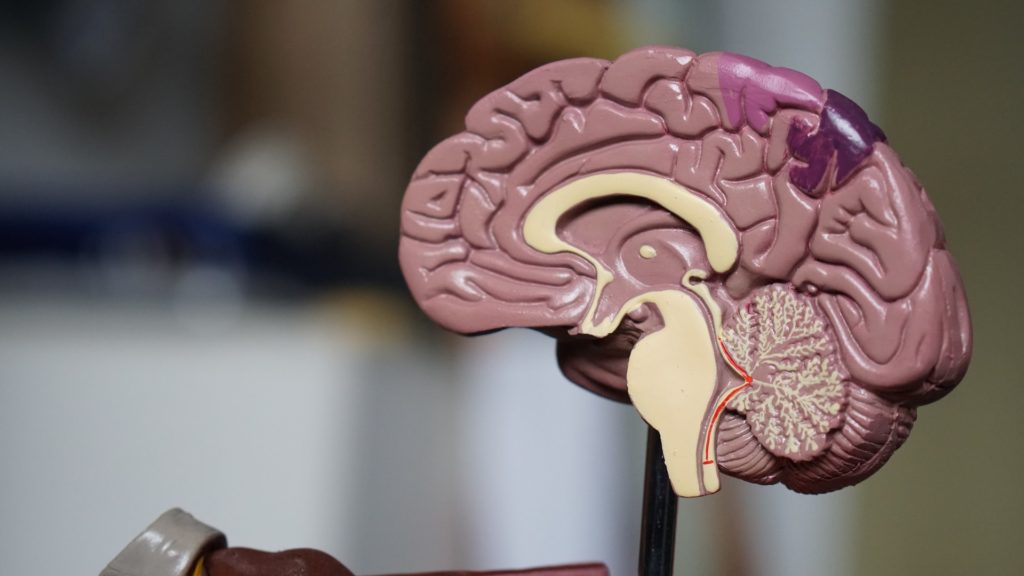

    WHEN LESS IS MORE: MINDFULNESS PREDICTS ADAPTIVE AFFECTIVE RESPONDING TO REJECTION VIA REDUCED PREFRONTAL RECRUITMENT
    Robina Weermeijer via Unsplash

    Developing and maintaining relationships is considered a fundamental need and people lean on  this as motivation when conducting interpersonal interactions. Social rejection can hinder this drive to connect.  Distress as a result of experiencing rejection can lead to a variety of negative affect, including but not limited to anxiety and depression.  Due to these outcomes, research on how individuals can adapt to rejection has become necessary.

    There has recently been a growing body of research that suggests that mindfulness can serve as an effective regulating factor of emotional responses to evocative stimuli. There are indications that mindfulness is effective at down-regulating the effects of rejection, and does so differently from other emotion regulation strategies that are commonly studied, such as reappraisal.  However, there is little evidence on the emotional regulatory effects of mindfulness on distress related to rejection. 


    WHEN LESS IS MORE: MINDFULNESS PREDICTS ADAPTIVE AFFECTIVE RESPONDING TO REJECTION VIA REDUCED PREFRONTAL RECRUITMENT
    Gemma Chua Tran via Unsplash

    A study led by Alexandra Martelli investigated whether more mindful individuals (based on self-report measure scores) would respond to social rejection with less distress and if certain neurological mechanisms in the brain’s prefrontal cortex can potentially explain the role of mindfulness in reduced social distress. The prefrontal cortex is an area of the brain responsible for measuring distress in people and by observing its activity, correlations can be determined with social triggers, and if mindfulness impacts it.  The study looked at 40 neurologically and psychologically healthy undergraduate students.  The study included  self-report measures meant to capture mindfulness and social distress.  Students also participated in a social rejection task while undergoing fMRI scans.  Participants completed a set of pre-paradigm/scan questionnaires, administered the paradigm, then were administered a post-paradigm/scan set of questionnaires.  

    “The study’s outcomes support the theory that mindfulness may act as a form of implicit emotion regulation where individuals higher in mindfulness may be more effective in regulation of their negative emotions because they are not overtaxing their prefrontal regions implicated in emotion and self-regulation.”

    Study results showed that more mindful participants reported less social distress approximately one hour after being socially rejected, which was consistent with recent research findings employing a similar social exclusion intervention. The present results supported the value of mindfulness as an effective means of managing distress relating to social rejection. Regarding the study’s second objective, the attenuated activation in the brain’s prefrontal cortex might explain the association between mindfulness and reduced social distress. Prefrontal cortex activation during social rejection is negatively related with trait mindfulness, and this lowered activation may explain the link between mindfulness and social distress. Furthermore, study results suggest that mindful individual’s reduced prefrontal recruitment may be effective in regulating social distress. 

    The study’s outcomes support the theory that mindfulness may act as a form of implicit emotion regulation where individuals higher in mindfulness may be more effective in regulation of their negative emotions because they are not overtaxing their prefrontal regions implicated in emotion and self-regulation.  However, further studies are needed with increasingly diverse samples, and individuals who are uniquely challenged with social rejection, such as those diagnosed with social anxiety. 

    Enjoy? Share with your friends

    Related Posts

  • Brief mindfulness session improves mood and increases salivary oxytocin in psychology students (Bellosta-Batalla et al., 2020)

    Brief mindfulness session improves mood and increases salivary oxytocin in psychology students (Bellosta-Batalla et al., 2020)

    Brief mindfulness session
    improves mood and
    increases salivary oxytocin
    in psychology students

    (Bellosta-Batalla et al., 2020)


    By Michael Juberg


    BRIEF MINDFULNESS SESSION IMPROVES MOOD AND INCREASES SALIVARY OXYTOCIN IN PSYCHOLOGY STUDENTS
    Erik Brolin via Unsplash

    Mindfulness-based interventions have been widely shown to be effective in reducing anxiety and negative moods in health professionals. Less known are the effects of mindfulness on biological markers that may correspond to these changes in mood and anxiety and may lead to enhanced empathy. A research team from Valencia, Spain recently investigated the effects of a brief mindfulness-based intervention on both mood and biological markers on a sample of health professional students. 

    This study separated 68 participants with no prior meditation experience into two groups. In the experimental group, participants were led through a brief series of 15-minute guided meditations that directed participants to focus their attention to their breathing, physical sensations, and mental activity. Unlike the experimental group, the control group completed emotion recognition exercises and played verbal creativity games. For both groups, researchers measured self-reported mood, anxiety levels, and collected saliva samples 10 minutes before the group sessions and again 10 minutes after the group session.


    BRIEF MINDFULNESS SESSION IMPROVES MOOD AND INCREASES SALIVARY OXYTOCIN IN PSYCHOLOGY STUDENTS
    Image Via Unsplash

    Within the saliva samples, this team of researchers analyzed the amount of salivary oxytocin, a peripheral biomarker associated with reductions of stress, anxiety, and the promotion of social bonding. In prior research studies, the intranasal administration of oxytocin has been shown to exert a positive effect on social cognition, such as increasing attention to socially relevant information, emotional accuracy, empathy, and even the development of strong therapeutic relationships. Results from prior studies examining whether mindfulness-based interventions increase salivary oxytocin are unclear and warrant further investigation.

    Findings from this study revealed that the experimental group receiving the guided meditations had both lower state anxiety levels and lower negative affect compared to the control group. However, the study notes no difference in the level of positive affect between the groups. Importantly, results suggested that the experimental group receiving guided meditations had a statistically significant higher level of salivary oxytocin than the control group. The study authors suggest that the combination of improvements in self-reported mood and increased salivary oxytocin lend to a growing body of evidence that supports mindfulness-based interventions effectiveness at enhancing emotional regulation that may be associated with empathy.

    “These researchers posit that mindfulness-based interventions may lead to increased emotional regulation and the upregulation of biological systems that facilitate feelings of empathy, important processes for health professionals.”

    The study also notes that the effect size of mindfulness sessions on oxytocin, a metric to assess magnitude of change, was higher than previous studies examining changes in salivary oxytocin after various relaxation exercises and even skin-to-skin contact between parents and infants. These researchers posit that mindfulness-based interventions may lead to increased emotional regulation and the upregulation of biological systems that facilitate feelings of empathy, important processes for health professionals.

    Although this study has notable limitations, this study offers insight into the possible mechanisms that link changes in emotional regulation to mindfulness-based practices. Future studies will have the opportunity to evaluate whether these results extrapolate to more diverse populations and with more regular mindfulness-based practices than the brief 15 minute guided mindfulness practices used within this study. Furthermore, since salivary oxytocin is a biomarker more accessible than oxytocin found in the central nervous system, more research will need to clarify the relationship between the peripheral and central oxytocin. This study advances the importance of biomarkers in understanding the mechanisms of mindfulness-based practices and how they work in concert to improve emotional health and wellness.  

    Enjoy? Share with your friends

    Related Posts

  • Neurophysiological and behavioural markers of compassion (Kim et al., 2020)

    Neurophysiological and behavioural markers of compassion (Kim et al., 2020)

    Neurophysiological and behavioral markers of compassion

    (Kim, Parker, Doty, Cunnington, Gilbert, & Kirby, 2020)


    By Michael Juberg


    NEUROPHYSIOLOGICAL AND BEHAVIORAL MARKERS OF COMPASSION ​
    Matt Collamer via Unsplash

    Scientists are exploring how self-compassion is associated with beneficial health outcomes. Previously, the study of compassion and its effects on health and well-being have been approached theoretically. Researchers have recently advanced the study of compassion using sophisticated multi-method research designs that paint a clearer picture of the neurophysiological effects of self-compassion.  

    A new study by Kim and colleagues explored how compassion-based training can affect two self-regulatory styles and its relationship to neural, physiological, and behavioral responses. Kim and his team speculated that self-compassion might be fundamentally linked to two distinct self-regulatory styles of self-criticism. One style of self-criticism focuses on opportunities for self-improvement. The second style of self-criticism is theorized to be self-hatred. 

    With empirical support that self-hatred might be associated with eating disorders, depressive disorders, social anxiety, personality disorders, self-harm, suicide, and interpersonal problems, self-hatred may be a viable transdiagnostic target for treatment.


    NEUROPHYSIOLOGICAL AND BEHAVIORAL MARKERS OF COMPASSION ​
    mentatdgt via Pexels

    Compassionate Mind Training (CMT) targets self-hatred by deliberately adopting a self-reassurance state of mind when self-criticisms arise. Originally designed as an adjunct treatment for patients who are non-responsive to traditional treatments, the CMT intervention helps patients learn grounding and body posture, rhythmic breathing, awareness of self-criticism as it arises, and finally helps cultivate compassionate states of mind. 

    This study recruited 40 participants who completed a series of self-reports, tasks, and psychophysiological measurements at the beginning of the study. During one of the neuroimaging tasks using fMRI to record neural responses, participants were asked to utilize either the self-criticism or a self-reassurance regulatory style while viewing negative expressions “I fail to keep up with my commitments in life,” or neutral expressions such as, “I keep up with my commitments in life.” Participants then rated the intensity of these statements.


    NEUROPHYSIOLOGICAL AND BEHAVIORAL MARKERS OF COMPASSION ​
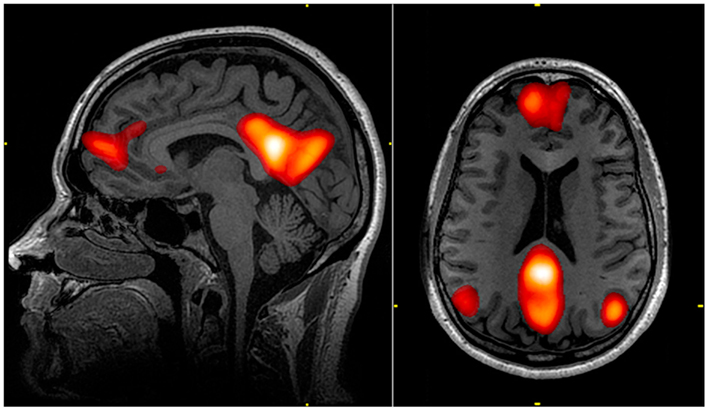
    fMRI example

    Researchers then assessed participants’ heart rate variability (HRV), an index of parasympathetic response, before and while participants listened to a standardized 15 minute recording of the Compassionate Mind Training. Participants were encouraged to follow the guided meditations for a two week period, followed by a second round of HRV testing.

    Study results suggest that a brief intervention of Compassionate Mind Training is capable of reducing neural networks associated with threat. By first examining the difference between the neural activation when participants engaged in self-criticism versus self-reassurance, the research team was able to identify greater neural activation across the whole brain in the salience network (SN), believed to process affective pain, and the default mode network (DMN), which is involved in self-referential processing. 

    Further analyses highlighted that there was greater activation in the anterior cingulate cortex (ACC), anterior insula (AI), and the amygdala during the self-criticism condition and reduced activation during the self-reassurance condition. The authors highlight that these study results suggest that the use of criticism and reassurance operate on similar neural pathways.

    “Results also indicate that compared to resting states, the practice of cultivating compassion increases parasympathetic response, measured as the increase in HRV.”

    Results also indicate that compared to resting states, the practice of cultivating compassion increases parasympathetic response, measured as the increase in HRV. This study also suggests that those participants who had a lower resting HRV engaged in the intervention more and had more increases in HRV from rest to intervention. 

    Conversely, those with higher HRV engaged less in compassion over the course of the intervention and did not observe significant shifts in parasympathetic response. The authors suggest this might signal that participants at great risk derived more benefits by engaging in compassion. Furthermore, the study demonstrated that the intervention elevated the HRV of a subset of participants so that they were no longer within a clinically-low range, which has been linked to elevated cardiac risk. 

    Finding from this multi-method study provides fascinating insights into the putative benefits of compassion-based trainings for helping individuals dealing with their own self-criticism While this study adds to a growing body of evidence that supports meditation practices increasing HRV, this study importantly highlights that self-criticism and self-reassurance function on similar neural substrates.

     Future studies will have the opportunity to clarify whether these results extend to clinical populations. If so, compassion-based training may offer a viable transdiagnostic therapeutic tool for helping individuals suffering from self-criticism.

    Enjoy? Share with your friends

    Related Posts

  • Yoga and Mindfulness as a Tool for Influencing Affectivity, Anxiety, Mental Health, and Stress among Healthcare Workers: Results of a Single-Arm Clinical Trial (Torre et al., 2020)

    Yoga and Mindfulness as a Tool for Influencing Affectivity, Anxiety, Mental Health, and Stress among Healthcare Workers: Results of a Single-Arm Clinical Trial (Torre et al., 2020)

    Yoga and Mindfulness as a Tool
    for Influencing Affectivity, Anxiety, Mental Health, and Stress among Healthcare Workers: Results of a Single-Arm Clinical Trial

    (Torre et al., 2020)


    By Emily Badillo


    YOGA AND MINDFULNESS AS A TOOL FOR INFLUENCING AFFECTIVITY, ANXIETY, MENTAL HEALTH, AND STRESS AMONG HEALTHCARE WORKERS: RESULTS OF A SINGLE-ARM CLINICAL TRIAL
    Andrea Piacquadio via Pexels

    Mindfulness-based interventions (MBIs) have garnished the attention of researchers as effective treatments for stress, chronic pain, anxiety, and recurrent depression in both clinical and nonclinical populations. Within the workplace, MBIs have also been shown to enhance overall well-being. 

    Kundalini yoga has been used to decrease perceived stress, depression symptoms and salivary cortisol levels, treat generalized anxiety and improve participants’ quality of life. 

    Both mindfulness and yoga influence individual brain networks, integrated brain states, and brain-body interactions. Furthermore, both time-honored practices place particular emphasis on posture, breath, the autonomous nervous system, and the major neural networks involved in the regulation of cognition and emotion.

    Healthcare workers (HCWs) face daily stressors while working in hospital settings  leading to consequences on their quality of life and mental and physical health, which inturn, impacts the entire healthcare system at large. This single-arm clinical trial (CT) assesses the effectiveness of a YoMin intervention (yoga and mindfulness; specifically MBSR) in improving mental well-being in HCWs. Here, researchers analyzed participants’ quality of life, work-related stress, positive and negative affect, and state and trait anxiety. 


    EVG Photos via Pexels

    Torre and colleagues recruited 70 HCWs from two hospitals in Rome, Italy for a 4-week course in yoga and mindfulness. Each week, participants attended one 2-hour section of yoga and one 2-hour section of mindfulness on the same day. Each yoga class emphasized elements of kundalini yoga and invited participants to pay specific attention to posture and breathing as a valuable method to manage their mind. Each mindfulness class included a body scan, focused attention exercises, a walking meditation, an open monitoring meditation, a period of inquiry about the practice with feedback from the mindfulness teachers, and instructions about homework at the end.

    Participants were instructed to complete surveys at baseline, before starting each 4-hour session, at the end of each 4-hour session and 21 days after course completion. Of the 70 HCWs that initially enrolled, 40 were included in the final analysis with 34 females and 6 males, 13 physicians, 15 nurses, and 12 other HCWs.

    Study results revealed that participants reported an immediate reduction in anxiety after a one day 4-hour YoMin session. Moreover, participants reported sustained decreased trait anxiety 3-4 weeks after the end of the course. It is interesting to note that while there was no significant difference in pre- and post-intervention scores with regards to positive affect, negative affect had an improvement. This means that while aspects such as energy, enthusiasm, and self-confidence were not affected, aspects such as fear, weakness, and anger were effectively diminished. Furthermore, while no significant results were found regarding physical health, the HCWs mental well-being significantly improved.

    “This study highlights the ever increasing need for healthcare systems to implement in-house interventions that will improve HCWs mental well-being and reduce burnout.”

    While a notable advantage of this study is the combination of yoga and mindfulness practices into one 4-week YoMin intervention, this study has substantial limitations. This study aimed to specifically help HCWs in the hospital environment; however, results from the only work-related questionnaire were not significant. Participants reported no change in perceived decision latitude, job demand, nor job strain. Also, results only included a 21-day follow up and future studies should look to incorporate 6-month to 1-year follow-ups to examine lasting effects. Future studies should also seek to incorporate physical and biochemical parameters.

    In a time when HCWs are on the frontlines of a global pandemic, the findings from this study are especially pertinent. This study highlights the ever increasing need for healthcare systems to implement in-house interventions that will improve HCWs mental well-being and reduce burnout. Brief 4-week interventions such as yoga and MBIs can be used to reduce stress and anxiety in HCWs and their respective communities.

    Enjoy? Share with your friends

    Related Posts

  • Mindfulness Buffers the Impact of COVID-19 Outbreak Information on Sleep Duration (Zheng et al., 2020)

    Mindfulness Buffers the Impact of COVID-19 Outbreak Information on Sleep Duration (Zheng et al., 2020)

    Mindfulness Buffers the Impact of COVID-19 Outbreak Information on Sleep Duration

    (Zheng, Yao, & Narayanan, 2020) 


    By Michael Juberg


    MINDFULNESS BUFFERS THE IMPACT OF COVID-19 OUTBREAK INFORMATION ON SLEEP DURATION
    Pranav Digwal/Pexels

    While many research teams are dedicating themselves to discovering a vaccine for the COVID-19 virus, mindfulness researchers are now studying how mindfulness practices could be effective for reducing the daily anxiety associated with the pandemic. Scientific research traditionally moves slowly, yet a team of researchers based in the perceived epicenter of the virus, Wuhan, China, recently tested whether a brief mindfulness intervention delivered through an app could be effective for reducing anxiety and protecting nightly sleep during the unfolding pandemic.

    New COVID-19 outbreaks within communities cause sudden and unprecedented physical, emotional, occupational, and social changes. Individuals naturally experiencing anxiety may also encounter disruption to their sleep health. The reciprocating effects of anxiety on sleep health lead to further health complications that may leave immune systems compromised and populations further susceptible to infection. 


    MINDFULNESS BUFFERS THE IMPACT OF COVID-19 OUTBREAK INFORMATION ON SLEEP DURATION
    Image via Pexels

    This study recruited 97 adult volunteers from Wuhan, China for a randomized controlled trial conducted in a 10 day period between February 20th and March 2nd, 2020. Participants were randomized into either a mindfulness intervention or a mind-wandering intervention control group.

     At the beginning of the study, all participants completed a baseline survey to collect demographic information and baseline mindfulness levels. Every morning, both groups were sent a survey through a messaging app assessing for sleep duration, sleep quality, and caffeine intake, followed by a ten minute audio instruction for practice. 

    The mindfulness practice included instructions for mindful awareness, present focus, and acceptance. The mind-wandering audio contained instructions for unfocused attention, a wakeful state that is commonly used as a controlled condition in mindfulness research. Each night, participants completed another survey to assess for daily anxiety levels. 

    “Mindfulness interventions delivered through a smartphone app offers a viable public health solution to counteract the detrimental and synergistic effects of anxiety and sleep disruptions during this emerging pandemic.”

    Study results revealed that compared to the mind-wandering condition, participants in the mindfulness group reported higher levels of mindfulness. Next, analyses indicated that daily anxiety levels were lower in the mindfulness group, even after controlling for a cluster of factors such as trait anxiety levels, age, and gender. 

    Furthermore, a difference emerged between the two groups with regards to the relationship between sleep duration and reports of new confirmed cases, a factor hypothesized to cause anxiety and disrupt sleep. Those within the mind-wandering condition loss more sleep by an average of 39 minutes per thousand daily confirmed cases. Importantly, sleep quantity was unaffected by those within the mindfulness condition. 

    While a notable advantage of this study is the unprecedented timing and access to a vulnerable community, this study has substantial limitations. Future studies will have the opportunity to implement more rigorous methodology, include a more comprehensive battery of assessments for different health indices, and include follow-up data to assess whether these changes are enduring. 

    The findings from this study offer insights into both the potential power of mindfulness practice and the multifaceted utility of science during a time of global crisis. Mindfulness interventions delivered through a smartphone app offers a viable public health solution to counteract the detrimental and synergistic effects of anxiety and sleep disruptions during this emerging pandemic. With concerns of over-utilization of hospital services, brief app-delivered mindfulness practices could add an additional level of health protection for citizens and their respected communities. 

    Enjoy? Share with your friends

    Related Posts