
Author: Brandt Kam

  • When Less is More: Mindfulness Predicts Adaptive Affective Responding to Rejection via Reduced Prefrontal Recruitment (Martelli et al., 2018)

    When Less is More: Mindfulness Predicts Adaptive Affective Responding to Rejection via Reduced Prefrontal Recruitment (Martelli et al., 2018)

    When Less is More:
    Mindfulness Predicts Adaptive Affective Responding to Rejection via Reduced Prefrontal Recruitment

    (Martelli, Chester, Brown, Eisenberger, & DeWal, 2018)

    By Brandt Kam

    WHEN LESS IS MORE: MINDFULNESS PREDICTS ADAPTIVE AFFECTIVE RESPONDING TO REJECTION VIA REDUCED PREFRONTAL RECRUITMENT
    Robina Weermeijer via Unsplash

    Developing and maintaining relationships is considered a fundamental need and people lean on  this as motivation when conducting interpersonal interactions. Social rejection can hinder this drive to connect.  Distress as a result of experiencing rejection can lead to a variety of negative affect, including but not limited to anxiety and depression.  Due to these outcomes, research on how individuals can adapt to rejection has become necessary.

    There has recently been a growing body of research that suggests that mindfulness can serve as an effective regulating factor of emotional responses to evocative stimuli. There are indications that mindfulness is effective at down-regulating the effects of rejection, and does so differently from other emotion regulation strategies that are commonly studied, such as reappraisal.  However, there is little evidence on the emotional regulatory effects of mindfulness on distress related to rejection. 


    WHEN LESS IS MORE: MINDFULNESS PREDICTS ADAPTIVE AFFECTIVE RESPONDING TO REJECTION VIA REDUCED PREFRONTAL RECRUITMENT
    Gemma Chua Tran via Unsplash

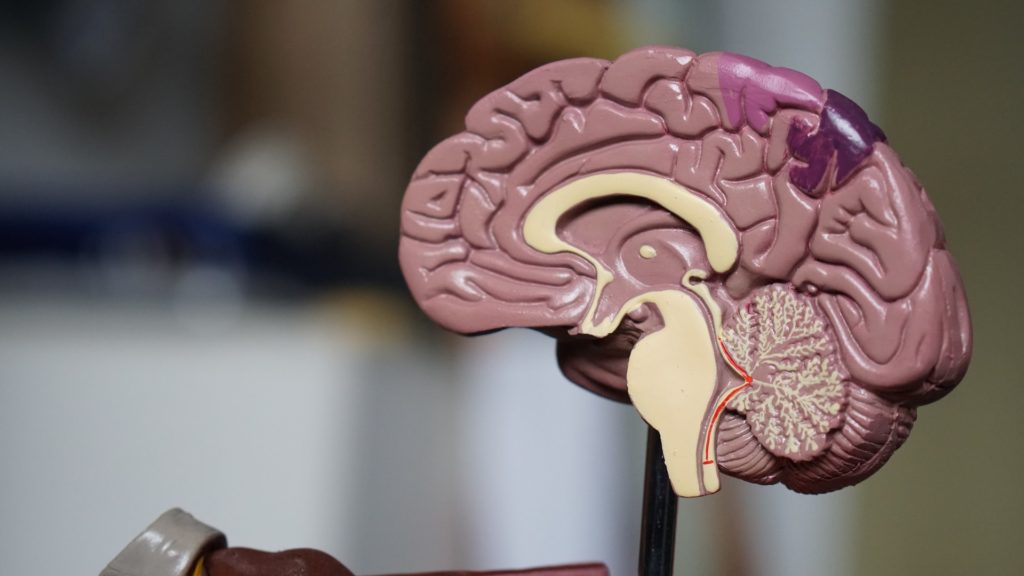
    A study led by Alexandra Martelli investigated whether more mindful individuals (based on self-report measure scores) would respond to social rejection with less distress and if certain neurological mechanisms in the brain’s prefrontal cortex can potentially explain the role of mindfulness in reduced social distress. The prefrontal cortex is an area of the brain responsible for measuring distress in people and by observing its activity, correlations can be determined with social triggers, and if mindfulness impacts it.  The study looked at 40 neurologically and psychologically healthy undergraduate students.  The study included  self-report measures meant to capture mindfulness and social distress.  Students also participated in a social rejection task while undergoing fMRI scans.  Participants completed a set of pre-paradigm/scan questionnaires, administered the paradigm, then were administered a post-paradigm/scan set of questionnaires.  

    “The study’s outcomes support the theory that mindfulness may act as a form of implicit emotion regulation where individuals higher in mindfulness may be more effective in regulation of their negative emotions because they are not overtaxing their prefrontal regions implicated in emotion and self-regulation.”

    Study results showed that more mindful participants reported less social distress approximately one hour after being socially rejected, which was consistent with recent research findings employing a similar social exclusion intervention. The present results supported the value of mindfulness as an effective means of managing distress relating to social rejection. Regarding the study’s second objective, the attenuated activation in the brain’s prefrontal cortex might explain the association between mindfulness and reduced social distress. Prefrontal cortex activation during social rejection is negatively related with trait mindfulness, and this lowered activation may explain the link between mindfulness and social distress. Furthermore, study results suggest that mindful individual’s reduced prefrontal recruitment may be effective in regulating social distress. 

    The study’s outcomes support the theory that mindfulness may act as a form of implicit emotion regulation where individuals higher in mindfulness may be more effective in regulation of their negative emotions because they are not overtaxing their prefrontal regions implicated in emotion and self-regulation.  However, further studies are needed with increasingly diverse samples, and individuals who are uniquely challenged with social rejection, such as those diagnosed with social anxiety. 

    Enjoy? Share with your friends

    Related Posts

  • Intrapsychic Correlates of Professional Quality of Life: Mindfulness, Empathy, and Emotional Separation. (Thomas & Otis, 2010).

    Intrapsychic Correlates of Professional Quality of Life: Mindfulness, Empathy, and Emotional Separation. (Thomas & Otis, 2010).

    Intrapsychic Correlates of Professional Quality of Life: Mindfulness, Empathy, and Emotional Separation

    (Thomas, & Otis, 2010)

    By Brandt Kam


    INTRAPSYCHIC CORRELATES OF PROFESSIONAL QUALITY OF LIFE: MINDFULNESS, EMPATHY, AND EMOTIONAL SEPARATION​
    Andrea Piacquadio/Pexels

    There has been a growing body of work regarding correlations between burnout and mindfulness among healthcare workers; however, no studies have examined the relationship between mindfulness in relation to compassion fatigue, compassion satisfaction, nor burnout among social workers.  Burnout affects practitioners’ well-being, retention, and quality of services provided.  Yet few studies have systematically examined how empathy, emotional regulation, and compassion satisfaction may affect rates of burnout.

    The current investigation builds on this limited amount of empirical evidence regarding empathy and emotional regulation, along with the impact of mindfulness and compassion satisfaction on compassion fatigue and burnout among social workers. 


    INTRAPSYCHIC CORRELATES OF PROFESSIONAL QUALITY OF LIFE: MINDFULNESS, EMPATHY, AND EMOTIONAL SEPARATION​
    Polina Zimmerman/Pexels

    The present study led by Jacky T. Thomas, utilized cross-sectional data to explore the impact that psychological variables such as mindfulness, empathy, and emotional separation had on outcome variables such as compassion fatigue, burnout, and compassion satisfaction.  Participants were randomly selected from the Kentucky Board of Social Workers and mailed 4 surveys to assess professional quality of life, mindfulness, empathy, and emotional separation. The final sample consisted of 171 Licensed Clinical Social Workers who ranged from 31 to 80 years of age.  

    Study results showed that higher emotional separation scores shared significant relationships with lower compassion fatigue and burnout scores, and higher compassion satisfaction scores.  

    The amount of self-reported mindfulness contributed significantly to the variance in burnout scores, and demonstrated the strongest association with compassion satisfaction. 

    “…further studies would benefit from incorporating other measures of empathy since it is believed to be a complex construct that may involve several distinct processes.”

    Findings from the study regarding empathy and emotional separation are consistent with previous findings that it’s not the idea of caring for clients or being moved by a client’s painful circumstances that put practitioners at risk for compassion fatigue or burnout, rather the risk  increases when practitioners care for patients without being able to keep themselves separate.

    Results from this study and previous findings support that mindfulness practices can enhance a therapist’s ability to intentionally and flexibly regulate attention as well as emotional reactivity, which has been demonstrated to influence burnout.  However further studies would benefit from incorporating other measures of empathy since it is believed to be a complex construct that may involve several distinct processes.

    Here, causal relationships between variables are difficult to establish because this study was tested at only one point in time using survey data.

    Enjoy? Share with your friends

    Related Posts

  • Brandt Kam Author Page


    Linkedin


    Researchgate

    Assistant EDITOR

    Brandt Kam

    Brandt Kam is a graduate student at the University of Hawaii at Manoa (UHM) where he’s earning his Master’s in Social Work with a focus on Behavioral Mental Health. His particular interest range from the impact that mindfulness has on social justice issues to mindfulness-based interventions that can be utilized in multi-cultural setting. During his spare time, Brandt enjoys surfing, body boarding ( or anything involving the ocean), and reading.

    Posts by Brandt

  • A Randomized Controlled Trial Examining the Effect of Mindfulness Meditation on Working Memory Capacity in Adolescents (Quach et al., 2015)

    A Randomized Controlled Trial Examining the Effect of Mindfulness Meditation on Working Memory Capacity in Adolescents (Quach et al., 2015)

    A Randomized Controlled Trial Examining the Effect of
    Mindfulness Meditation on
    Working Memory Capacity
    in Adolescents

    (Quach et al., 2015)

    By Brandt Kam

    A RANDOMIZED CONTROLLED TRIAL EXAMINING THE EFFECT OF MINDFULNESS MEDITATION ON WORKING MEMORY CAPACITY IN ADOLESCENTS
    Photo by mentatdgt from Pexels

    The amount of research involving mindfulness interventions has grown exponentially, however only in the last decade has mindfulness research involving adolescents increased rapidly.  Mindfulness interventions have been known to exhibit positive health results among adolescents and adults. As these positive health results have become more common, researchers have started to focus on more specific benefits of mindfulness training, namely on working memory.  

    There has been an increase in the study of the impacts that mindfulness may have on working memory because both involve moment to moment awareness. Existing literature with adult samples suggest that mindfulness meditation may be used to increase working memory capacity (WMC), however, the effectiveness of mindfulness training on improving (WMC) in adolescents has not been investigated.  It could be inferred that strengthening WMC among adolescents would be valuable during the developmental stages, where the majority of their day is spent in an educational setting.

    A RANDOMIZED CONTROLLED TRIAL EXAMINING THE EFFECT OF MINDFULNESS MEDITATION ON WORKING MEMORY CAPACITY IN ADOLESCENTS
    Photo by Pragyan Bezbaruah from Pexels

    A study led by Dianna Quach investigated the relationship between mindfulness mediation and working memory capacity among adolescents.  This study was conducted on students from Southern California between the ages of 12 and 17 years old and designed to investigate whether different interventions impacted working memory better than others.  Students were randomly assigned to three different groups, a mindfulness meditation group, a hatha yoga group, and a waitlist control group.

    Study results show that the mindfulness meditation group reported significant improvements pre and post intervention in working memory capacity (WMC), while those participants in the hatha yoga and waitlist control group didn’t report any significant improvement in WMC.  

    The study’s hypothesis that mindfulness meditation was more effective at improving WMC than hatha yoga was supported. The results of this study are provide more evidence that the practice of mindfulness meditation can actively enhance working memory.

    “The results of this study are provide more evidence that the practice of mindfulness meditation can actively enhance working memory.”

    Potential mechanisms may explain the study’s results.  First, meditation requires similar functions to that of (WMC), namely implementing a sustained attention while simultaneously redirecting attention back to the current experience.  Second, it is conceivable that learning to practice hatha yoga mindfully may have proven difficult for adolescents, which could have influenced the results. If done so mindfully, hatha yoga may in fact provide similar benefits to WMC.

    The results of this study are consistent with the notion that the practice of mindfulness meditation is closely related to the function of working memory and promotes it.  Although this study is promising in establishing a positive link between the practice of mindfulness meditation and WMC, further studies need to be conducted in order increase factor generalization.  Also alternative intervention timing may need to be incorporated.

    Enjoy? Share with your friends

    Related Posts