Author: the Educating Gossip

  • African American Mindfulness Researchers Make Vital Contributions

    African American Mindfulness Researchers Make Vital Contributions

    The Educating Gossip™

    Producing a Canon and Identifying Areas for Future Targeted Research Highlights Need for both Broader Mindfulness Practices to Study and Fund

    In my most recent writing directed specifically for minoritized graduate students, I explore how spiritual mindfulness practices can lead to individual psychological self-transcendence, personal healing and courage to use the creativity of writing and research to bring about deeper personal and social healing (see Clark, 2024). My hope is to inspire graduate students to boldly take on groundbreaking research with spiritual practice at its center.

    To foster this hope, I’ve selected two studies and one thesis paper written by African American researchers as a starting place to report the need for more research and funding for the investigation of mindfulness and the need to study other types of spiritual mindfulness practices, in addition to the Loving-Kindness Meditation (LKM) mindfulness practice most often studied. I celebrate these authors by reading them through the lens of the Clark Unitive Effect (CUE) theory: positive critique (opinion or judgment) and critical analysis (systematic, objective, and analytical), acceptance, and realized values that inform action that will more likely than not lead to healing and peace.

    In Nonreactivity and Resilience to Stress: Gauging the Mindfulness of African American College Students (Freligh & Debb, 2019), the study focuses exclusively on African American undergraduate students to understand how mindfulness is related to resilience. Results indicated that it might be useful if new mindfulness-based practices were created specifically with the intention of building the skill of nonreactivity in order to cultivate resilience.

    According to the CUE theory, spiritual practices that affirm the perceived duality of this world yet accept that the true nature of this human experience is unity and diversity promotes healing and peace. Through this process, individuals can experience a sense of personal liberation of the mind. This revealing nurtures confidence and courage to foster individual beliefs, group ethics, and larger cultural systems and structures that lead to human psychological maturation and peaceful action in the world.

    Joseph Campbell asserted that today’s mythological or spiritual realization ought to address both the standard concerns and dealings with “the maturation of the individual, from dependency through adulthood, through maturity, and then to the exit,” but most importantly also “to address concerns and dealings about global society (everybody on the planet, not separated by nativist or nationalistic identities), and how to relate this global society to the world of nature and the cosmos” (Campbell & Moyers, 1991). The world’s wisdom traditions contain a myriad of spiritual practices including, songs, dances, mantras, hymns, prayers, lectio divina (praying with sacred texts), and more. I suggest investigating a wider array of such spiritual practices and their potency on not only physical but also emotional associations. Admittedly, methodologies may need to be created that do not yet exist to measure the effects of specific spiritual practices, yet existing questionnaires and scales may be of some use and guidance.

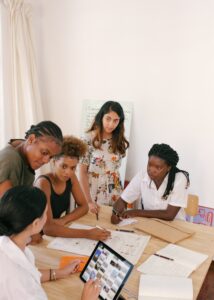
    PC via @ dreamtimes.com

    In Promoting Mindfulness in African American Communities, the researchers discuss how mindfulness interventions might be used to reduce high incidents of chronic diseases in African Americans due to, among other stressors, economic class, lack of access to healthy foods, and other societal factors. They note challenges to higher representation such as time, location of sessions and transportation. “We also provide additional strategies to guide future mindfulness research that target African Americans” (Biggers et al., 2020). My positive critique centers on the section “Cultural Adaptation of Mindfulness Programs Targeting African Americans.” In my judgment, this discussion is positive in opening the mind to structuring a broader array of mindfulness spiritual practices, including traditions from African American religions. For example, the singing of spirituals and gospel songs can soothe the mind-body. Cultural gatherings celebrating African American art and food are also practices that deepen the sense of connection and belonging. Critical analysis would suggest that research into these practices may reveal healing and lessening of stress, among other positive outcomes including a developed sense of a unitive identity with God or universal oneness, although this study does not directly address this outcome. The challenge, as the authors note, is how to design a methodology to broadly study these and other spiritual practices.

    “…it might be useful if new mindfulness-based practices were created specifically with the intention of building the skill of nonreactivity in order to cultivate resilience. ”

    “There seems to be an important distinction between implementing a mindfulness curriculum that specifically incorporates religion versus employing a more secular approach that is open to discussion of participants’ perceptions of how mindfulness practice may or may not integrate with their own spiritual or religious experiences” (Biggers et al., 2020). The authors suggest that mindfulness instructors consider discussing with participants how the mindfulness practice may or may not align with any religious or spiritual practices they may use. Again, as the previous study noted, is the call for additional research including African Americans. And I would add other social and religious groups as well. Additionally, I advocate methodology identifying, evaluating and quantifying the values that are identified in such spiritual practices.

    “There seems to be an important distinction between implementing a mindfulness curriculum that specifically incorporates religion versus employing a more secular approach that is open to discussion of participants’ perceptions of how mindfulness practice may or may not integrate with their own spiritual or religious experiences” (Biggers et al., 2020). The authors suggest that mindfulness instructors consider discussing with participants how the mindfulness practice may or may not align with any religious or spiritual practices they may use. Again, as the previous study noted, is the call for additional research including African Americans. And I would add other social and religious groups as well. Additionally, I advocate methodology identifying, evaluating and quantifying the values that are identified in such spiritual practices.

    Finally, in “Healing Racial Injustice with Mindfulness Research, Training, & Practice,” the author takes a big swing and gets a home run in compiling “The Canon,” that celebrates African American contemplative researchers and invites all contemplative researchers to “(1) come together in conversation about race and (2) have an ongoing, personal, body-based practice. In short, show up for conversations about race, and come prepared.” (Laura, 2022). The author notes that reparative contemplative practices are called for, including those that “combine contemplative science with social justice” (Laura, 2022). The paper provides a powerful positive critique and critical analysis of inclusive mindfulness research, methodology strategies and applications across individuals, groups and society. It is imperative that contemplative scientists experiment with a larger range of test designs to target overcoming the biases in existing social behaviors, thought, policy and decision-making. Additional interventions need to be explored that heal a troubled mind. CUE practice (also known as Oppositional Cultural Practice®) is a promising intervention worthy of testing and measuring. My experience has been that the practice opens pathways to creative and courageous integrity for the individual, the group, and society.

    References

    Biggers, A., Spears, C. A., Sanders, K., Ong, J., Sharp, L. K., & Gerber, B. S. (2020). Promoting mindfulness in African American communities. Mindfulness, 11, 2274-2282.


    Campbell, J., & Moyers, B. (1991). The Power of Myth. Anchor.


    Clark, K.E., (2024). Are You Being Prepared? Oppositional Cultural Practice, Healing Yourself While Healing the World. In R. D. Williams & D. Y. Ford (Eds.), Healing While Studying: Reflections and Strategies of Healing, Coping, and Liberation of Graduate Students of Minoritized Identities. (In press 2024). Information Age Publishing.


    Freligh, C. B., & Debb, S. M. (2019). Nonreactivity and resilience to stress: Gauging the mindfulness of African American college students. Mindfulness, 10, 2302-2311.

    Laura, Danielle “Danae”, “Healing Racial Injustice with Mindfulness Research, Training, & Practice” (2022). Mindfulness Studies Theses. 57. https://digitalcommons.lesley.edu/mindfulness_theses/57

    Related Posts

  • The Clark Unitive Effect: Bridging the ‘Valley of Death’ from Research to Practice

    The Clark Unitive Effect: Bridging the ‘Valley of Death’ from Research to Practice

    The Educating Gossip™

    This is the second in a series of editorials discussing mindfulness research and the Clark Unitive Effect (also known as Oppositional Cultural Practice Theory). The Clark Unitive Effect postulates a series of actions—analysis, acceptance, and awareness—that can lead to individual psychological growth, improve understanding of the systems and structures of society, reduce decision-errors, and focus life’s energy into creative peaceful acts that promote healing. This acceptance of and commitment to helping others becomes a spiritual or contemplative praxis (Clark, K.E. 2016, 2018).

    OWN IT!

    When people from across academic fields and disciplines come together to understand a phenomena in its totality, they experience transdisciplinary research. They bring together their various lenses to take an up-close, fully illuminated examination of an event or phenomenon,  identifying new areas for research and achieving deeper understanding. Cyrille Rigolot proposes that transdisciplinarity become a new discipline and considered as a way of being (Rigolot, 2022). His suggestion aligns with the Clark Unitive Effect (also called oppositional cultural practice theory), a transdisciplinary theory positing an explanation of events and phenomenon that can fulfill the need for self-transcendence and that becomes a way of being (Clark, 2016, 2018).

    The growing recognition of transdisciplinarity’s powerful nature offers researchers valuable opportunities for collaboration. Transdisciplinary examination of an issue, from many points of view, using many data sets, provides insight to dispel individual and discipline bias and to reduce thinking and decision-making errors. Our ability to decrease errors, especially those based on misinformation or unconscious bias, is called upon now more than ever, as Rigolot puts it, “to efficiently address the world’s most pressing issues…”

    The Clark Unitive Effect hypothesizes insights and understanding focused on the world’s individual, group, and larger culture issues when transdisciplinarity critical analysis and positive critique are used to understand today’s unprecedented perils. Additionally, the Clark Unitive Effect submits when this attempt for understanding includes the collaboration of researchers, findings often result that point to solutions that bring peace and lessen ill-being. Furthermore, the Clark Unitive Effect suggests a way of understanding how transdisciplinarity thinking becomes a mindfulness practice. In other words, becomes a new identity, a new way of being.

    While reading the Truthdig re-post of Angelika Albaladerjo’s article Are Police Helicopters Worth the Cost?, I was excited to learn of the several researchers trying to understand and solve the issues of the tax burden and the s negative impacts of police helicopters on communities. The article suggests a transdisciplinary conversation is at work to understand the event and phenomenon. I own my belief in transdisciplinarity as a pathway to understanding how collaboration can address both local and global issues. 

    “The growing recognition of transdisciplinarity’s powerful nature offers researchers valuable opportunities for collaboration”

    FEEL IT!

    As I read the police helicopter article, the “being cognition”, emotions of glee, happiness, excitement and hope emanated from the core of my conscious mind. The feelings in my body of energy, a kind of vibrating, or soft oscillation, gently moved me from side to side. A faint ‘Om‘ moved my lips as I practiced mindful reading. 

    Other sections of the article activated in me deficiency cognition, emotions of anger, helplessness, worry, and fear. I was reminded of my own experiences with police helicopters and their seemingly endless circling above my neighborhood, both day and night. The muscles in my shoulders began to tense. Yet, because I am a contemplative/spiritual practitioner, I know how  and begin to take care of those emotions first. Using the energy of mindfulness, I found a place of calm and peace, tapping into the being cognition emotions to regulate this response. I remembered to take slow, deep breaths–to practice mindfulness breathing—recalling that I am here now in a relaxed frame of mind, and thus I read the article to completion. The article solidified my hope and faith in humanity, and my work on the Clark Unitive Effect. 

    If you have never experienced helicopter policing similar to Beni Benitez’s account in the article, the issue remains critical for the larger culture. The troubling impact of this policing strategy on mental, emotional and physical health, and arguably frivolous spending at all levels of government, has motivated individuals to act. The article interviewed the team amassing an array of data, across fields of knowledge and experience.  As a result, the reader gains a deeper insight and understanding of what, why and how a transdisciplinary team can collaborate. It’s possible the individuals engage in mindfulness reflection as they collaborate with the author to inform the public about this growing local and nationwide issue. Additionally, the research study focus is suggestive of the propositions and hypotheses of the Clark Unitive Effect in many aspects. For example, the historical local and global positionality focus; the positive critique and critical analysis of an early study of the helicopter program to uncover and understand any bias in the decision to create the program; exploring the society and social behavior that develop as a result of the program; and looking for alternative goals that might actually result in less crime and be more cost effective.

    In our communities, we may not be responsible for the consequences of neocolonial capitalism, but we can step-up in any of our capacities, be accountable, and be engaged with other concerned individuals, groups, and the larger cultural system. Just as the aforementioned individuals have modeled for us, together we can create enduring positive change (Chomsky & Waterstone, 2020).

    science of mindfulness

    LIVE IT!

    Researchers of contemplative practices, including of course mindfulness, will find that by teaming up with a transdisciplinary effort, adding their data gathering skills and inquiries, can add another element of consideration during the decision-making process that may lead to improved human health and community peace. They can direct their research to include the propositions of the Clark Unitive Effect for example, critical analysis of unhealthy social impacts, specifically in overcoming helplessness supported by mindfulness practices; practicing being by calming deficiency emotion like fear, anger and wrong mental formations while engaged in resolving conflict in the process of forming new peaceful solutions; practicing mindfulness and unitive mental formations, understanding there is no separateness, no individuality, only oneness, to support emerging mutual understanding and equanimity; and so much more. Individuals can direct their research in this contemplative manner, avoiding the “valley of death,” where translating research advances into practical applications never fully realizes its potential in the larger culture  from private funding to public funding (Murphy& Edwards, 2003) or from basic science discoveries to human trial studies (Coller & Califf, 2009).   

    The Clark Unitive Effect provides hypotheses and propositions for further focused research of contemplative practices. With this positional, up-close focus, researchers not only gain personal experiential contemplative practice but also actively show how mindfulness and other contemplative practices support conflict resolution, provide healing and peace, can help overcome fear, and find courage to engage in active compassion (Barclay, 2016). Now, the research has contextual importance and relevance. The Clark Unitive Effect supports bridging the gap between research and application.

    Yes! Imagine what it would feel like to have your mindfulness research discussed as a major contribution in the context of a decision to  change cultural behaviors that had caused suffering and ill-health. A Clark Unitive Effect focused mindfulness research inquiry has great potential. The transdisciplinary research team would encounter a peak experience (Clark, K.E. 2016, 2018). The participation would deepen one’s own personal spiritual journey, while at the same time allow contemplative practice to fully realize its potential to the larger culture.  

    Further, because the Clark Unitive Effect proposes a transdisciplinary research approach including the individual, community, and larger society on its team, the effort is about real world impacts, the findings and suggested interventions are therefore more likely than not to result in decisions free of noise and bias. Purposeful, effective actions that reduce suffering and increase peace may very well come into being.

    “The Clark Unitive Effect predicts that transdisciplinarity, along with community and larger culture engagement as part of the team, can traverse the ‘valley of death.’”

    LOVE IT!

    According to Dr. Attila A. Seyhan, “The crisis involving the “translation” of basic scientific findings in a laboratory setting into human applications and potential treatments or biomarkers for a disease is widely recognized both in academia and industry” (Seyhan, 2019). Translating transdisciplinary research is also increasingly being recognized as difficult to accomplish (Meslin & Cambon-Thomsen, 2013). But I am not discouraged. In fact, I am elated. The Albaladejo article is an example of recognizing the importance of transdisciplinary research, translating the research design, and clearly communicating the potential for compassionate government and political decisions to result that can bring about improved human health and community and societal peace and well-being.

    The Clark Unitive Effect predicts that transdisciplinarity, along with community and larger culture engagement as part of the team, can traverse the “valley of death.” We don’t know how Albaladerjo as a reporter came to be part of the conversation, yet here we get to witness journalists, researchers, and the  community engage in contemplation, self-examination, fellowship, and reflection, forms of spiritual or contemplative practice.  They are inviting us to participate with them in these practices. The vexing bond of power and its pernicious proclivity for the deployment of tools that cause suffering is meditated upon. So many individuals, communities, and the larger culture, by virtue of reading this article, can now understand, discuss, and be encouraged to take interest in this phenomenon. 

    I love it! Transdisciplinarity is gaining the attention of researchers. In concert with the Clark Unitive Effect hypotheses and propositions, transdisciplinary research holds the possibility of healing individuals, communities and the larger culture and restoring peace. I love that each day I practice connecting my research to action in the world; I traverse over the ‘valley of death’ and I experience confidence to act with courage, even in the face of uncertainty. Albaladejo’s article reminds us that we are not alone in this experience. We move as individuals, communities, and as a larger culture toward lasting social change that is sustaining physical and emotional health and reflecting the wonder and joy of creation that is all around us.

    References

    Albaladejo, A. (2022, November 29). Are Police Helicopters Worth the Cost?

    As advocates and academics question the impact of flights over neighborhoods, police departments lack persuasive evidence of crime-fighting effectiveness. Capital & Main. https://capitalandmain.com/are-police-helicopters-worth-the-cost


    Barclay, E. (2016, November 22). A Buddhist monk explains mindfulness for times of conflict. Vox. https://www.vox.com/science-and-health/2016/11/22/13638374/buddhist-monk-mindfulness


    Chomsky, N., & Waterstone, M. (2020). Consequences of capitalism: manufacturing discontent and resistance. Haymarket Books


    Clark, K. E., (2016). Critical Race Theory, Transformation and Praxis. Southwestern Law Review, Rev. 45, 795-823. Full text, open access online


    Clark, K. E., (2018). Demarginalizing the Intersection of Spirituality and Law: Oppositional Cultural Practice Theory, Self-Transcendence, and Social Change. Western New England Law Review, 40, 225-255. Full text, open access online


    Coller BS, Califf RM. Traversing the valley of death: a guide to assessing prospects for translational success. Sci Transl Med. 2009 Dec 9;1(10):10cm9. doi: 10.1126/scitranslmed.3000265. PMID: 20368156; PMCID: PMC2879158.


    Meslin, E. M., Blasimme, A., & Cambon-Thomsen, A. (2013). Mapping the translational science policy ‘valley of death’. Clinical and translational medicine, 2(1), 1-8.


    Murphy, L. M., & Edwards, P. L. (2003). Bridging the valley of death: Transitioning from public to private sector financing. Golden, CO: National Renewable Energy Laboratory.


    Rigolot, C. (2020). Transdisciplinarity as a discipline and a way of being: complementarities and creative tensions. Humanities and Social Sciences Communications, 7(1), 1-5.


    Seyhan, A. A. (2019). Lost in translation: the valley of death across preclinical and clinical divide–identification of problems and overcoming obstacles. Translational Medicine Communications, 4(1), 1-19.


    Thich Nhat Hanh (2007, September, 20). Clips / What is mindfulness? Plum Village Organization. https://plumvillage.org/library/clips/what-is-mindfulness/

    Related Posts

  • Oppositional Cultural Practice®: OWN IT! FEEL IT! LIVE IT! LOVE IT!

    Oppositional Cultural Practice®: OWN IT! FEEL IT! LIVE IT! LOVE IT!

    The Educating Gossip™

    The Educating Gossip™ (TEG) is an educator, transdisciplinary researcher,
    and writer certified in spirituality and social change. Having earned both
    undergraduate and law degrees from the University of California at
    Berkeley, TEG developed both Oppositional Cultural Practice® and the
    theory on which it is based. TEG is developing new ways to integrate the science of the mind
    into the theory and practice. TEG deeply values empowering individuals to live their best life
    through Oppositional Cultural Practice®—creating confidence and courage to live belonging,
    well-being, and peace.

    I post and blog as the Educating Gossip™. I’m inspired by Daniel Kahneman who says we make better decisions when we think slowly, and that we can learn to improve our decision-making by finding the errors in other people’s decisions; he calls this educating gossip (Kahneman, 2021). Kahneman and other researchers inform what I believe is a comprehensive mindfulness practice: Oppositional Cultural Practice® (OCP). Derived from the theory from where it gets its name, OCP happily employs all forms of mindfulness, from active awareness and concentration, to letting go of illusions of opposites (Clark, 2016, 2018). The theory reformulates Maslow’s theory of self-transcendence (Koltko-Rivera, 2006). Under OCP theory, the self is fully retained, peak experience is the feelings of awe, wonder, joy, gratitude, values and goals emanating from experiences of unity connection of self with the world and other living beings. These peak experiences are accepting prosocial goals and interests in collaborative furtherance of mental and physical health through peaceful means.

    Critical analysis and positive critique is the focused attention to our situation in the world. This activity can take the form of contemplative reading, mindfulness meditation, exegesis, and so many other contemplative practices. Earlier this year, Sará King published a paper exploring neuroeducational and anthropological research on the relationship between empathy, emotions, and awareness to analyze how embodied and contemplative practices such as yoga and meditation are examples of awareness-based interventions that can serve as the means of promoting embodied social justice (King, 2022). 

    Scientists and researchers have typically explored the expansiveness of mindfulness as it intersects the human experience at the personality, social, and cultural systems. Although I am not a trained scientist, I find these topics increasingly becoming the intrigue for transdisciplinary engagement. King’s paper introduces a key transdisciplinary theoretical framework for the science of social justice and a systems-based awareness map as its visual representation (King, 2022).

    “Mindfulness practices like critical analysis can reveal the mental formations behind these tools.”

    Own It

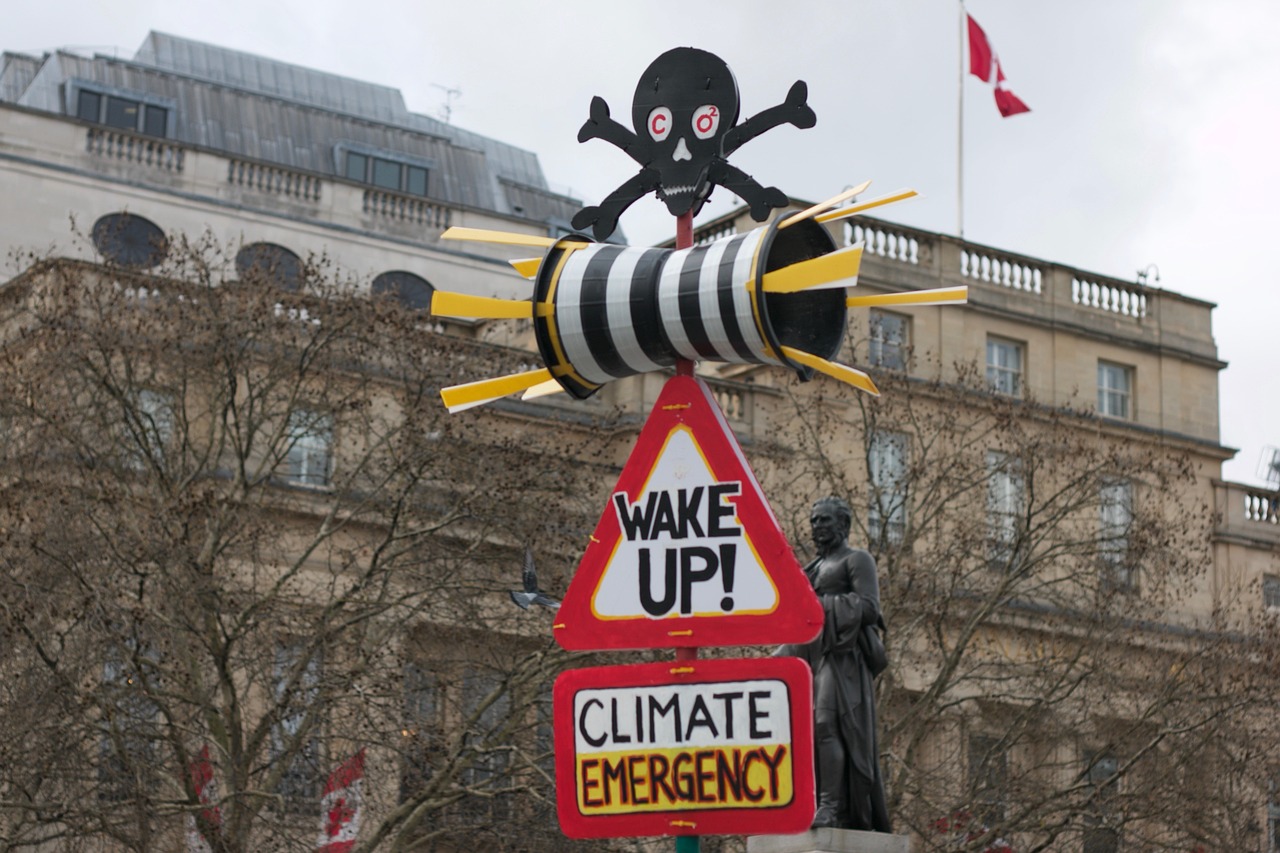
    I own my beliefs and understandings from reading King’s paper. Admittedly, I most enjoyed the discussion of cited works that support more general ideas about interpersonal neurobiology and other scientific inquiries. The oppositional cultural practice theory is supported by many of the cited studies. Uncovering ways in which OCP theory is anchored in empirical science is my focus. Advocating and advancing OCP theory might be the way to understand, and perhaps choose to practice collaborative prosocial actions as peak experiences for feeling the awe and wonder of unity, leaving the illusion of duality behind. This can result in more error-free decision-making at a time when our global society needs to quickly pivot if we are to mitigate the effects of the earth’s climate adaptations.

    science of mindfulness- OCP
    Photo by Gayatri Malhotra on Unsplash

    When we own the sometimes difficult awareness of erroneous beliefs, conclusions, or understandings about ourselves, it can be a jarring experience. We may have to face some pretty awful flaws in our thinking, actions, and speech. For example, many scholars, including bell hooks (2013), have identified pernicious tools used to gain power as imperialist/neocolonialist, white supremacist, capitalist, patriarchy. These tools often bring suffering, oppression, and violence, yet also can bring wealth, privilege, and fame. Mindfulness practices like critical analysis can reveal the mental formations behind these tools. Positive historical critique can liberate the mind, shining a light to illuminate the source of the rancor. The desire to gain power, and self-aggrandizement and other deficiency psychological needs fulfillment, can become goals in this misunderstood reading of reality. We all need to cooperate and pursue with psychological maturity human activity that sustains life on the planet.

    Oppositional Cultural Practice® offers a path to understanding the world as it is and how it could be by overcoming apathy, fear, and distress. Take for example the science of overcoming helplessness. Research has shown that individuals with an external, unstable, and local attributional style for negative events can be less at risk for a depressive reaction to failure experiences (Abramson et al., 1978; Weiner, 1986). OCP theory posits that those who come to understand that the causes of suffering are mostly man-made and can be changed, feel hopeful and empowered. These individuals identify specific (rather than global) attribution belief that the causes of a negative event is unique to a particular situation, rather than consistent across different contexts. This is also understood in other domains like sociology and positional theory (Collins, 2002). Next, these individuals identify unstable attribution when they think that the cause of negative events is specific to one point in time (rather than consistent across time), suggesting things can change. And lastly, these individuals come to assign causality to situational or external factors ,rather than factors within the person. OCP theory and practice promotes these dynamic and healing positional ways of understanding global human power dynamics.

    Oppositional cultural practice theory puts forward a way of understanding how people who dedicate their lives in peaceful ways to improve the mental and physical health of the individual, group and larger culture come to do so as guiding principles for their lives. The theory also provides a way for us to be more powerful in our lives while at the same time feeling the awe, wonder, connection to life (aka spirituality). Oppositional cultural practice is a mindfulness practice from beginning to end. My particular interest is in the journey inward that helps individuals reconnect to a unitive understanding of life, what is known and understood as spirituality (Campbell & Moyers, 2011). And in the idea that practicing OCP can really mature, sustain, and inform resilient change makers.

    Feel It

    I feel joy when advocating and advancing the science of OCP theory. Joy is a deep, abiding sense of wellbeing, even in the face of difficulty and challenges. Kahneman is, again, helpful here as he distinguishes happiness as a fleeting feeling, personal, and subject to illusion bias (Schkade & Kahneman, 1998). When I write or give talks about OCP theory, I am overjoyed because inevitably the audience is surprised and pleased. They are surprised to know that they have permission to talk about some very serious social ills that are filled with illusions about separateness and dis-connection. And, they are pleased to find protection in understanding the world as it is from historical and emerging transdisciplinary research. This effect is suggestive of the findings of Hollis-Walker and Colosimo (2011) stating that “because mindfulness means continual contact with experience, there is an opportunity for insight. Maintaining clear and open awareness over time allows first hand experience of how the mind functions.” I hope that by opening spaces for scientists to bring OCP theory and practice into their values, goals, and work will have a healing effect on themselves and others by increasing empathy, compassion, and pro-sociality (Creswell & Lindsay, 2014).

     “I hope that by opening spaces for scientists to bring OCP theory and practice into their values, goals, and work will have a healing effect on themselves and others by increasing empathy, compassion, and pro-sociality.”

    LIVE IT

    Creative living, for me, is found in doing research and analysis that reconnects individuals with the peak experience of unitive awe and wonder, and unity goals and values. We can move from dreaming of a world where mental and physical health, and peace exists, to waking up to a world in which it does. We can design systems and structures, interventions, and make decisions with reduced bias within uncertainty. Increasingly, this is a demand of the times. A case in point is primatologist and anthropologist Jane Goodall’s foundation that brings together a critical mass of young people who “understand that there has been a loss of wisdom, a disconnect between the clever brain and the loving heart.”  The young people are encouraged and supported in their chosen projects to “make the world a better place for people, animals, and the environment.” Although the young people understand the individual role one can play by not using plastic, taking public transportation, eating less meat, etc., Goodall recognizes a more important activity. She writes, “And, perhaps most importantly, who, by communicating with each other, sharing ideas and results, are breaking down the barriers that we build between people of different nations, cultures, religions…between us and the natural world” (Goodall, 2017). Imagine what it must feel like to bring resonance and purpose into the lives of young people in this time of crisis. 

    LOVE IT

    The science of mindfulness and the people who live the experience of uncovering its remarkable contributions to human behavior…I love it! Encouraging these pursuits as a way to understand how lasting, healthy, and peaceful social change can be brought into existence at this remarkably critical time in human history fills my heart with hope.

    “We can design systems and structures, interventions, and make decisions with reduced bias within uncertainty.”

    References

    Abramson, L. Y., Seligman, M. E., & Teasdale, J. D. (1978). Learned helplessness in humans: critique and reformulation. Journal of abnormal psychology, 87(1), 49.


    Campbell, J., & Moyers, B. (2011). The power of myth. Anchor.


    Clark, K. E., (2015). My Interviews with Transformative Leaders.  Full text, open access online


    Clark, K. E., (2016). Critical Race Theory, Transformation and Praxis. Southwestern Law Review, Rev. 45, 795-823. Full text, open access online


    Clark, K. E., (2018).  Demarginalizing the Intersection of Spirituality and Law: Oppositional Cultural Practice Theory, Self-Transcendence, and Social Change. Western New England Law Review, 40, 225-255. Full text, open access online


    Collins, P. H. (2002). Black feminist thought: Knowledge, consciousness, and the politics of empowerment. routledge


    Creswell, J. D., & Lindsay, E. K. (2014). How does mindfulness training affect health? A mindfulness stress buffering account. Current Directions in Psychological Science, 23(6), 401-407.


    Goodall, J. (2017)  Foreword. In E. Laszlo, The Intelligence of the Cosmos: Why Are We Here? New Answers from the Frontiers of Science (p 6.). Simon and Schuster.


    Hollis-Walker, L., & Colosimo, K. (2011). Mindfulness, self-compassion, and happiness in non-meditators: A theoretical and empirical examination. Personality and Individual Differences, 50, 222-227.


    Hooks, B., (2013). Writing Beyond Race Living Theory and Practice. Routledge.


    Kahneman, D. (2011). Thinking, fast and slow. Macmillan.


    Kahneman, D., Sibony, O., & Sunstein, C. R. (2021). Noise: A flaw in human judgment. Little, Brown.


    King, S. (2022). The “Science of Social Justice”: An Interdisciplinary Theoretical Framework Grounded in Neuroscience, Education, and Anthropology towards Healing Intergenerational Trauma. The Journal of Contemplative Inquiry, 9(1), 210-241.

    Koltko-Rivera, M. E. (2006). Rediscovering the later version of Maslow’s hierarchy of needs: Self-transcendence and opportunities for theory, research, and unification. Review of general psychology, 10(4), 302-317.


    Schkade, D. A., & Kahneman, D. (1998). Does living in California make people happy? A focusing illusion in judgments of life satisfaction. Psychological science, 9(5), 340-346.

    Weiner, B. (1986). Attribution, emotion, and action.

    Enjoy? Share with your friends

    Related Posts